
Costs of spillage and carryback
Material that doesn’t end up in a stockpile or a truck isn’t just messy – it’s lost revenue.
When you factor in labor, energy and the processing costs already invested, Mullen says spilled material can cost more than $200 per ton. Over a 12-hour shift, that loss adds up fast.
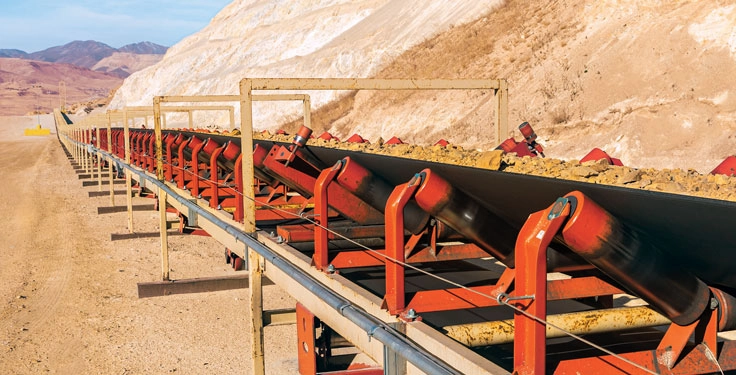
Much of that loss originates from two issues: poor belt cleaning, which allows carryback to build up; and uncontrolled load zones, where material changes direction, speed and elevation without proper containment and control.
Seek expertise
Every conveyor application is different. Wet, sticky material behaves nothing like dry aggregates. And enclosed systems have entirely different airflow dynamics than open conveyors.
That’s why one of the most effective reliability strategies isn’t a product – it’s perspective.
Mullen says a focused walkthrough by someone looking at conveyors every day can reveal issues operators don’t have time to chase down.
Producers are evaluated on tons per hour, safety metrics and production targets – not on mastering conveyor diagnostics. Expecting them to be experts in every failure mode isn’t realistic.
“A better approach is getting the right pair of eyes on it – conveyor specialists who know where to look, what questions to ask and how all components interact as a system,” Mullen says.
Information for this article courtesy of Superior Industries.
Related: Dry versus wet screening: Choosing the right approach for efficiency