
Downtime is among the most expensive variables in heavy industrial operations.
Across aggregate operations, every hour of unplanned shutdown translates directly into lost production and revenue – and, sometimes, regulatory risk.
Equipment reliability has always been vital. But amid supply chain volatility, inflationary pressure and labor challenges, plant operators increasingly recognize that uptime isn’t just a maintenance metric; it’s a strategic differentiator.
As a result, many are shifting from reactive service models to proactive aftermarket strategies designed to protect performance throughout the equipment lifecycle.
Aftermarket service includes all activities following installation and commissioning: preventive maintenance, spare parts planning, repairs, warranty support and lifecycle optimization. When structured strategically – not simply deployed as last-minute fixes – these programs reduce total cost of ownership, extend equipment life and strengthen overall operational stability.
The real cost of downtime
The financial impact of equipment failure varies by industry, but disruption is universal.
In high-volume mining operations, unplanned outages can cost more than $100,000 per hour. In cement production, a feeder failure can halt clinker processing and trigger costly material rework. Recycling facilities that rely on separation systems experience throughput losses and contamination risks when magnets, eddy current separators or metal detectors underperform.
Beyond production loss, downtime can affect safety, traceability and customer confidence. Many feeding and separation systems serve as upstream control points, meaning a failure can compromise downstream operations and force a complete reset.
These risks are magnified by harsh environments, where heat, vibration and abrasion accelerate wear. Without structured maintenance and defined response protocols, minor issues can quickly escalate into major failures. Increasingly, operators understand that preventing downtime – not simply responding to it – is central to competitiveness.
The expanding role of aftermarket
Aftermarket support was once seen as a cost center. Today, it’s recognized as a critical driver of performance and asset value.
A well-structured service organization enhances reliability, supports capital planning and safeguards long-term return on investment. A comprehensive aftermarket framework typically integrates four core components:
■ Service. This includes installation support, commissioning, field diagnostics, annual inspections and preventive maintenance. Tools such as magnetic field testing, performance audits and system recalibration help sustain peak operating efficiency. Remote diagnostics increasingly allow quick identification and correction without site visits.
■ Spare parts management. Effective planning uses failure-rate data, lead times and part criticality. Bundling recommended spares with new equipment orders improves readiness and reduces the risk of emergency procurement.
■ Repairs and rebuilds. Rebuild programs restore functionality while conserving capital, often incorporating upgrades that improve efficiency or safety.
■ Warranty support. Tracking warranty claims highlights recurring failure patterns and operating conditions, guiding product improvements and reliability gains.
When these components work together, they create a feedback loop that strengthens lifecycle performance – where service insights refine parts planning, warranty data informs design, and repairs double as modernization opportunities.
Rebuild versus replace
Capital budgets rarely align perfectly with production demands. Proactive rebuilding strategies help facilities maintain reliability while deferring major expenditures.
The economics are strong across equipment categories:
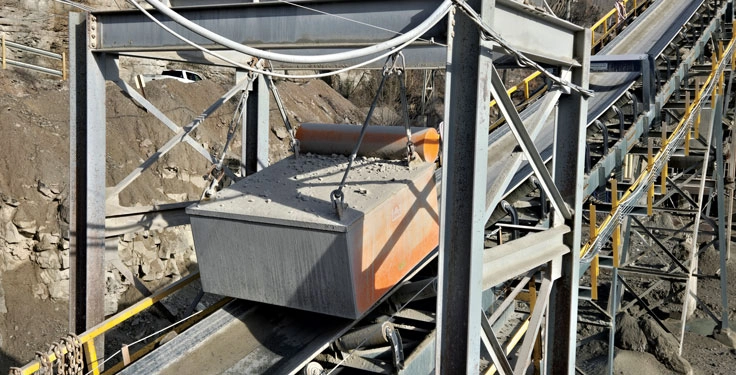
■ Suspended electromagnets. Rebuilds may include new coils, improved oil systems and resealing, yielding 30 to 50 percent savings over new units while resolving common failure modes.
■ Magnetic wet drum separators. Bearing replacement, resealing, shaft repair and element realignment can cut costs by up to 60 percent, often with added wear protection.
■ Scrap drums. Structural reinforcement and bearing upgrades restore performance at roughly half the cost of a new unit.
■ Vibratory feeders. Upgrading springs, trays and drives restores function for 40 to 60 percent of new equipment cost, with optional liner or drive enhancements.
■ Metal detectors. Electronic upgrades and recalibration can return units to original – or better – specifications for far less than replacement.
Rebuilds also deliver faster turnaround. While new equipment may take months to produce and deliver, rebuilds are often completed in a matter of weeks.