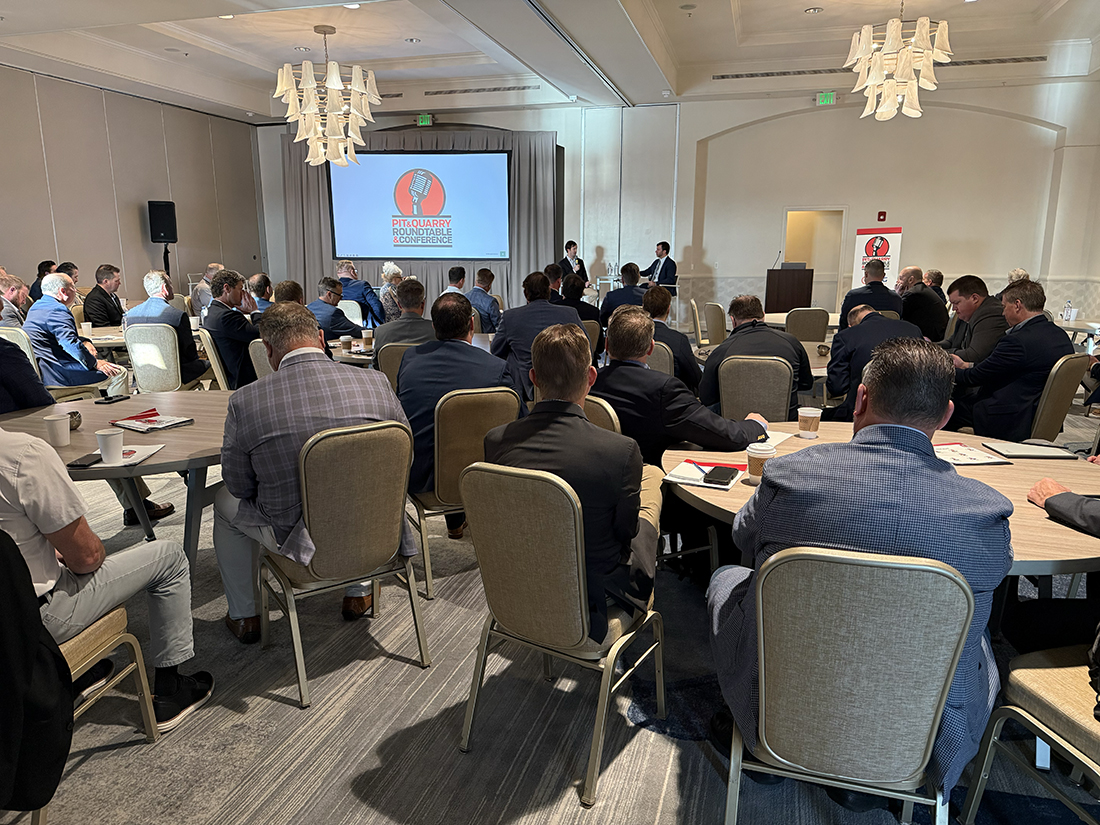

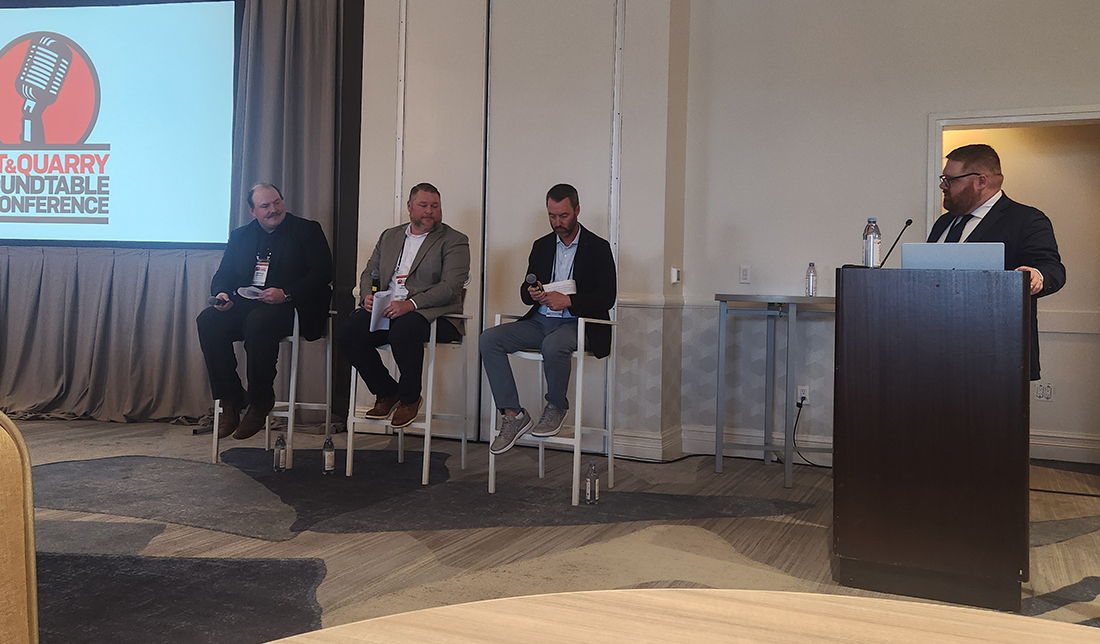
The Pit & Quarry Roundtable & Conference brought industry leaders together this week to discuss what’s happening across operations in North America. During a Roundtable panel discussion, three producer attendees shared their perspectives on AI, autonomy and the future of operations.
Here are highlights from the discussion featuring Turner Staffing Group’s Thomas Haun, WD Scepaniak’s Bryan Scepaniak and Kraemer Mining & Materials’ Tim Theobald. P&Q’s Jack Kopanski moderated the panel. The content presented here was edited for brevity and clarity.
KOPANSKI: With this year’s Roundtable taking place after ConExpo-Con/Agg, what were your thoughts on the show? Were there any developments you were looking for, and did the show meet your expectations?
SCEPANIAK: It met our expectations. As a company, we came into it looking for more suppliers for consumable parts – instead of going through a distributor or shipping directly from manufacturers overseas. That was productive.
There’s a barrier to entry with tariffs and shipping costs when you don’t buy from a distributor, but at the volumes we need, we determined we’re able to make that make sense.
Something I noticed – and I might be wrong – but it seemed like there were fewer people there this year. That led to more worthwhile conversations because there wasn’t as much ‘fluff.’ It helped everyone have more productive conversations.
THEOBALD: Ours was a little different. We’ve started down the AI process and are working across a lot of functions in our facilities. We were more on a fact-finding mission, talking to different vendors.
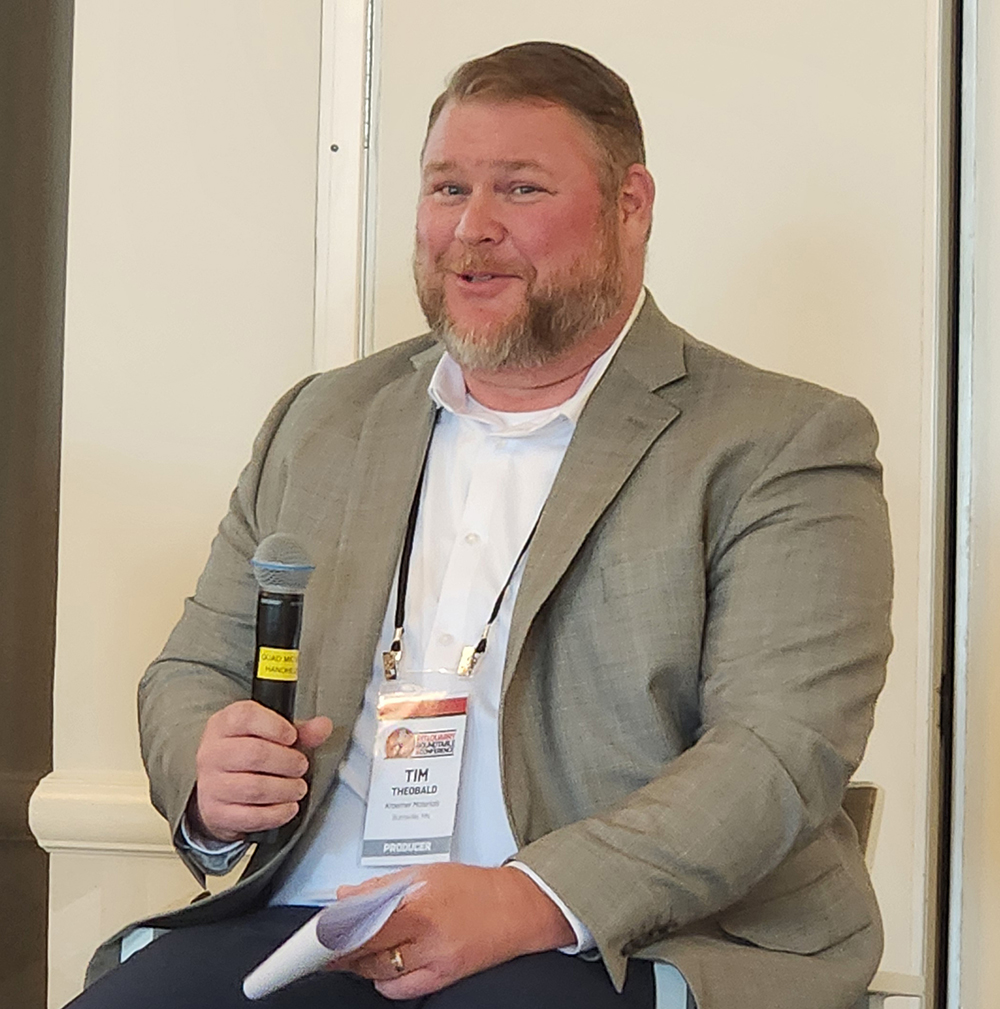
When you walk around, the mechanical side starts to blend together. And the data and AI vendors stand out. Our focus was on what’s out there to help us, so we spent most of our time focusing there.
HAUN: I’ll add something related to ConExpo. It’s interesting to see the level of interest from pure-play software companies moving into our space. Silicon Valley ignored it for a long time.
KOPANSKI: Tim, I like the approach you mentioned, using ConExpo as a fact-finding mission. With the focus on autonomy, connected equipment and AI-driven tools, what felt implementation-ready versus conceptual? Did anything change your priorities or timeline?
THEOBALD: For our business, nothing was package-ready. But it sparked a lot of ideas. We’re already pretty far down the road with some things.
When you look at dashboards and how vendors collect data, we tend to build our own systems. We want in-house solutions so we know how to work on them, fix them and expand them.
HAUN: The tools make self-implementation a lot easier. We do similar things at Turner. Software firms may not want to hear that, but it’s true.
KOPANSKI: A lot of operations are still piloting AI and autonomous tools. How do you decide which sites, processes and partners are the best proving grounds? What milestones do you need before scaling?
SCEPANIAK: We haven’t found a good use case for autonomous or semi-autonomous equipment because we’re 100 percent mobile crushing. We move between projects that can last a couple weeks to half a year, but often just a few weeks.
The lead time for geofencing and implementation could be longer than the project itself. We’re not opposed to it – there’s a use case – but in our niche, it’s not there.

THEOBALD: We’re similar. We’re a fixed plant, but we haven’t gotten there yet. We’ve done demos over the years, going back to early Komatsu systems.
It feels like it’s been in a testing phase for a long time. Out West, it’s starting to scale – especially in large mines. But for 1 to 2 million tpy facilities, that’s a tough expense to justify.
HAUN: I’ll talk about a different angle. There’s a lot happening on the back-office side where software can make a big impact. It may not always be field-ready, but these platforms can give you data on everything. Implementing that is an interesting way to impact operations.
KOPANSKI: It’s not just happening in operations. Ahead of the Roundtable, we talked about Kraemer exploring AI more on the back end. What does that look like right now? How are you using it?
THEOBALD: We’ve segmented the operation from stripping and pit face all the way to logistics and trucks leaving the gate.
We’re using AI for stripping volume, mine planning and long-term planning. With drone data and contour maps, you can generate a 15-year mine plan in minutes. Traditionally, you’d call engineers and wait. Now you can get something close in 15 minutes.
We’re also developing dashboards for maintenance – tracking bearing failures, belt wear, fuel usage and more. With the right platform, it creates a live system that learns over time.
We’re applying it across capital projects, production and sales to create efficiencies.
HAUN: On the hiring side, it’s interesting. Our back-office staff are very tech-native. It’s not about pushing them – they’re already using these tools. People want to be better at their jobs, and there’s a shift happening.
KOPANSKI: From a staffing standpoint, how are conversations changing as AI and autonomy become more visible? Are candidates asking different questions?
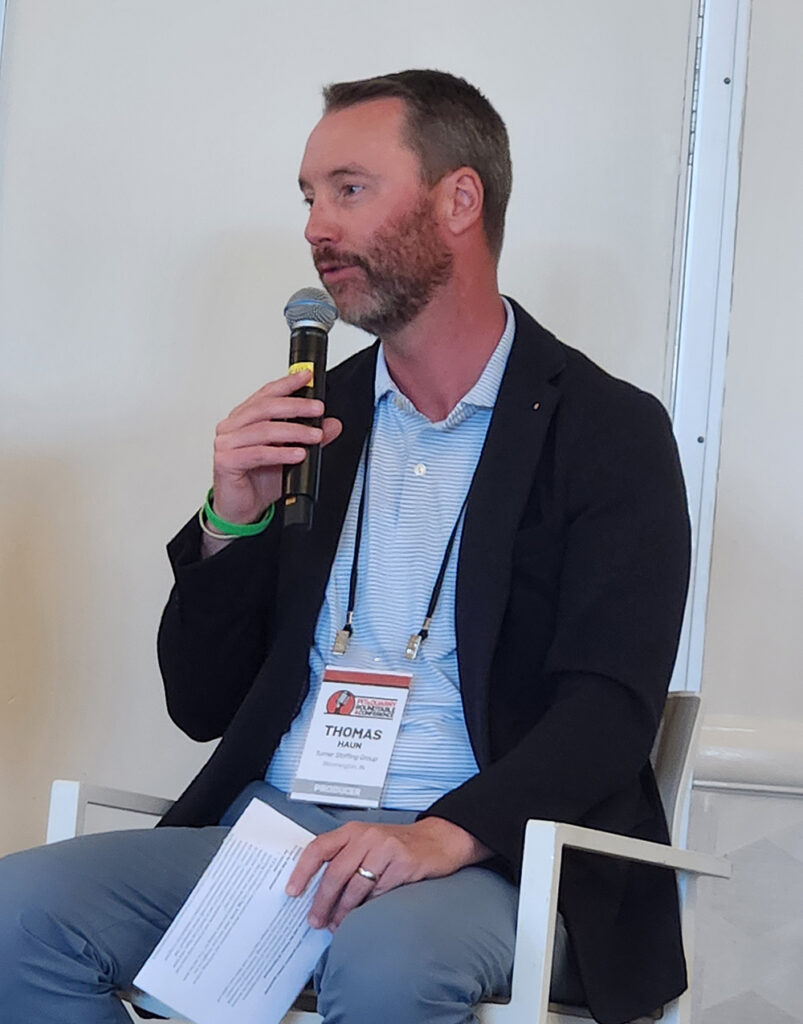
HAUN: We’ve talked about declining college enrollment, and that’s an opportunity. As we create more tech-enabled roles, we can attract 18-year-olds who have these skills and don’t want to go to college. They want to work and create value. That’s a larger shift.
SCEPANIAK: There’s still a place for the traditional worker, especially where we’re based in Minnesota with ‘the farm kid’ who grew up working on equipment.
My concern is autonomy taking away entry-level opportunities. The easiest jobs to automate are lower-skill roles. So how does an 18-year-old with no technical background get into the industry if those roles disappear?
That’s something to watch over the next 10 to 15 years. If we’re aware of it, we can create new pathways.
THEOBALD: We need to bring in younger workers who love this technology. Pair them with experienced workers, and you get a stronger workforce. Some jobs will change, but training will evolve. Someone might operate equipment and also work with AI systems.
KOPANSKI: When you think about AI and autonomy five, 10 or 15 years from now, what does success look like? How do you adopt these technologies without eliminating entry-level roles?
SCEPANIAK: Success would be running entire production facilities with minimal staff. We already operate lean, but if we can increase volume and capacity with the same number of people – using autonomy and AI for data collection – that’s the goal.
THEOBALD: Along those same lines, AI-directed cameras could monitor primary crushers or operate rock breakers. That doesn’t necessarily eliminate a role – it shifts it.
That person could focus on safety inspections, training, cleanup or improving the plant. It’s about redirection rather than reduction.
HAUN: The goal is to move from reactive to proactive work. Instead of firefighting, you’re optimizing – anticipating issues and acting ahead of them rather than chasing problems.
Related: Learn more about the Pit & Quarry Roundtable & Conference