

FULL HANDBOOK
Chapter 1: Industry Overview
Chapter 2: Geology & Site Selection
Chapter 3: Drilling & Blasting
Chapter 4: Excavating & Loading
Chapter 5: Hauling
Chapter 6: Crushing & Hydraulic Breaking
Chapter 7: Screening
Chapter 8: Washing & Classifying
Chapter 9: Conveying & Material Handling
Chapter 10: Loadout & Weighing
Chapter 11: Safety & Health
Water Management
Mine operators know how critical optimal mine water management is.
As finite water resources become ever scarcer, investors, regulators and local communities are increasingly focused on how the industry is managing water. In the U.S., where some parts are facing a historic drought, an estimated 4 million gallons of water per day are withdrawn for mining purposes.
Holistic mine water management – including smart technologies – presents a powerful opportunity to unlock compelling economic benefits for mine operators while protecting the surrounding environment and local community.
Experience shows that optimal water management begins with a holistic view of how water is used across the entire mining operation – from sourcing to dewatering to treatment and reuse. Every step is part of a process that can increase productivity, reduce costs and, ultimately, turn mining water management from an expense to a strategic advantage.
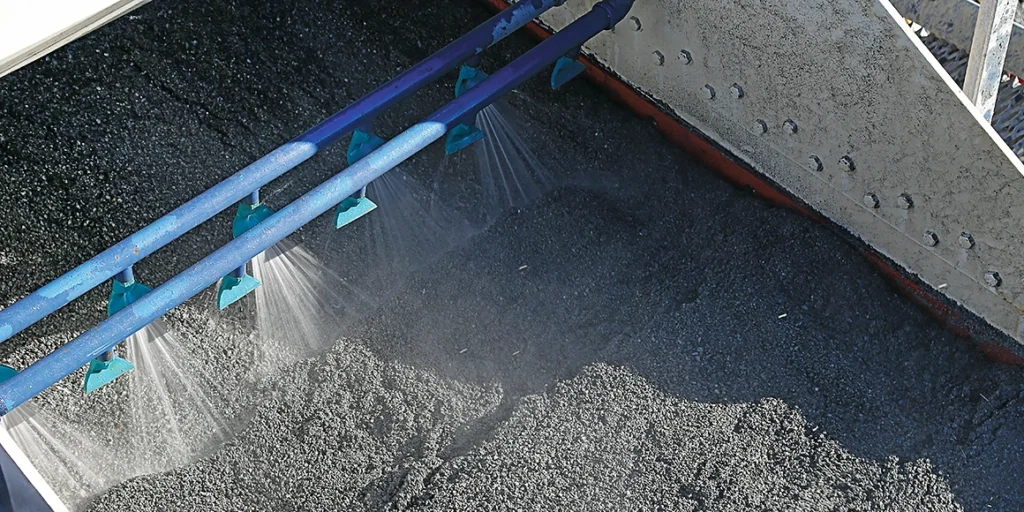
Managing efficiently
Every mine has a distinct set of operating conditions, and customized water management solutions can deliver better results. Still, challenges facing many mine operators are increasing productivity, reliability and sustainability.
Efficient mine water management, and tapping into the power of digital technologies, can support the effort by minimizing production downtime, operating costs and the environmental impact while enhancing performance and safety. Let’s examine what this means in reality:
- Water quality and scarcity. Remote monitoring and control with real-time, continuous monitoring systems give operators a better understanding of water use and ensure water can be extracted from multiple sources, transported and treated at the desired pressure and quantity.
- Operational continuity and efficiency. Smart technologies like remote monitoring and control minimize costly, unplanned maintenance and unwanted downtime while reducing safety risks. Visibility and understanding the health of assets enables efficient scheduled maintenance, smart inventory management and reduced energy consumption.
- Regulatory compliance. Real-time, continuous monitoring systems and pipeline integrity management monitor water quantity and quality to ensure the extraction and transport of water and management of tailings meet regulatory standards.
- The golden rule of pumping systems. Some operators may find it difficult to know where to begin to achieve efficient water management on-site. Experience, however, shows that aiming to operate as close to the best efficiency point for a site’s pumping system is a great place to start.
&uuid=(email))
Straying too far from a pump’s best efficiency point reduces overall efficiency, which leads to premature wear, higher energy consumption, increased maintenance requirements and, as a result, more downtime. An audit of an operation’s water management system is the first step in a process to boost efficiency, reduce costs and enhance profit margins.
Once the appropriate selection is made based on proximity to the best efficiency point, integrating smart technologies is a logical next step. Let’s consider a typical, phased scenario: An open pit mining operator is looking for an efficient dewatering solution. The first step is to develop a customized solution using the most efficient dewatering pump to meet the head/flow requirements of the application. The pump can be paired with a variable frequency drive to ensure optimal performance.
Additional pumps may be needed as the mine expands and dewatering requirements increase. This second phase of integrating smart technologies can involve a PLC intelligent controller being incorporated into the system, enabling the operator to easily control multiple pumps via the PLC or intelligent controller.
A third phase would involve enhancing the dewatering system further by adding a remote monitoring and control solution. For isolated or inaccessible mine sites or operations where manpower is limited, remote monitoring and control provides visibility of assets and peace of mind.
Manufactured Sand
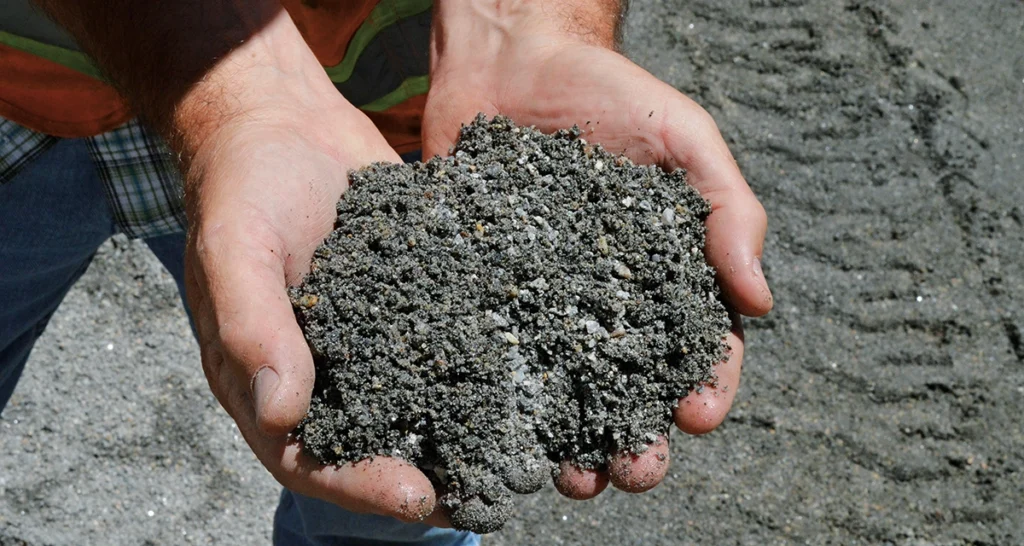
Natural sand deposits are a depleting resource in many parts of the United States, prompting quarry owners and operators to take a second look at a waste product many aggregate producers already have on site in massive stockpiles.
The process of dry crushing and screening produces a screenings byproduct that contains high levels of fine material, silts and clays. This product has a very limited market but, as a result, producers can accumulate hundreds of thousands of tons of this “waste” over time.
These stockpiles take up valuable space on the quarry floor and cost money to maintain rather than generate a revenue. Using advanced washing systems, screenings can now be reprocessed to create spec manufactured asphalt and concrete sands that can be used in place of natural sand.
Introducing washing to a completely dry process in a quarry was traditionally a challenge. The permitting required to get wet processing permits was costly and time consuming – if it was possible at all. Settling ponds used to recirculate water are also costly to maintain and take up valuable real estate.
These issues have pushed some quarry operators to look at closed-loop water and silt management systems. They have many benefits, including the elimination of tailings ponds and the associated cleanout costs, recycling up to 95 percent of the process system water and reducing waste by 75 percent.
These benefits make the permitting process much easier, with no concerns over groundwater contamination and much less fresh top-up water required.
The process
The first stage of the process is the washing of the screenings to reduce the percentage of silts to meet asphalt and concrete sand specifications. One efficient method of doing this is using hydrocyclone technology that maximizes the recovery of in-spec sand and minimizes the amount of waste material going to the silt management system.
The addition of a dewatering screen after a hydrocyclone reduces the moisture percentage in the finished product and maximizes the recovery of water to be reused in the system.
The second stage of the process is a closed-loop water and silt management system to clean the wastewater and recycle it back to the wash plant. The water management system will maximize the process water return, reducing fresh top-up water demand to a minimum.
The system comprises a thickener tank that scalps off most of the water over a weir system and produces a slurry of milkshake consistency. A high-pressure pump then transfers the material to a plate press that filters the mud through the plate chambers, producing a perfectly dry, dehydrated, low-moisture mud cake.
Because the plate press is fully automated and does not require a flocculant/coagulation additive to achieve the dry cake results, running costs are kept to a minimum.
The environmental and economic benefits of the process are a reduced demand for natural sand while turning a waste product into revenue and profit for the quarry owner.
Safety
Every wash plant should have clear safety guidelines that include best practices for the entire plant. Safety, after all, requires a proactive role to prevent workplace accidents.
Make sure you and your operators are trained in proper safety and maintenance procedures of your site – including washing equipment. The top priority with any maintenance task is safety. Review the conditions surrounding the tasks and determine which tools are required to complete them.
Which employees are needed and how many in all? Are they properly trained on procedures? What communication is needed with other employees and contractors that may be on your site? Conditions such as time of day, weather and area around equipment can all affect a maintenance task and, in turn, everyone’s safety.
SAFETY TIP
Guard moving parts: Install and maintain protective guards on washers, screws and conveyors to prevent contact injuries.
Keeping equipment and operators safe
As part of routine maintenance, check safety guards and warning decals.
Guards can sometimes be seen as inconvenient and are removed from a machine to allow for easier access to components. These guards may not be put back on because operators lose the bolts and don’t bother to replace them.
Guards are intended to keep operators safe. If they need to be removed for maintenance, they should be put back before startup.
Warning decals are also put in place to keep operators safe, so be sure to keep them clean and intact. Should an equipment warning decal become damaged, contact the manufacturer immediately for a replacement.
Always be sure to check the integrity of all safety items before use. Tips to keeping a safe site are:
- Walk it daily
- Ensure training on proper lockout/tagout procedures
- Check guarding around equipment
- Keep the site clean
Some equipment – especially vibratory – requires retorquing of bolts. A review of the manufacturer’s manual for this data is recommended. If missed, it can cause damage to equipment and possibly a loss of warranty.
A torque-multiplier may be needed if torque specs are higher than available tooling. Check if lubricated or dry threads are used prior to this procedure.
While lubrication schedules vary, check the quantity and type of grease or oil that’s required. Also, be aware of the recommended frequency for lubrication.
Is lubricant replacement needed after a fixed time following startup? Is that timeframe based on environmental conditions?
Also, keep your grease fittings clean. This step should be obvious but is not always followed. Grease fittings should be cleaned before engaging the gun to lubricate your equipment.
Additionally, keep dirt and other foreign material cleaned out from around oil-filling points, and be sure to inspect old lubricants for contamination. In some cases, a lubrication analysis should be made for tracing contaminants associated with some failures, which can lead to potentially unsafe washing equipment.
Don’t allow yourself to turn a blind eye to a hazard or an unsafe situation. Don’t allow yourself to say: “it’s not my job” or “someone else will fix it.”
When doing inspections or maintenance, every worker involved should lock out. Never remove a lock until positive identification verifies all personnel are out of the area.
Every incident, accident or event should be investigated. Through investigations, recommendations can be made to improve safety and prevent the event, incident or accident from happening again. It is vital these recommendations be implemented. Otherwise, sites are destined to repeat mistakes of the past.
SAFETY TIP
Lockout before maintenance: Always follow lockout/tagout procedures before working on washing equipment.
Keeping washing equipment safe
Scrubbers/trommels
In addition to proper lubrication, mounting alignment is critical to prevent damage to tires and drives. Check liners and screen media condition for wear. Inspecting internal lifters and advancing/retarding paddles are just as important for production, because if their height is below a certain critical point, material will not rotate and interact effectively.
Allowing paddles to wear away and not replacing them may save a few dollars upfront, but this may result in unclean material. By taking these steps to maintain your scrubber or trommel, you are complying with safety regulations and ensuring a safe machine to operate.
Log washers, blade mills, aggregate conditioners, coarse material washers and fine material washers
Order equipment with optional guards to prevent accidents, and add guards if there are dangerous access points.
The rear bearing assembly designs vary by manufacturer. Some are complex and feature a “submerged” bearing, while others are a simple outboard pillow block with a rubber boot seal assembly. Each claim different advantages, but they all require lubrication.
Paddles and flights need periodic inspection for wear and possible replacement. With metallic paddles or shoes, it’s important to be aware that worn ends become razor sharp and can cause serious injury if not handled properly. It’s important to check wear on these items and fasteners, as the latter secure the wear parts to the shaft.
Occasionally check the shaft for runout, as a bent shaft can cause premature failure of support bearings and even the shaft. Personnel should carry out shaft straightening, but only after consulting the manufacturer’s manual.
To assure proper lubrication of bearings, many manufacturers offer optional automatic lubrication systems, which are often inexpensive. These can assure more regular, periodic lubrication and minimize operator personnel exposure to a plant-operating environment.
SAFETY TIP
Inspect paddles for sharp edges: Worn metallic paddles can become razor- sharp and cause injury.
Slurry pumps
These are the heart of a wet process. However, serious injury can result from a bad installation where solids settle out and an explosion can occur. So, be sure to consult the manufacturer when reinstalling or modifying an installation. The correct selection of construction materials is critical to long-term, cost-effective service life and safe operation.
There are three key areas in any pump: wet end, gland and bearings. It is important, particularly with open vane-style impellers, to check the clearance between the impeller and the suction side liner. Too wide a gap leads to bypass inefficiency and, in slurry pumps, accelerated wear.
Impeller wear should be monitored, as reduction in performance is most likely due to this factor. Do not apply heat to any area of the pump’s impeller if trying to loosen it during maintenance, as serious injury or death can occur.
Hydrocyclones
While hydrocyclones have no moving parts, there are two failure modes – delamination and wear – that affect performance and can affect the safety of your machine.
Liners that become loose due to wear or adhesion cause disruption of flow inside the unit. This ultimately causes poor performance with misplaced particles.
Checking the internal lining of a cyclone should be done at least seasonally. This is particularly important when dealing with siphon (vacuum)-assisted cyclones/separators. The apex (spigot) is the fastest-wearing component.
These are sized based on mass-flow. That way, as they wear, the underflow becomes more dilute and more fines will bypass into that stream, affecting the removal of deleterious fines.
Also, check the apex if your product is getting dirtier. Worn vortex finders can allow coarse fractions to short circuit to the overflow and fill the ponds or contaminate the next stage of production. The worst case is wear can cause the pipe to detach from the plate, causing significant damage to equipment and possibly injuring nearby personnel.
&uuid=(email))
Dewatering screens
Safer working conditions result from the use of dewatering screens, as they discharge a drier sand and result in less carryback and spillage to clean up around conveyors.
While they typically have a lengthy service life, there are still some areas to watch to keep them running safely and effectively. For example, notice if cracks occur in the side plate. Trace the crack to its end with dye penetrant and drill a 1/8-in. to 3/16-in. hole. This often takes care of the problem, and the side plate will last the life of the screen.
Cracks in cross members should be referred to the manufacturer immediately, as should any bolt breakage. Often, the problem with cracking in dewatering screens is the support structure rather than machine integrity.
Lubrication is a general maintenance task but take extra care because some vibrator motor manufacturers use special grease that, if not used, may void the warranty. Motor wiring that is draped across a vibrating motor to the side of the screen and vibrates against adjacent surfaces is a very dangerous condition. Visually check this and replace the wiring as needed. Also, always check the direction of motor rotation upon restarting after electrical work to keep equipment running properly.
Final thought
It’s important to make your washing site as safe, clean and productive as possible. By keeping your site clean and training operators on safety procedures, you are taking the steps to keep your site and operators safe while they perform their job.
Keeping your washing equipment well-maintained will keep your equipment running longer, and promoting cleanliness and safety everywhere in your plant helps to send employees home safe.
SOURCES
CDE
cdegroup.com
EIW (Eagle Iron Works)
eagleironworks.com
Dave Schellberg
EIW (Eagle Iron Works)
eagleironworks.com
McLanahan Corp.
mclanahancorp.com
Phoenix Process Equipment
dewater.com
Superior Industries
superior-ind.com
Carol Wasson
Jesse Parmar
Xylem
xylem.com
FULL HANDBOOK
Chapter 1: Industry Overview
Chapter 2: Geology & Site Selection
Chapter 3: Drilling & Blasting
Chapter 4: Excavating & Loading
Chapter 5: Hauling
Chapter 6: Crushing & Hydraulic Breaking
Chapter 7: Screening
Chapter 8: Washing & Classifying
Chapter 9: Conveying & Material Handling
Chapter 10: Loadout & Weighing
Chapter 11: Safety & Health
PROMOTED PARTNERS