

The Pit & Quarry University Handbook is an educational resource that offers comprehensive lessons covering the entire aggregate production process from start to finish, highlighting new technologies and enhanced procedures within each branch/category of the aggregates industry.
FULL HANDBOOK
Chapter 1: Industry Overview
Chapter 2: Geology & Site Selection
Chapter 3: Drilling & Blasting
Chapter 4: Excavating & Loading
Chapter 5: Hauling
Chapter 6: Crushing & Hydraulic Breaking
Chapter 7: Screening
Chapter 8: Washing & Classifying
Chapter 9: Conveying & Material Handling
Chapter 10: Loadout & Weighing
Chapter 11: Safety & Health
While crushing and screening are fundamental to aggregate processing, washing and classifying are becoming increasingly important steps for producers.
Striving to improve concrete and bituminous mixes and road bases for end use, clean aggregates are often a must. Construction aggregates are ultimately washed so they meet specifications.
Still, producers often struggle to meet every cleanliness requirement. While hydraulic methods are generally the most effective for cleaning aggregates, they are not flawless. It is often necessary to allow a limited percentage of deleterious matter.
&uuid=(email))
Of course, there is more to the function of water in processing aggregates than mere washing. Among these functions are:
- Clay and silt removal
- Removing shale, coal, soft stone, roots, twigs and trash
- Sizing
- Classifying and separating
- Dewatering
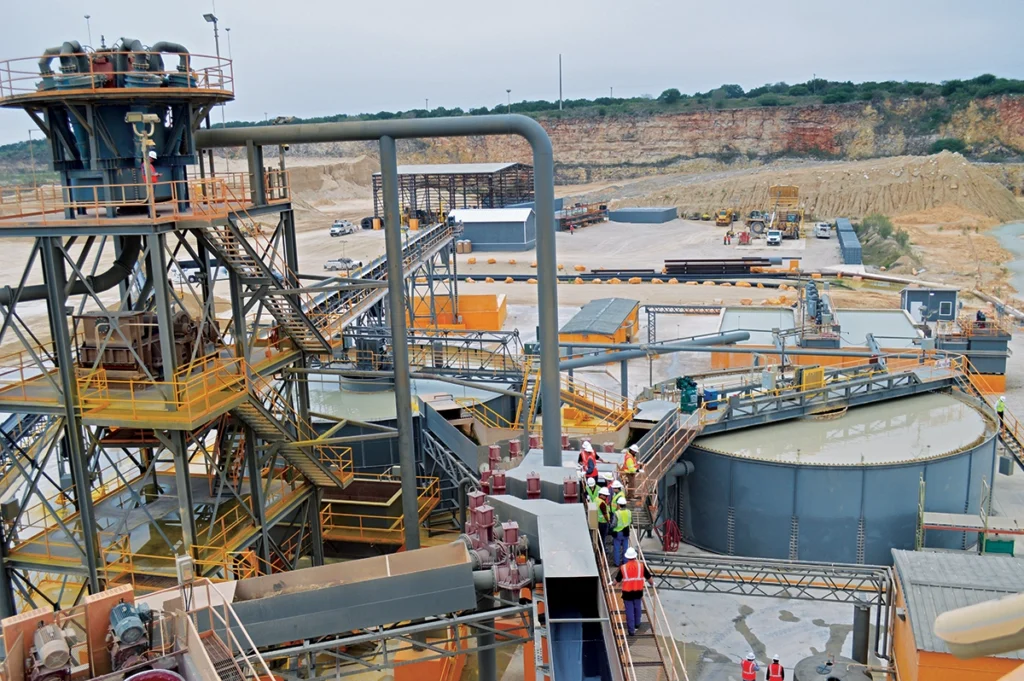
Because no washing method is flawless and because some materials may require too much time, equipment and water to meet specifications, it is not always economically practical to use such materials.
Therefore, it is important to test the material source thoroughly beforehand to ensure the desired finished product can be produced at a reasonable cost. A materials engineer can be of assistance in assessing the economic suitability of material and typically must approve a source before production begins.
Additionally, many manufacturers of washing equipment examine and test samples to determine whether their equipment can do the job satisfactorily. No reputable manufacturer will recommend equipment if there is reasonable doubt about satisfactory performance on the job.
The ideal gradation is seldom, if ever, met in naturally occurring deposits. Yet, the quality and control of these gradations are essential to the workability and durability of the end use. Gradation, however, can be adjusted or improved with simple processes. This is a primary goal of aggregate-preparation plants.
Crushing, screening and blending help adjust aggregate gradations, though the material may still require washing to meet cleanliness specifications.
Washing and classifying are typically divided into two categories, based on material size:
- Coarse material. Generally above 3/8 in. (and sometimes split at 1/4 in. or #4 mesh). In the washing process it is usually desired to remove foreign, objectionable material – including fine particles.
- Fine aggregates. 3/8 in. and smaller. In this case, it is generally necessary to remove dirt and silt while retaining sand down to 100 mesh – or even 200 mesh.
As pits and quarries progress into their reserves, easily mined material becomes less available, forcing producers – particularly sand and gravel operations – to process material with a greater amount of clay and silt. While some materials may require only rinsing to remove fines, other materials may require scrubbing to remove clay or other deleterious materials.
Sand and gravel are typically mined in a moist or wet condition by open-pit excavation or dredging. Open-pit excavation is commonly performed with power shovels, front-end loaders, bucket-wheel excavators or draglines. Alternatively, dredging involves mounting equipment on boats or barges and removing the sand and gravel from the bottom of a water body by suction or bucket-type dredges.
After mining, the materials are transported to the processing plant by suction pump, earthmovers, trucks or automated belt conveyor systems.
Although significant amounts of sand and gravel are used for fill, bedding and base products without processing, most domestic sand and gravel is processed prior to use.
Processing sand and gravel for various market applications often involves different combinations of equipment, such as log washers; coarse and fine material washers; attrition scrubbers; bucket wheels; classifying tanks; hydrocyclones; and dewatering screens.
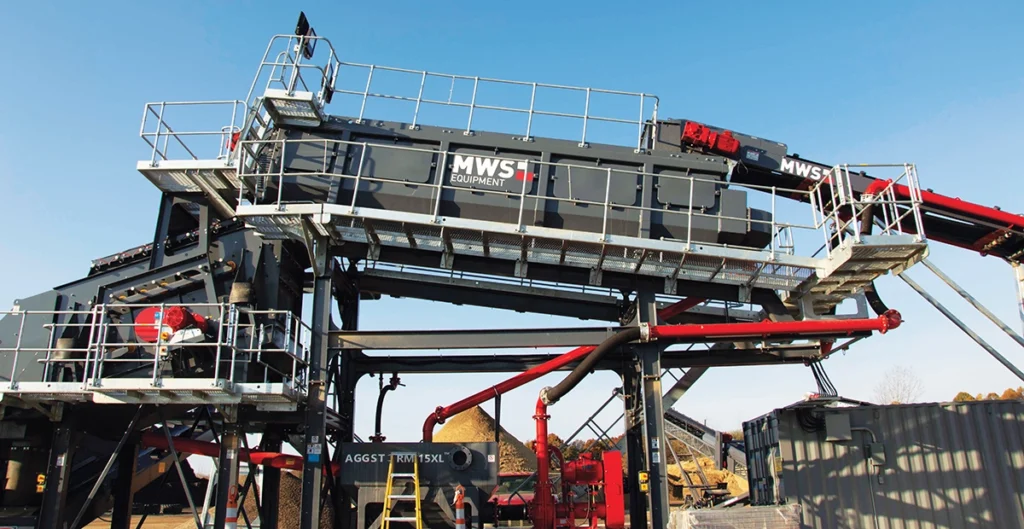
Log Washers
Log washers are used in aggregate processing to remove tough, plastic-type clays from natural and crushed gravel, stone or ore feeds.
When in operation, log washers are installed at slopes ranging from 0 to 14 degrees, depending on the severity of the washing application. As the percentage of deleterious material increases, the slope must be raised to increase retention time. In some cases, lower slopes may increase capacity while decreasing horsepower and wear.
One limitation of log washers is that they must have a controlled top size. Typically, 36–in.- and 38–in.-diameter units can accept feed material up to 4 in., while a 46–in.-diameter unit can accept feed material as large as 6-in. cubed. It is recommended that sand-sized fractions be removed prior to a log washer, as finer material tends to cushion the washing action.
When selecting a log washer, the amount, type and percentage of deleterious material to be removed must be considered. As the percentage of deleterious material increases, longer units should be used to increase the washing action. In some severe applications, two or more log washers in a series may be required.
For safety, operators should use optional guards to prevent accidents. In some cases, guards can be retrofitted if dangerous access points are present.
Also with log washers, paddles and flights should periodically be inspected for wear and possible replacement. With metallic paddles or shoes, worn ends can become sharp enough to cause serious injury, if not handled properly. Maintenance personnel should take appropriate precautions.
Coarse Material Washers
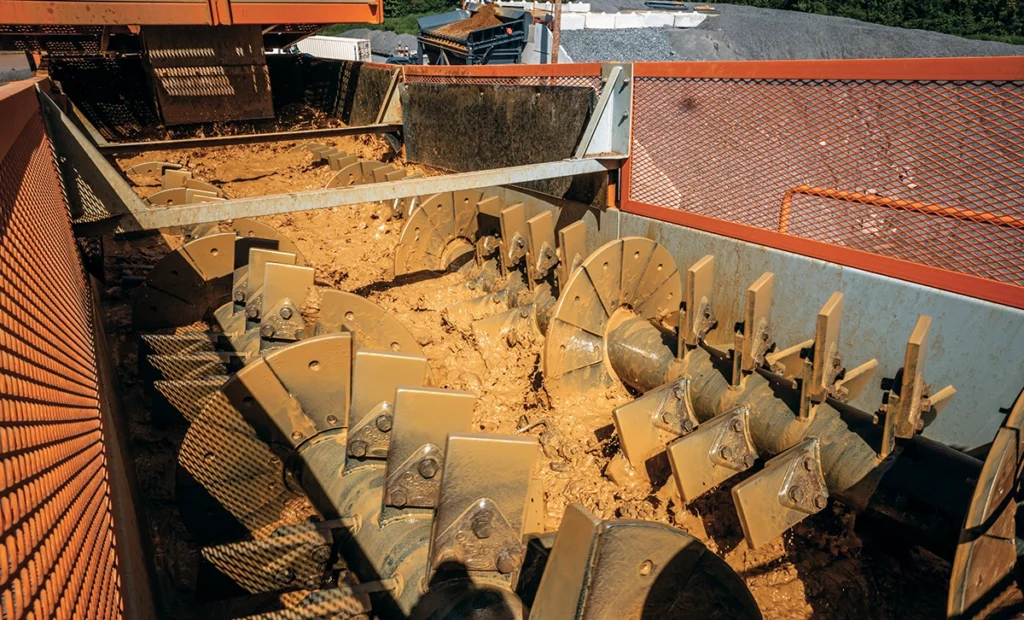
Built primarily to wash crushed stone and gravel, coarse material screw washers effectively remove light, loamy clays, dirt, crusher dust and coatings not eliminated by wet screening alone. They can also be used to remove floating vegetation and soft aggregates from feed material.
Coarse material screw washer paddles work in conjunction with screw flights to provide scouring and agitation. The turbulent washing action, combined with rising current water introduced at the feed end at the bottom of the box, results in the separation of lighter fractions from sound aggregates.
Lighter fractions float to the surface due to the rising water in the box and then overflow the weir located at the back. The desired clean product is scrubbed and conveyed by paddles and flights to the discharge end.
Paddle configurations vary based on the design and length of the washer. More paddles increase washing action but decrease capacity because paddles do not convey material up the box as efficiently as flights. When additional paddles are used, it is necessary to lower the slope of the box and increase motor horsepower to help convey material to the discharge end. Reversing some paddles can also retain material in the box longer.
Proper maintenance of coarse material washers is essential for efficient, long-term operation. Consider the following practices:
- Perform regular inspections. Establishing a structured inspection schedule is fundamental to effective maintenance. Conduct daily, weekly, monthly, quarterly, six-month and yearly checks to ensure all components are in good working order. Regular inspection of paddles and wear shoes helps identify issues before they worsen, ensuring continuous and efficient operation.
- Monitor bearings and motors for heat and noise. Bearings and motors are critical components. Monitor them regularly for excessive heat and unusual noise, which may indicate misalignment or wear. Overheating can cause premature failure, while noise may signal problems requiring early intervention to prevent costly downtime.
- Check oil levels consistently. Proper lubrication reduces friction and wear on moving parts. Ensure oil is within the manufacturer’s recommended range and use the correct type for optimal performance.
- Inspect v-belts for tension and alignment. V-belts are vital for operation. Misaligned or loose belts can cause slippage, reduce efficiency and increase wear. Belts that are too tight may snap under tension. Adjust as needed to ensure smooth operation.
- Inspect the rubber cover protecting the spider and flanges. This cover prevents contamination and damage. Regularly check for wear or damage and replace if necessary to protect critical components from debris and moisture.
- Remove excess grease from the outboard bearing vent opening. Excess grease can plug the vent slot, leading to overheating and increased wear. Nine out of 10 failed bearings result from this issue. Regularly clean out excess grease to ensure ventilation and prevent bearing damage.
Fine Material Screw Washers
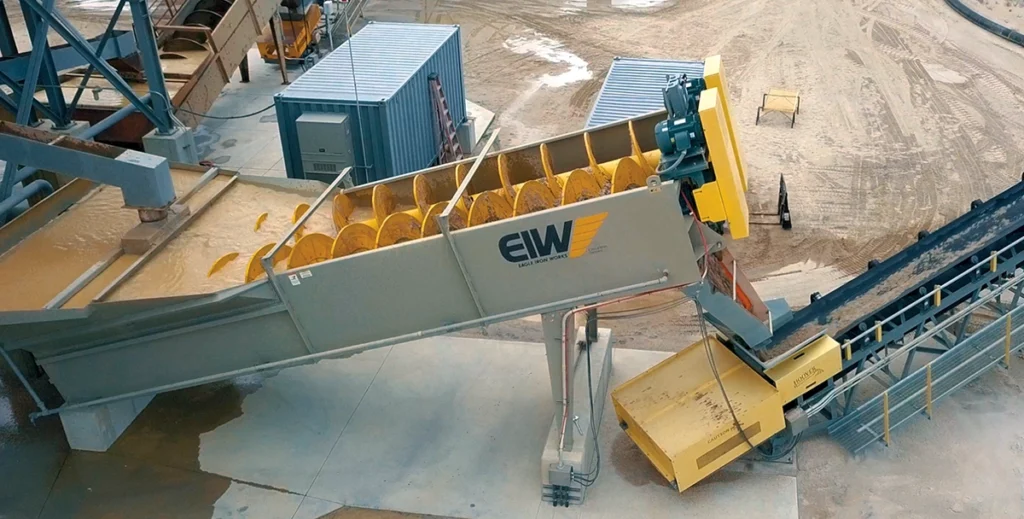
Fine material screw washers are used primarily to dewater, classify and wash minus 3/8–in. sand or other fine material. They are designed to accept feeds from sand classifying tanks, belt conveyors, other fine material screw washers or slurry feeds.
In some cases, they may be installed adjacent to wet vibrating screens, with slurry delivered via a flume or chute.
Several factors must be determined to properly size a fine material screw washer, including tons per hour, the amount of water used with the sand feed, the specification of the desired product and the gradation of the feed material.
As material enters the feed box, heavier particles sink to the bottom while finer fractions float to the surface and overflow the back weir. Material that sinks is conveyed from the pool area up a slope toward the discharge end.
&uuid=(email))
To maximize performance with a fine material screw washer, consider the following:
- Adjust screw speed for finer sands. Screw speed is determined by the percent passing 50 mesh. Finer material requires more time to settle in the washer tub, so slower speeds are necessary. Screw speed can be calculated by dividing 1,500 by the percent passing 50 mesh.
For example, if 15 percent of the material passes 50 mesh, the screw should operate at 100 percent speed. If 20 or 30 percent passes 50 mesh, the screw should run slower at 75 or 50 percent speed, respectively.
Excessive shaft speed can cause fine material to build up in the washer tub corners, eventually filling the pool area and causing product-sized fines to overflow to waste.
PRO TIP
Adjust screw speed for finer sands: Slow down screw washers when high percentages pass #50 mesh to avoid losing fines.
- Add processing steps when needed. Additional washing may be required when sand feed contains high amounts of minus 200 mesh (0.075-mm) material. Generally, when minus 200 mesh exceeds 12 to 15 percent, a two-step process should be considered. This can be achieved with two screws or a hydrocyclone feeding a screw.
- Ensure sufficient water supply. Adequate water is essential for washing aggregates. As a rule of thumb, fine material washers require 50 gallons per minute of water for each ton per hour of silt removed.
- Incorporate rising current. Rising current allows fine-tuning via water injection beneath the pool areas. The addition of clean water improves classification by keeping ultra-fines in suspension while product-sized particles settle out.
- Level the weirs. Proper weir adjustment fine-tunes washer performance and improves fines removal. To remove small amounts of excess fines, raise the side weirs and lower the back weir. This increases velocity over the back, carrying excess minus 200 mesh fines out of the washer.
- Use flush water to reduce buildup. Adding water to the dry deck area can result in drier sand discharging to the conveyor and product pile. Flush water clears fine sand accumulation, maintaining open channels for drainage.
- Maintain proper feed entry. A calm pool area maximizes fines retention. Excess turbulence in the washer tub can cause the loss of minus 200 mesh fines and some plus 200 mesh fines. A feed chute or flume with a velocity break box helps minimize turbulence.
- Lubricate equipment properly. Proper bearing lubrication is critical for reliable operation and reduced downtime. For a 40-hour-per-week operation, lubricate the rear outboard bearing every three months or 500 operating hours. Avoid over greasing, as this can damage seals and plug the drainage port.
FULL HANDBOOK
Chapter 1: Industry Overview
Chapter 2: Geology & Site Selection
Chapter 3: Drilling & Blasting
Chapter 4: Excavating & Loading
Chapter 5: Hauling
Chapter 6: Crushing & Hydraulic Breaking
Chapter 7: Screening
Chapter 8: Washing & Classifying
Chapter 9: Conveying & Material Handling
Chapter 10: Loadout & Weighing
Chapter 11: Safety & Health
Use the page numbers to continue reading, or select a section / chapter above.