

FULL HANDBOOK
Chapter 1: Industry Overview
Chapter 2: Geology & Site Selection
Chapter 3: Drilling & Blasting
Chapter 4: Excavating & Loading
Chapter 5: Hauling
Chapter 6: Crushing & Hydraulic Breaking
Chapter 7: Screening
Chapter 8: Washing & Classifying
Chapter 9: Conveying & Material Handling
Chapter 10: Loadout & Weighing
Chapter 11: Safety & Health
Seasonal Maintenance
Shifting modes
In the northern U.S., many pits and quarries work through the production season to keep up with customer and internal demands. These put teams into a mode of keeping stockpiles up and keeping up with sales.
When the season begins to relent, winter maintenance usually takes center stage. Whether we know it or not, this changes our perspective from operational to maintenance. And when we change modes, the likelihood for human error increases.
The first item teams should consider when shifting to maintenance is communication. When routines are shaken up, teams should take the time to properly communicate. This can look different, depending on your company and strategy. But it often includes toolbox talks, tailgate talks, daily or weekly huddles, or something similar where teams talk about upcoming assignments, risks and controls.
The key to effective communication is making sure everyone involved is engaged. Don’t just read off assignments and get to work. Chat with your team and make sure people understand their work scope, risks and hazard controls.
Most incidents have an aspect of compromised communication. Encourage your team to “take five,” meaning take five minutes whenever something seems off or a work scope changes.
The next thing teams should consider is the safety protocols they may need during maintenance – ones they would not need during regular operations. A slew of new hazards arises when we disassemble, repair, inspect and maintain equipment. This entails confined space protocols, lockout/tagout and fall protection – the big three that presents the potential for the most harm and must be controlled.
PRO TIP
Inspect PPE daily: Replace scratched glasses, dirty vests or damaged hard hats immediately.
&uuid=(email))
How to remember hazards: “GEMS”
The hazards your team faces will most likely vary. The point is to be cognizant of what new hazards emerge so you can control them.
Remain vigilant of “GEMS,” as this is an easy acronym to remember:
- Gravity. Falling from heights – or even tripping from poor housekeeping or ground obstructions – is one common hazard our industry contends with. During seasonal maintenance, sites should check out all guardrails, self-closing gates and walkways to ensure they do not pose a hazard.
If seasonal maintenance requires working from heights, teams should make sure they’re protected from falling to a lower level. For example, work out of manlifts with fall protection, use proper staging and, if ladders are absolutely needed, make sure they are used properly. - Electrical. Maintaining, repairing and upgrading equipment involves controlling electricity. Always follow company expectations on lockout/tagout. The most important aspect of lockout/tagout is to ensure you “test” or “try” to make sure all energy is controlled.
When it comes to lockout/tagout, remember the energy we are controlling may dominantly be electrical. But it can also include pneumatic, stored energy, thermal or any other type of energy that may cause harm. - Mechanical. Two things come to mind when talking about mechanical hazards in the industry: machine guarding and tool use. Machine guarding can take a beating, so make sure to bring all of it up to par – and fix any items that may cause problems (i.e., machine guards plugging up).
Additionally, tool use increases during maintenance activities – including using some we may not use during the season. Make sure your team is trained in the tools being utilized and that everyone uses the proper PPE. Most tool use triggers the need for eye/face protection, gloves and, potentially, hearing protection. - Space. Confined spaces may need to be entered more in the maintenance season. It is critical to follow the confined space procedures your company has in place. These likely include testing the air, filling out permits and having a rescue plan. Although some spaces may seem safe at first, the air can be compromised by way of welding, chemical use and grinding when activities are added.
Regulation: MSHA
MSHA, which was already mentioned several times in this chapter, is an agency within the U.S. Department of Labor that works to prevent death, illness and injury from mining, as well as promote safe and healthful workplaces for U.S. miners.
MSHA carries out the provisions of the Federal Mine Safety & Health Act of 1977 (Mine Act) as amended by the Mine Improvement & New Emergency Response (MINER) Act of 2006.
The agency develops and enforces safety and health rules for all U.S. mines regardless of size, number of employees, commodity mined or method of extraction. MSHA also provides technical, educational and other types of assistance to mine operators. The agency works cooperatively with industry, labor and other federal and state agencies to improve safety and health conditions for all miners in the U.S.
History
Safety and health in the mining industry made significant strides during the 20th century and over the last several decades. In 1978, the first year MSHA operated under the Mine Act, 242 miners died in mining accidents. In 2022, this number fell to 29 fatalities.
MSHA continues to make efforts to reduce injuries, illnesses and death through strong enforcement, as well as active outreach, education and training, and technical support to the mining industry.
Miners’ rights and responsibilities
An employer cannot retaliate against miners for exercising their rights under the Mine Act’s whistleblower protection laws. Retaliation includes actions such as firing, denying overtime or promotion, or reducing pay or hours.
Miners have a series of rights, including:
- Effective health and safety training during normal working hours at the regular rate of pay
- Filing or making a complaint of a safety or health violation to a federal or state agency, a mine operator, an operator’s agent or a miners’ representative
- Having an inspection of the mine where there is belief that an imminent danger, or a violation of the Mine Act or of a safety or health standard exists
- Withdrawing from the mine for not having the required health and safety training
- Being paid during certain periods of time when a withdrawal order closes a mine or part of a mine
- Taking part in proceedings under the Mine Act, including testifying, assisting or filing a complaint with the Federal Mine Safety & Health Review Commission
- Refusing to work in conditions they believe to be unsafe, unhealthy or illegal (after notifying the operator of the condition and giving them an opportunity to address the situation)
- A medical evaluation or consideration for transfer to another job location because of harmful physical agents and toxic substances
- Exercising any rights afforded by the Mine Act
- Select a representative for safety and health purposes
- Not being obligated to identify themselves when reporting a hazardous condition
As MSHA describes, a miner’s responsibilities include…
Always:
- Complying with all federal and state laws and regulations, as well as your mine’s safety and health policies
- Notifying the operator when refusing to work in unsafe or unhealthy conditions. (Note: Miners must notify the operator of the condition and give them an opportunity to address the situation.
Never:
- Giving advance notice of an inspection conducted under the Mine Act
- Knowingly making a false statement to MSHA
- Knowingly making a false representation (orally or in writing) on an application, record, report, plan, training certificate or another document required to be kept or filed with MSHA
- Smoking in an underground coal, gassy metal/nonmetal mine or other surface or underground location where smoking is prohibited
- Additionally, MSHA says miners do not need to identify themselves when reporting a hazardous condition.
Safety & Digital
The digital transformation of aggregate operations has long been underway, impacting a variety of operational areas – including safety.
One newer regulation for operations is MSHA’s requirement for mine operators to establish written safety programs for surface mobile equipment, with the aim being to reduce accidents, injuries and fatalities at surface mines and the surface areas of underground mines.
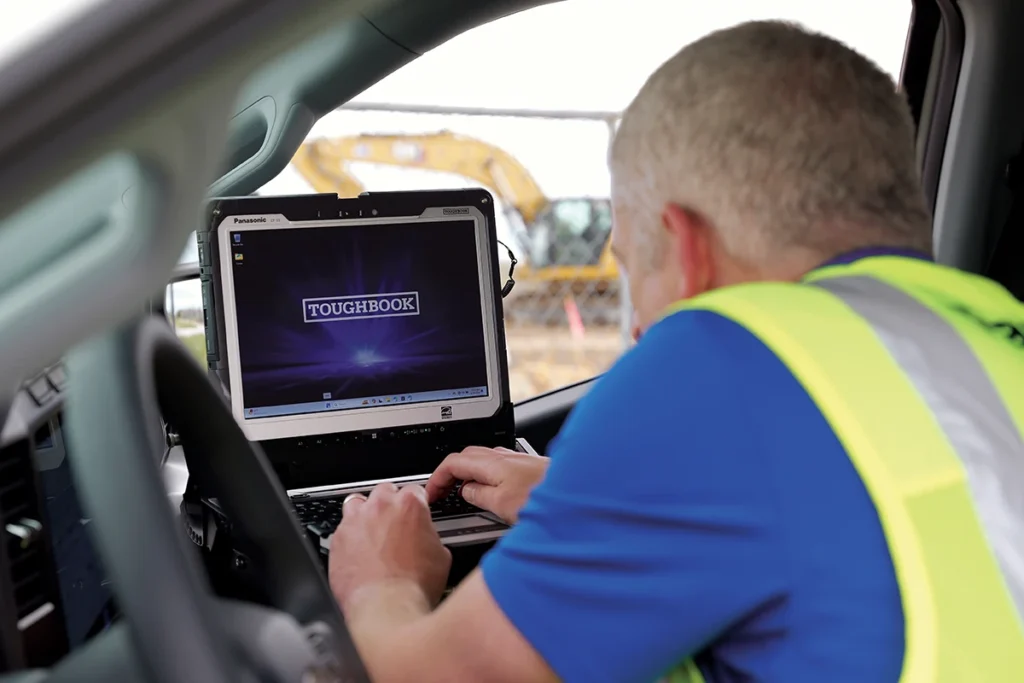
Rugged mobile computers can help mine operators meet the MSHA requirement and integrate new safety actions into their daily operations.
The rule, which MSHA began enforcing in July 2024, was created to help production operators and independent contractors meet safety objectives, including identifying and analyzing hazards, documenting close calls, mitigating risks associated with surface mobile equipment, and identifying and evaluating technologies to enhance safety.
The goal, of course, is for everyone to make it home safely every day. With the rule, operators must develop detailed procedures and schedules for regular maintenance and nonroutine repairs.
Paper-based system challenges
While MSHA’s safety program mandate marks progress for the mining industry, ensuring round-the-clock compliance presents challenges – particularly in documentation and recordkeeping.
Paper records are vulnerable to dirt and dust damage in mine environments. Paper records are also easily misplaced, delaying inspections and complicating internal audits.
Additionally, manual recordkeeping is time-consuming and inefficient. Locating and updating older documents requires substantial effort, which is especially problematic for large-scale operations.
This inefficiency makes it difficult to comply with MSHA’s new requirement and other rules that require documentation to be easily accessible to inspectors and miners’ representatives. Real-time electronic recordkeeping, however, gives mining operations a more versatile, reliable and time-saving approach.
Transitioning to digital
Pits and quarries are tough environments. The range of tasks, hazards, situations and environments that workers are exposed to is inherently risky, so it’s critical to be supported with the right tools for the job.
Rugged mobile computers deliver the performance and reliability companies need to overcome many of the challenges of traditional paper-based systems and realize transformative benefits in inspections, diagnostics, reporting and information sharing. Rugged mobile computer equipment can pass the tough mining environment test and withstand its extremes.
Digital solutions, including rugged mobile devices, provide a more dependable, efficient and accessible alternative for documenting safety programs, tracking machine health and maintaining compliance with new requirements. By centralizing all safety documentation, electronic recordkeeping ensures easier updates, storage and retrieval of important information.
Rugged mobile devices also enable operators to generate reports with speed and accuracy, reducing administrative burdens so personnel can spend less time on paperwork and more on operational tasks like monitoring equipment health, training workers and conducting proactive safety and pre-shift inspections.
The latest cloud-based mobile devices have advanced connectivity capabilities, including 4G, 5G and other industry-specific private LTE networks, so operators can retrieve safety documents in real time from any location. If documentation needs to be pulled from six months ago, operators can quickly access and share the requested records – no matter where they are in the field.
&uuid=(email))
Additional benefits
The transition from paper-based systems to the latest mobile solutions offers a host of additional benefits for miners and mine operators.
Unlike consumer-grade solutions, purpose-built, rugged solutions are designed to withstand harsh conditions. They come IP-rated and MIL-STD rugged, offering enterprise functionality such as glove-touch capabilities, hot-swappable batteries and multi-function connectivity. Their durability allows miners to perform tasks in even the most demanding conditions, ultimately boosting productivity and operational efficiency.
A further advantage of rugged mobile devices is that they significantly enhance communication and coordination across mining teams by centralizing essential information and tools. Even across large and remote mine sites, teams can collaborate with ease and receive instant hazard notifications. By enabling more efficient communication between team members, the devices make it easy to address issues proactively and maintain smooth, uninterrupted operations.
Laptops and other rugged mobile devices also enable miners and operators to transition to real-time diagnostics for powered haulage equipment and machinery. Operators can count on the devices to monitor equipment health, optimize maintenance schedules and maintain operational excellence.
Devices equipped with remote diagnostic capabilities can be used to detect early signs of mechanical failures, electrical problems or wear and tear, so operators can address issues before they lead to accidents or equipment breakdowns. The shift from reactive to preventive maintenance significantly reduces unplanned downtime and mitigates potential risks.
Pioneering a digitally enhanced future
As the mining sector continues to adapt to MSHA requirements, as well as other safety-related rules, transitioning to digital systems will be crucial for maintaining compliance and safeguarding workers.
By embracing rugged mobile devices, mine operators can simplify regulatory reporting, enhance real-time data access and streamline operations. Transitioning to the latest devices not only supports compliance, but it empowers operators to meet evolving challenges with greater agility and effectiveness.
SOURCES
Steve Fuller
Steve Fuller Company
positivesafetycoaching.com
Mine Safety & Health Administration
msha.gov
Michael Trafton
Panasonic Connect North America
connect.na.panasonic.com
The Pit & Quarry University Handbook is an educational resource that offers comprehensive lessons covering the entire aggregate production process from start to finish, highlighting new technologies and enhanced procedures within each branch/category of the aggregates industry.
FULL HANDBOOK
Chapter 1: Industry Overview
Chapter 2: Geology & Site Selection
Chapter 3: Drilling & Blasting
Chapter 4: Excavating & Loading
Chapter 5: Hauling
Chapter 6: Crushing & Hydraulic Breaking
Chapter 7: Screening
Chapter 8: Washing & Classifying
Chapter 9: Conveying & Material Handling
Chapter 10: Loadout & Weighing
Chapter 11: Safety & Health
PROMOTED PARTNERS