

FULL HANDBOOK
Chapter 1: Industry Overview
Chapter 2: Geology & Site Selection
Chapter 3: Drilling & Blasting
Chapter 4: Excavating & Loading
Chapter 5: Hauling
Chapter 6: Crushing & Hydraulic Breaking
Chapter 7: Screening
Chapter 8: Washing & Classifying
Chapter 9: Conveying & Material Handling
Chapter 10: Loadout & Weighing
Chapter 11: Safety & Health
Electrical
Humans can perceive most hazards before they cause an incident.
We hear loud noises, alarms, pressure releasing and binding belts. We see warning signs, dust clouds, trip hazards, poor housekeeping and unprotected edges. We smell chemicals like sulfur or volatile organic compounds that we need to stay away from.
Generally, we can sense danger, particularly if we know what to look for. But electrical hazards are not necessarily perceived by our senses. This is one reason why electricity is so dangerous.
Year after year, electrical citations remain in the top 20 most common MSHA violations.
Typical citations involve lack of labeling, lack of guarding conductors from damage, exposed conductors or missing knockouts. Daily mine inspections are the best way to control these deficiencies.
Merely being technically compliant is like getting a C-plus, but operators can do better. To go home safely every day, operators must nail down the fundamentals of electrical safety – without fail.
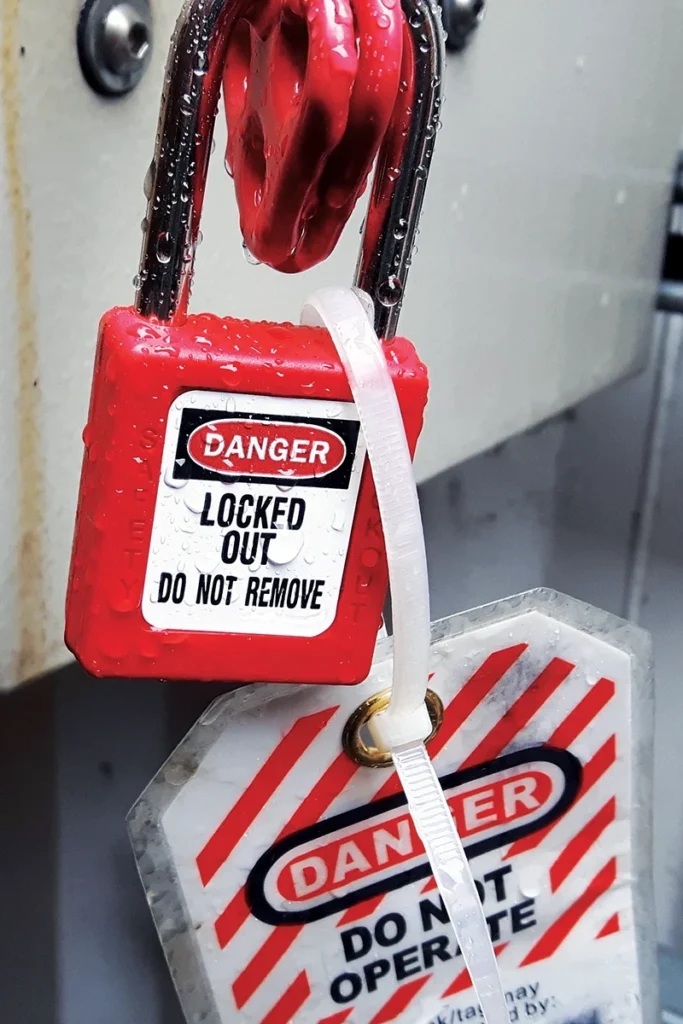
Here are four things your teams can commit to today to increase their personal safety as it relates to electrical hazards:
1. Follow company procedures. Established pits and quarries should have site-specific lockout/tagout programs. These tailored plans should outline exactly how to deenergize and safely work on components within the facility or property.
It’s critical to follow your company’s expectations. If you need clarification on company polices, contact a supervisor or safety liaison.
2. Overhead wire awareness. In February 2023, MSHA delivered an alert about three miners who were electrocuted after their trucks contacted overhead electrical conductors and they exited the truck.
On your site, you should alert drivers and workers about overhead electrical hazards by installing signage. Have a traffic flow plan, and keep vehicles away from overhead wires when possible. Avoid staging or parking vehicles, as well as equipment, under power lines. Never defeat a “body up” alarm or allow drivers to drive with their body up.
3. Never touch a downed wire. The idea of never touching a downed wire cannot be emphasized enough.
A downed wire does not mean a deenergized wire. Downed cable and phone wires can become energized simply because they come in contact with electrical wires. Similarly, broken conductors can become energized from generator back feeds.
So, just stay away from any downed wires and call 911 – or your local utility for non-emergencies. And if you’re in a vehicle or equipment that becomes entangled in wires, stay in the cab as long as you can safely do so, and call 911 if possible.
If you must exit the cab because of an immediate danger to your life or health (i.e., a last resort, like escaping a fire in a cab), jump as far from the cab as you can, land with both feet close together and shuffle your feet (to avoid step potential) until you are a school bus-length away from the wire.
4. General electrical safety. Don’t overlook the simple items.
- Keep electrical panels clear and accessible. That way, if you need to shut something off, you have unblocked access
- Label panels, breakers and devices. And replace labels if they fall off or become unreadable
- Do not work beyond your expertise. Contact a qualified in-house or external electrician if your system needs electrical modifications or repair
- “Test” or “try out.” If you are performing a lockout/tagout evolution, never forget the most important part: verify that your isolation plan is effective by testing for zero energy
- Temporary extension cords. Don’t let these become permanent. Temporary extension cords are needed in every industry, but they are not legal permanent installs. Permanent installs should be thought out, protected from wear and routed to not cause STF hazards. Overall, permanent installs are a safer solution than temporary ones.
&uuid=(email))
Electrical takeaways
Make sure you incorporate fundamental electrical safety into your daily plans and that you maintain tight tolerances with compliance. Uncontrolled electrical hazards are unforgiving, and by the time you realized you made a mistake, it is usually too late.
In other words: Stay vigilant.
PRO TIP
Design safer traffic flow: Use maps, signs and mirrors to keep pedestrians clear of vehicles.
Silica Controls
Silica, also known as respirable crystalline silica – or “quartz dust” – is an occupational hazard that can be generated when performing any activity disturbing content containing silica.
Long-term, uncontrolled exposure can cause silicosis and other respiratory diseases that are not reversible. These diseases can be fatal.
Many activities generate silica dust, including crushing, cutting, chipping, grinding, excavating and hauling materials that contain silica. To know if your organization has silica exposure, perform sampling so you know what you’re working with.
MSHA recently revised the regulations surrounding silica. Safety, legal and operational teams across the industry are creating plans to comply with the advanced expectations, including stringent sampling; tighter exposure limits (i.e., a 50 percent reduction); medical surveillance, if exposure limits are tripped; and an industry push toward engineering controls.
Any company crushing rock should have this on their radar and be poised to act. These plans will take time to create, but they will help to reduce exposure and increase total worker health.
In the meantime, teams should assess their existing controls.
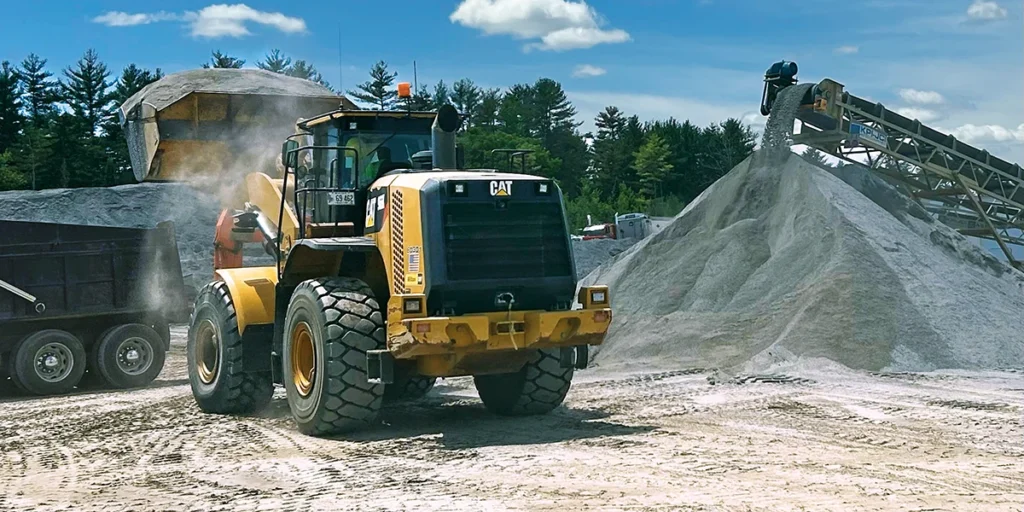
Managing exposure
One way to assess controls is to refer to the hierarchy of controls. Controls near the top of this pyramid (i.e., elimination) are more effective than the controls near the bottom (i.e., PPE).
Here are two engineering controls that are incredibly effective when combined:
- Wet methods. Using water to knock down dust is extremely effective. According to Occupational Knowledge International, wet methods are 60 to 86 percent effective.
- Isolating workers. Staying out of dusty areas can be the most effective, potentially eliminating exposure altogether. Enclosed cabs with filtration systems, staying in the control house during crushing operations, or simply being cognizant of positioning can help drastically.
These two items should be front and center as you develop plans to comply with MSHA regulations. If you can manage the exposure through these methods, you may be able to avoid respirators and medical surveillance.
Another tip for organizations is if they have not added silica awareness to their MSHA refresher training, they should consider doing so.
Regardless of dust’s silica content, you don’t want to be breathing in anything other than clean air.
Heat Stress
Pit and quarries are not known for their air conditioning. In the summer months, the working environment can be very trying at aggregate operations – not to mention the fact that peak productivity usually happens in the July to August timeframe.
What all this means is we must consider a new hazard during these months: the heat.
What is heat stress?
Quite simply, when your body cannot effectively regulate its temperature, you are at risk for having heat stress symptoms.
Your body’s core (i.e., deep muscles, organs) is regulated by your body’s shell (i.e., skin, surface muscles, hands, feet). When your body gets out of regulation due to heat, you can experience heat cramps, heat exhaustion, dehydration or several other heat stress-related health concerns.
When we think about heat, we often think about the ambient air temperature. But in our pits and quarries, we have several other heat sources to contend with.
Some of these heat sources could be retained heat from the rock or earth, solar heat in cabs, heat from machinery and equipment, and other items that may increase temperatures.
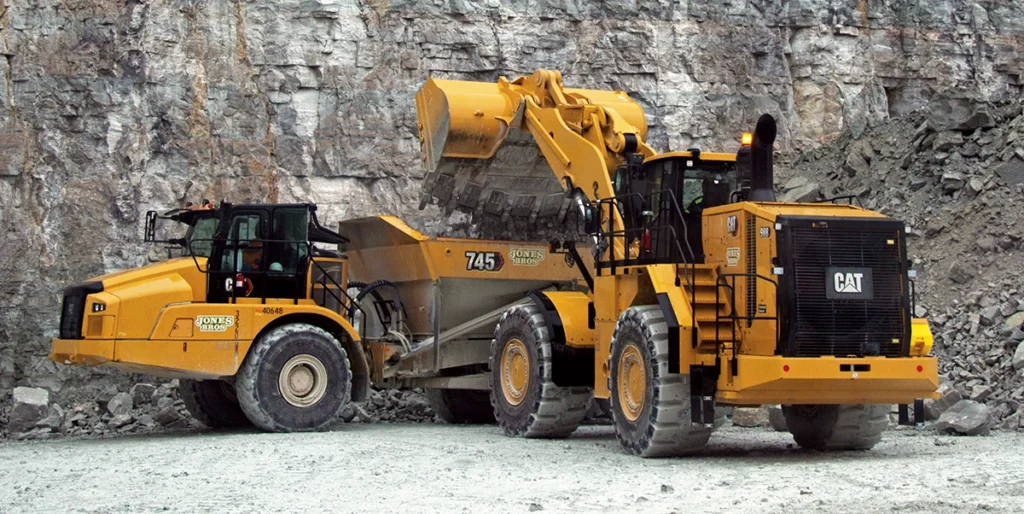
Controlling heat stress
Additionally, you can use the hierarchy of controls framework to consider ways to manage heat stress hazards.
Engineering controls such as air conditioning, canopies for shade and ventilation can be implemented. Also, administrative controls can be applied – including personnel rotation, pacing and performing strenuous tasks earlier or later.
Hydration is another administrative control and should be a prominent one that’s pushed across your organization during – and before – anticipated heat waves.
As your organization contends with managing heat stress, serious consideration should also be given to clothing, PPE and acclimatization. Regardless of how your organization decides to manage heat stress, the strategy must be communicated to the field – either through training, toolbox talks or another means.
An important aspect of the communication to the field is to let them know what to do if a co-worker experiences signs of heat stress. Heat stress is not to be taken lightly.
Aside from minor signs of heat stress, I recommend medical evaluation from a professional if anyone experiences dizziness, excessive sweating, nausea, confusion or any other concerning symptoms.
PRO TIP
Plan for heat stress. Rotate crews, push hydration and adjust schedules during heat waves.
Impacts to safety
Mental fatigue is perhaps the single-largest thing that occurs when somebody experiences heat stress.
A long, hot day can be draining and increase the likelihood of fatigue. This results in diminished reasoning and functional decision-making.
In fact, on hot days, you may see incidents manifest that were the result of heat – yet not at first glance. For example, an STF event during a heat wave may seem like a simple STF case, but it could very well have been exacerbated by the heat.
Other heat-related impacts are sunburn, dehydration, fogged or sweaty eyewear, increased exposure to silica and compromised eye wash stations.
An increased silica exposure can occur simply because of an increased need to roll down windows in mobile equipment, allowing ambient air into the cab. If mobile equipment is equipped with AC, don’t forget to perform proper maintenance on it so AC continues to be functional.
Additionally, watch out for your plumbed eye wash stations. Some installs have metal piping that may be directly exposed to the hot sun, creating potentially scalding water within the eye wash system. These installs should be assessed and addressed if needed.
Fatigue Management
Seasonal businesses face a unique challenge – a year’s worth of work is often done in a span of six to seven months.
Because of this dynamic, organizations contend with turnover, time pressure, high temperatures at the height of the season and heightened fatigue.
These factors can contribute to conditions that increase the risk of human error and unsafe behavior.
SAFETY TIP
Rest prevents mistakes: Long hours and fatigue are a recipe for incidents.
What is fatigue?
We all know what fatigue feels like. Your body has either been up too long or worked too hard – or a combination of both.
Fatigue worsens when this pattern continues over time. If not controlled, it can impact one’s physical, cognitive and emotional abilities.
According to the Centers for Disease Control & Prevention, fatigue also manifests through slow reaction times, reduced attention and concentration, and impaired judgment.
The effects of fatigue can manifest in a variety of incidents. Consider one real-world event where a person fell backward – from ground level – onto a square, metal fuel container. The fall resulted in fractured ribs.
At first glance, the event was relatively innocuous – one of the slip/trip/fall variety. But people don’t fall backward easily – especially from ground level. An investigation found that the individual had logged more than 100 hours that week. Throw stress, heat, staffing concerns and other curveballs into the mix, and you have a recipe for an incident.

Managing fatigue
Following this instance, members of the executive management team looked at themselves and came up with a better process to monitor employee hours across their sites. They developed a color-coded report showing how hours worked was distributed each week:
- Yellow for employees working more than 50 hours
- Orange for those over 60 hours
- Red for those over 70 hours
The visual helped the team identify trends early and intervene. “One-off” weeks where long hours were worked still occurred. But trends were noticed quicker, and significant events from fatigue were reduced dramatically.
Managers have an obligation to their teams to act as outlined above. Still, on-the-ground employees also have responsibilities. Here are a few things all employees should keep in mind:
- Know your limits. Fatigue is a personal condition. If you’re burning the candle at both ends by overdoing it at home as well, it’s possible to be fatigued at work even if you’re only working 40 hours a week.
- Rest. In the heat of the summer and at the peak of the season, employees must prioritize rest when they can. Getting a full night’s sleep is very helpful to decision-making – and your personal safety.
- Breaks. Motors can run until they break down, but people can’t. Good supervisors will make sure they don’t allow their team members to burn out.
- Planning. When an operations team is planning activities like maintenance or construction, they should be very cognizant of fatigue issues. Proactively planning would mean considering the hours it will take to accomplish activities and then seeing how that impacts people in the field. This is where management should consider staffing levels and workload.
- Hydrate. As covered earlier in this chapter, dehydration and heat stress can greatly impact fatigue.
- Stress. Everyone has some level of stress, but chronic or serious stress is very tiring and directly correlates with fatigue level.
&uuid=(email))
Other fatigue concerns
Fatigue can pop up in any aspect of a company.
Long days outside will likely present fatigue issues for those working in the field, but be aware that other departments in an organization can contend with the same challenges during the season. This includes mechanics, dispatchers, administrators, management and others, as no one is immune to fatigue issues.
To all those supervisors and team leaders reading this: Watch your teams, monitor their hours worked and plan out activities to minimize fatigue’s effects – particularly at the height of the season.
FULL HANDBOOK
Chapter 1: Industry Overview
Chapter 2: Geology & Site Selection
Chapter 3: Drilling & Blasting
Chapter 4: Excavating & Loading
Chapter 5: Hauling
Chapter 6: Crushing & Hydraulic Breaking
Chapter 7: Screening
Chapter 8: Washing & Classifying
Chapter 9: Conveying & Material Handling
Chapter 10: Loadout & Weighing
Chapter 11: Safety & Health
Use the page numbers to continue reading, or select a section / chapter above.