

FULL HANDBOOK
Chapter 1: Industry Overview
Chapter 2: Geology & Site Selection
Chapter 3: Drilling & Blasting
Chapter 4: Excavating & Loading
Chapter 5: Hauling
Chapter 6: Crushing & Hydraulic Breaking
Chapter 7: Screening
Chapter 8: Washing & Classifying
Chapter 9: Conveying & Material Handling
Chapter 10: Loadout & Weighing
Chapter 11: Safety & Health
Vehicle Pedestrian Segregation
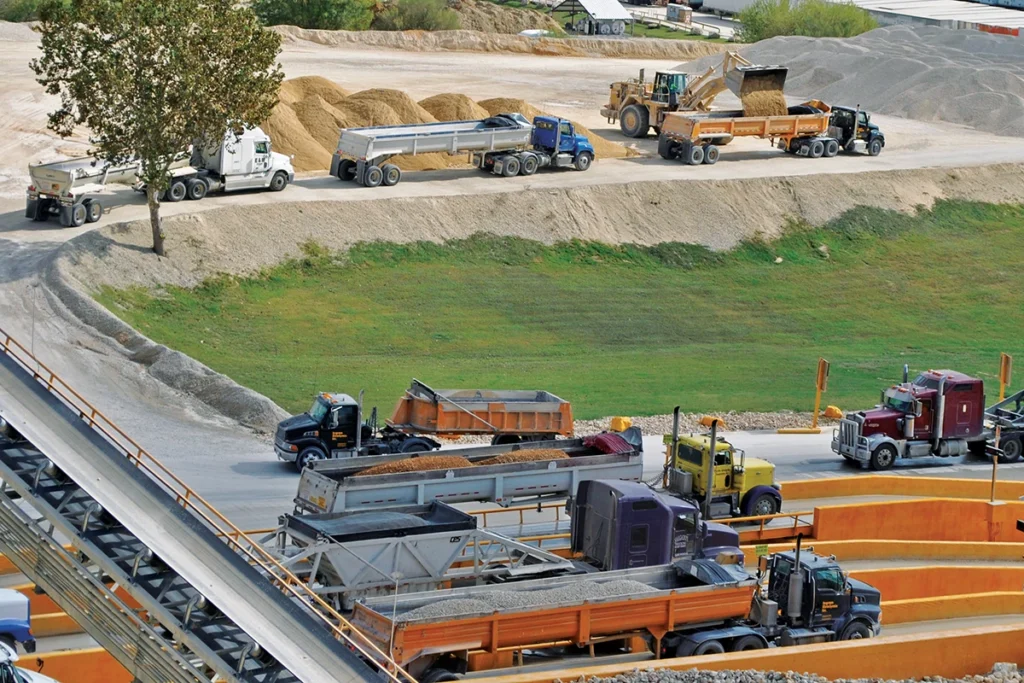
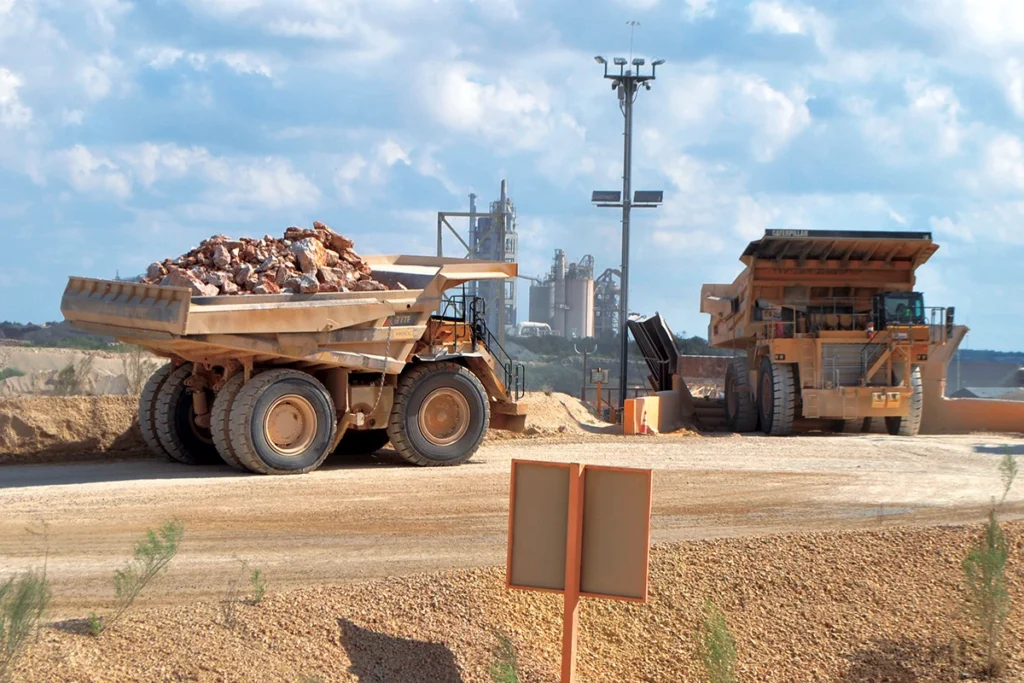
Loaders, pickup trucks, scissor lifts, forklifts, cranes, customer trucks and dump bodies – even trains – are some of the pieces of mobile equipment most of us see driving through pits and quarries. Unfortunately, the potential for a safety event increases with all this traffic.
The most fundamental item to help control site traffic is a control plan – one that’s customized for your facility. A traffic control plan shows the intended flow of traffic for a site.
This can be featured on a printed handout for customers so they know where piles are and where to go. The most effective traffic control plans use visuals such as signage, maps and photos to help people understand.
A crucial next step is to analyze how you’ll keep pedestrians segregated from all moving vehicles and equipment. In the construction world, this is called an “internal traffic control plan,” although it is commonly referred to as a vehicle pedestrian segregation (VPS) plan when used in pits and quarries.
The goal of a VPS is to identify anticipated travel paths for workers, visitors and contractors, making those as safe as possible. Here are a few elements that are commonly considered in these plans:
Things to consider
- Parking. Where will workers and other visitors park when on-site? Bonus points are awarded if you can eliminate backing in the process (i.e., pull-through parking). Minimizing backing significantly reduces incident risk.
- Walking paths. How do people get from parking areas to the scale house, shops, the plant and other areas? Some sites put out cones, chains or other visuals to keep people on intended travel paths, keeping them fully separated from site traffic.
- Cell phone area. A great practice is to prohibit cell phone use while people are walking around a site. Some sites post “cell phone area” signs in dedicated spots to help with this. Full attention is required when walking around busy sites.
- High-visibility clothing. Many companies require retroreflective traffic vests for employees, particularly when walking around sites. This is a good practice and should be analyzed by sites. Consider at least high-visibility clothing for day operations, and strongly consider retroreflective traffic vests if working in low-light conditions.
- Fixed mirrors. While it’s ideal to not need mirrors, visibility is sometimes impacted by items we cannot move. Adding mirrors and signage can help.
- Signage. Think about the last time you went to the airport. Remember the signage to the parking areas? Remember the signage to get to your airline, then to security and then your gate? Airports have done a great job making this very visible and easy to follow. Apply the same logic to your site. Do you have the right traffic signs? Do you have speed limit signs?
- Eye contact. This is a very simple one: Communicate to your teams that they should never assume someone operating a piece of equipment or vehicle can see them. Many vehicles and pieces of mobile equipment have blind spots. It’s important to ensure the pedestrian makes eye contact with the operator before walking near moving equipment.
&uuid=(email))
Food for thought
These are the fundamental elements to consider when creating or reviewing your site’s VPS plan.
Still, for these plans to be effective, they must be communicated appropriately. Some sites do this well, communicating at least annually to their employees and their anticipated contractors.
Some sites even incorporate their plans into a customer appreciation week, handing out traffic control plans and swag to customers.
One of the most unforgiving hazards on sites is moving equipment. Keeping people separate from this hazard should be a fundamental goal for any pit and quarry.
Inspecting Mobile Equipment
It’s hard to imagine a pit or quarry functioning without mobile equipment. There is a slew of compliance items that go along with each piece of equipment. For now, though, it’s important to go over the fundamental concerns to ensure teams get home safely every day.
Accessing mobile equipment
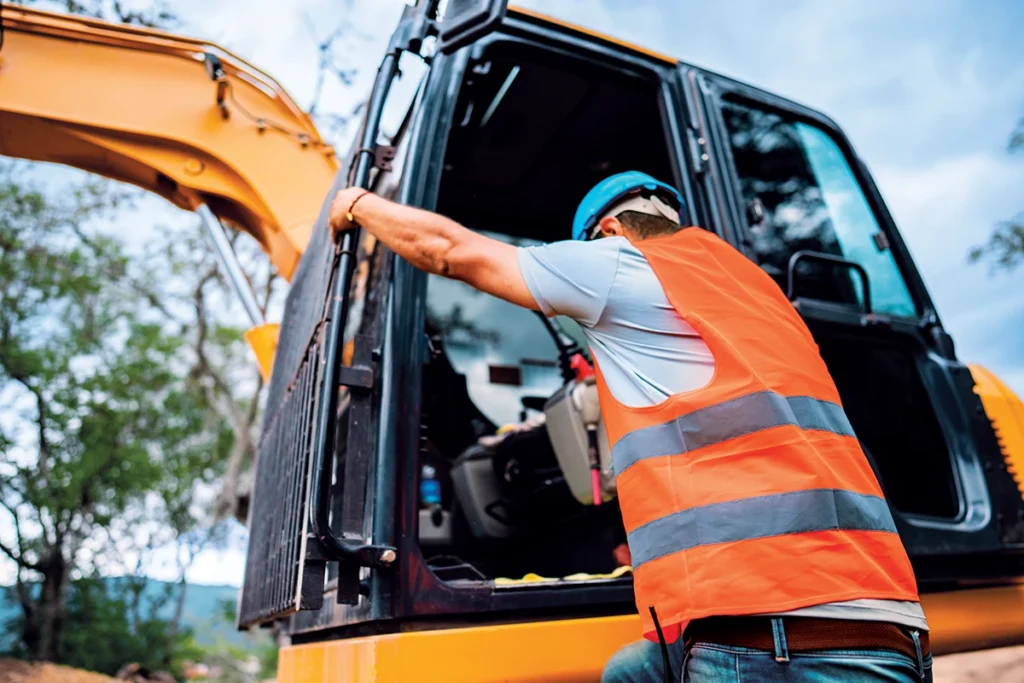
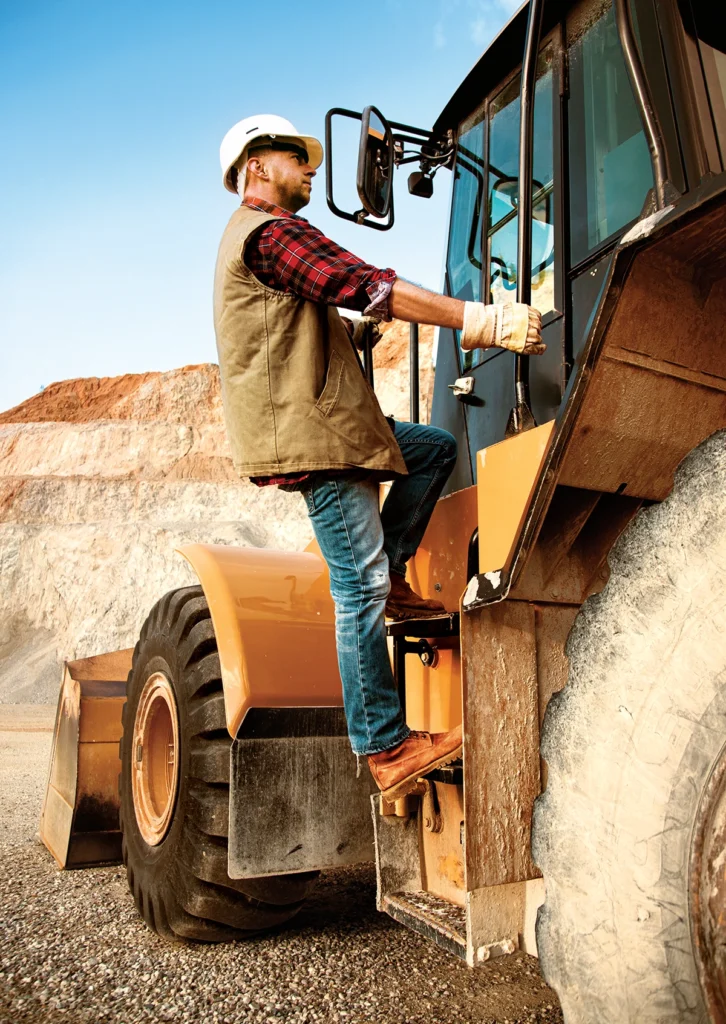
Getting on and off equipment will always be a safety concern. To get from the ground to the cab usually requires going up fixed ladders or stairs that manufacturers have built into equipment. It seems like common sense, but it’s important to train people how to get onto the pieces of mobile equipment they are using.
Some injuries are linked to accessing or dismounting mobile equipment, with the final step being the most common point of incident. A solution here is to train on three points of contact twice a year, mark where handholds should be, use grip tape and even measure the forces upon the knee so they can be reduced. This approach can drastically reduce injuries caused by accessing mobile equipment.
Being seen
In some instances, mobile equipment operators may have limited visibility. Blind spots are common, so you’ll want to ensure you’re visible if you are on ground level.
Here are some tips to consider:
- Avoid working around active moving equipment
- Mobile equipment operators have the right of way
- If working around active moving equipment, be seen
- Don’t assume the operator sees you – make eye contact
- Wear high-visibility clothing – retroreflective clothing is the most visible
Before operating mobile equipment
One of the frequent citations MSHA issues is for operating mobile equipment – or leaving it in service – when deficiencies exist. Most commonly, these citations center around an e-brake that won’t hold. These citations are easy to avoid, though.
Before using any piece of equipment, it’s your responsibility to ensure it’s in good working condition and safe to use. Here are some things to look for:
- Make sure you’re trained and authorized to use the mobile equipment
- Perform an appropriate inspection prior to use
- If a fire extinguisher should be present, make sure it’s in the designated spot and within its extension window
- Make sure everything functions as it should, and no operational deficiencies exist
If something isn’t right, don’t use the equipment. To avoid MSHA citations, tag equipment as “out of service” until deficiencies are addressed.
While using mobile equipment
Once you ensure mobile equipment is safe for use, here are a few tips to keep you and your coworkers safe:
- See the big picture
- Keep your eyes moving. Know your surroundings. Stop moving if you lose sight of people or objects around you. Get out and look around as much as needed
- Wear your seatbelt (or fall protection, if in an aerial lift)
- You are much safer contained within a cab than not
- Use a spotter, if needed
- If you are navigating tight spaces or you have limited visibility, get a spotter
- If near overhead electrical wires, use a spotter to ensure you maintain sufficient distance from conductors – at least 10 ft. of clearance for distribution electrical wires. More clearance may be required if large transmission wires are on your site – 13 ft. for 115 kilovolt, 20 ft. for 345 kilovolt)
- Pay attention to soil stability and angle of operation, and remain within tolerances
PRO TIP
Never shortcut fall protection: Guardrails, harnesses and lifts only work if used properly.
Thoughtful and sensible operation will keep you and your team safe. Here are some questions to consider:
- Is your team wearing high-visibility clothing when near mobile equipment?
- Is your mobile equipment inspection process tight?
- Do you take equipment out of service when deficiencies are noted?
- Do your team, visitors and contractors know that mobile equipment has the right of way?
Slips, Trips & Falls
Slip, trip and fall (STF) events continue to represent most recordable injuries in a variety of industries.
A common misconception is that a simple trip event won’t result in a major injury. This could not be further from the truth.
Ground-level STF events can result in serious injuries. Falls from greater heights can also be catastrophic, including ones from ladders, aerial lifts and fixed platforms, as well as when accessing and egressing mobile equipment.
STF events are entirely preventable. With some foresight in assessing risk and taking appropriate actions, STF events can be eliminated. Some of the things you can review with your team are housekeeping, guardrails, three points of contact, footwear, procurement assessments and “ladders last.”
Housekeeping
The intentional act of keeping things orderly and organized will result in a habit of walkways and work areas being clear of trip hazards. This goes for the plant, scale house and any facilities supporting the operation.
One thing to consider is managing material spillage from conveyor belts. Left unmanaged, spillage will create STF hazards, and it may negate the effectiveness of guardrail systems.
Guardrails
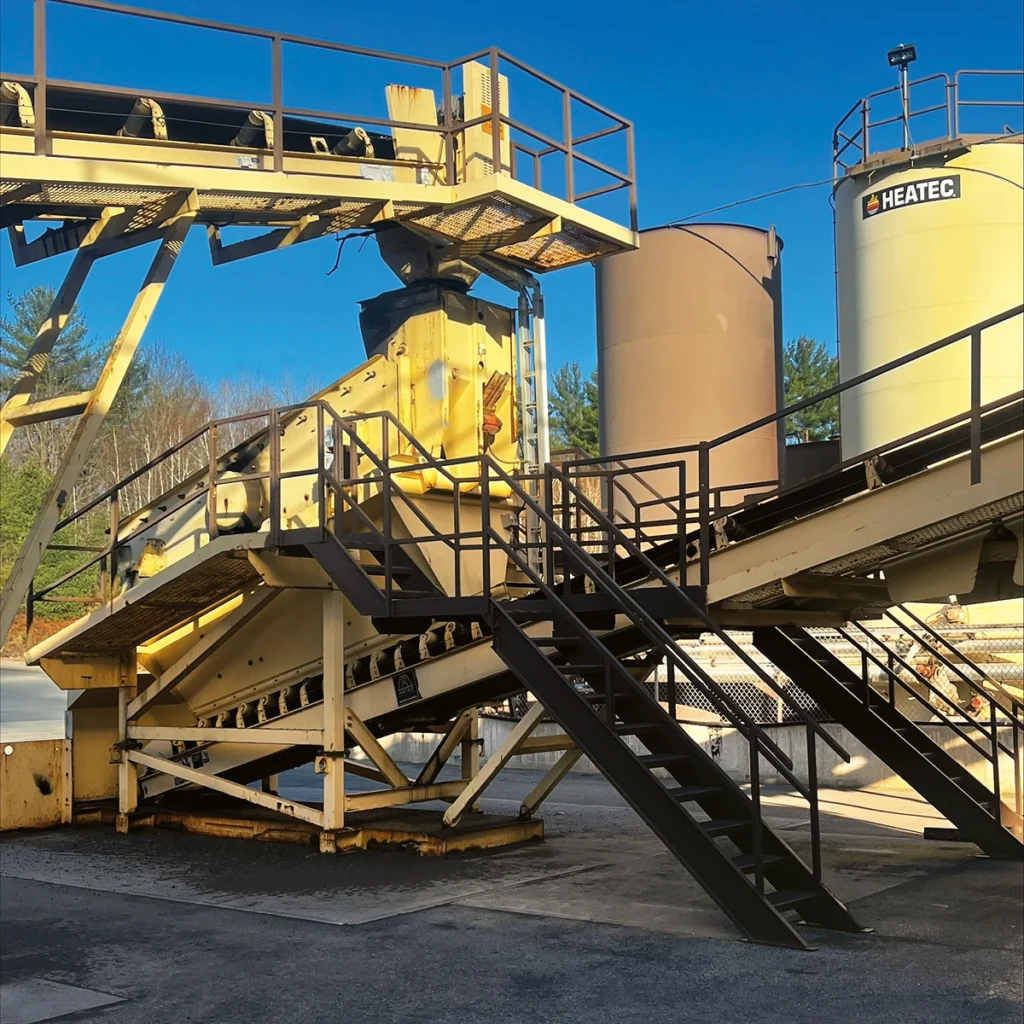
Relative to STF events, guardrails must be intact. Also, using ladders near a guardrail will likely make it ineffective. You may need additional fall protection.
Three points of contact
When climbing ladders – fixed or portable – or accessing mobile equipment, you always want to maintain three points of contact. This means your hands are free to support you. It may also mean hoisting materials to the level you’re working on rather than carrying them.
In addition to maintaining three points of contact, you want to control your descent speed and force in a controlled manner. Incidents can occur where three points of contact were maintained, yet team members still came down too hard and caused damage to knees.
Footwear
Additionally, footwear should be in good condition, supportive and appropriate for the work. Those located in a northern climate may need slip-resistant footwear to contend with snow-removal activities.
For those contending with snow and ice, a best practice is to manage the terrain by removing snow and treating surfaces with sand or salt. Footwear can help, but proper management of ground conditions is the most effective.
SAFETY TIP
Check footwear condition: Good tread and support prevent slips, trips and falls.
&uuid=(email))
Procurement assessments
As you purchase items or invest in capital expenditures, you should always assess for STF hazards and control them early. Mobile equipment, plant improvements and construction, and any other “thing” you may bring into your location should be assessed.
It is often possible to engineer out the need to access heights in the first place – for example, piping in lubrication points so they can be managed at ground level.
‘Ladders last’
Many emergency department doctors stay busy because of injuries associated with ladders. Here are a few things you can do to avoid these sorts of visits:
- Attempt to eliminate the need to access heights with engineering controls
- Replace ladders with stairs
- Use aerial lifts if possible (and if trained)
- If ladders are still needed, secure them, if possible, by ratcheting them to structural steel and maintaining three points of contact
FULL HANDBOOK
Chapter 1: Industry Overview
Chapter 2: Geology & Site Selection
Chapter 3: Drilling & Blasting
Chapter 4: Excavating & Loading
Chapter 5: Hauling
Chapter 6: Crushing & Hydraulic Breaking
Chapter 7: Screening
Chapter 8: Washing & Classifying
Chapter 9: Conveying & Material Handling
Chapter 10: Loadout & Weighing
Chapter 11: Safety & Health
Use the page numbers to continue reading, or select a section / chapter above.