

FULL HANDBOOK
Chapter 1: Industry Overview
Chapter 2: Geology & Site Selection
Chapter 3: Drilling & Blasting
Chapter 4: Excavating & Loading
Chapter 5: Hauling
Chapter 6: Crushing & Hydraulic Breaking
Chapter 7: Screening
Chapter 8: Washing & Classifying
Chapter 9: Conveying & Material Handling
Chapter 10: Loadout & Weighing
Chapter 11: Safety & Health
Motors
Industrial electric motors are critical to the success of large conveyor systems – and motor maintenance is critical to prolong the life of conveyors.
In fact, initially selecting the correct motor can significantly change a conveyor maintenance routine.
By understanding motor torque requirements and selecting the right mechanical features, it is possible to choose a motor that will last many years beyond a warranty period with minimal maintenance.
The primary function of a motor is to produce torque, which is a function of power and speed. The National Electrical Manufacturers Association (NEMA) has design classification standards that identify the performance of different motors. These classifications are known as NEMA design curves, and there are typically four of them: A, B, C and D.
Each curve specifies the standard torque required to start, accelerate and operate different loads. NEMA design B motors are considered standard. They’re used for a variety of applications with slightly less starting current, where large startup torque is not required and in instances where the motor does not need to support a large load.
While NEMA design B covers about 70 percent of all motors, other torque designs are sometimes necessary.
&uuid=(email))
NEMA design A is similar to B but with a higher starting current and torque. Design A motors are excellent for use with variable frequency drives (VFDs) because high-breakdown torque occurs when a motor is nearing full load and the higher inrush at startup does not impact the performance.
NEMA design C and D motors are considered high-starting torque motors. These are used when more torque is needed earlier in the process in order to start a very heavy load.
The greatest difference between NEMA design C and D is the amount of slip in the final speed of the motor. The slip of the motor directly impacts the full load speed of the motor. A four-pole motor without slip would run at 1,800 rpm. That same motor with more slip would run at 1,725 rpm – or less slip would be 1,780 rpm.
Most manufacturers provide a variety of stock motors designed for each of the different NEMA design curves.
There are points of a motor curve that are critical when comparing the design curves:
- Locked rotor is also known as starting torque
- Pull-up torque is the minimum torque produced by a motor during startup
- Breakdown torque is the maximum torque a motor will produce during startup
- Full-load torque is the torque a motor will produce at rated power and speed
The amount of torque available at different speeds during the startup process is important because of the demand of the application.
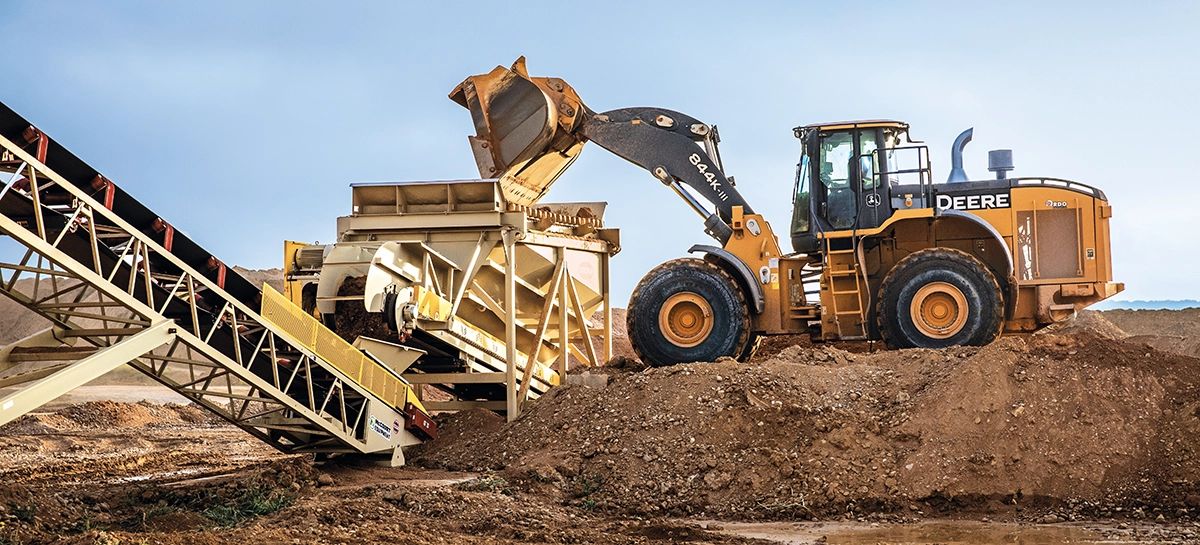
Conveyors are constant torque-load applications, meaning the torque they require is constant after startup. Still, conveyors need additional torque at startup before they can achieve constant torque operation. If a conveyor requires more torque than a motor can provide before startup, other devices such as VFDs and fluid couplings allow for the full use of breakdown torque.
One phenomenon that could negatively impact the load starting is low voltage. If an input power voltage drop occurs, the torque produced can be significantly reduced.
When considering if the motor torque is adequate to start the load, starting voltage must be considered. The relationship between voltage and torque is a square function. As an example, if the voltage drops to 85 percent during startup, the motor will develop about 72 percent of the torque it would at full voltage. So, be certain to evaluate motor starting torques versus load in worst-case conditions.
Service factor, meanwhile, is the amount of overload a motor will handle within temperature limits without overheating. It may seem like a higher service factor is better, but this is not always the case.
Buying an oversized motor when it will not perform at maximum capacity could result in wasted money and space. Ideally, a motor should continuously operate at 80 to 85 percent of nameplate power to maximize efficiency.
As an example, motors typically reach peak efficiency at 75 to 100 percent of full load. To maximize this efficiency, an application should utilize 80 to 85 percent of the motor nameplate horsepower.
Aligning the torque produced by the motor with the application demand torque will allow the motor to run efficiently. This means if the application requires 250 ft.-lbs. of torque to keep the load moving, users should calculate the ideal nameplate horsepower to prevent over- or undersizing the motor:
- Horsepower = torque x speed / constant 5252
- Horsepower = 250 ft.-lbs. x 1,750 rpm / 5252 = 83 ideal nameplate hp
In this case, because 83 hp does not exist in standard motor offerings, select either 75 hp, 100 hp, 125 hp, 150 hp or another offering. Users often think oversizing is better, but this isn’t always the case.
If only 83 hp is required to run the load and the conveyor is run by a 150-hp motor, then the motor is mathematically running at 55 percent load. And the motor, then, operates at less-than-optimal efficiency.
In the example, the target motor should be 100 hp. This will run at 83 percent load and with the motor at an optimal efficiency.
Today, every motor has a nameplate service factor. This value is the extra allowable intermittent overload, meaning a 100-hp motor with 1.15 service factor will be sufficient. Keep in mind, though, that overheating can occur. The nameplate service factor is built-in protection for a specific motor.
Also, remember that when a motor is overloaded, heat is produced and a motor will begin to break down. Exceeding the motor nameplate power continuously can result in equipment damage and additional expense that is unnecessary.
A delicate balance exists between the power needed on a continuous basis versus how much inefficiency or overloading may occur with a system. Relying on service factor capabilities for carrying overloads on a continuous basis is not recommended.
Recommended service factors can also vary depending on the type of motor. It is not a requirement to add service factor to a nameplate if the motor does not have the capacity to exceed 1.0 service factor. This can apply to motors used in hazardous locations that are not recommended to be used over the standard 1.0 service factor.
The type of operating environment must be considered when selecting a motor, as well.
Will the motor operate outdoors? Be exposed to weather and temperature changes? Will dust be present? Will the motor need to withstand a beating from rocks falling onto the motor?
Mechanical features can extend operating life by protecting the motor from the environment in which it operates. While there is no industry standard for “heavy duty” or “severe duty,” some manufacturers loosely use these phrases to cover entire families of products. Looking carefully at each feature can make a difference in overall cost and motor performance.
Sealing and bearing design, frame material, cooling systems, insulation and conduit box protection, rotor balancing and other aspects of a motor can make a difference in motor performance.
Bearings are a critical component within a motor, and they’re often the reason for premature motor failure.
Bearings have several important functions, from supporting the rotor of the motor and driven equipment, to helping to reduce heat generated throughout the motor. Depending on the conveyor, going from a traditional bearing to an oversized ball bearing – and even to roller bearing designs for large radial loads – can help with motor performance in high-torque applications.
Another phenomenon with motors and VFDs is shaft currents. Simply put, current needs to find grounding. If a motor isn’t grounded properly, it is common for a current to travel through the shaft and, potentially, damage bearings.
When shaft currents constantly travel through bearings, small indentations are made in the bearing raceways. This is called “brunnelling,” which is not much different than the rumble strips on the shoulder of the interstate.
Over time, these marks can result in premature bearing failure. To protect the motor bearings, upgrade and use insulated bearings or other shaft-grounding devices.
Additionally, multiple seal options are available throughout the motor industry. Some are patented designs that positively lubricate bearings to extend motor bearing life, while others are maintenance-free and sealed for life.
From rolled steel to aluminum and stainless steel to cast iron, there are many material types that can be used for motor frames.
Most motors used in heavy-duty conveyors are made of cast iron. Cast iron is not only used for the frame itself, but also for end bells, conduit boxes and fan covers – with each having specific purposes in the overall design and motor life.
Does the motor weight matter? If yes, weight can be reduced by selecting alternate materials for components. If the motor weight is irrelevant, selecting all-cast-iron construction will help the motor withstand the beating it may take in severe-duty operations.
Consider, too, that optional coatings can be added to extend the life of a motor frame. In some cases, these come at a large expense and may not provide adequate payback. If a motor operates in a high-moisture environment or is in an extremely corrosive application, epoxy or C3 paint may provide additional life.
When a motor is energized, heat is created. A motor design must take this into account and be able to dissipate heat.
Totally-enclosed-fan-cooled motors are most common due to exposure to contaminants such as dust and water. These motors feature a fan on the opposite drive end, which rotates with the shaft and results in air being pushed over the housing and between the fins.
Motor fins can help dissipate heat on cast-iron motors. For that reason, it is important to keep the exterior of a motor free from contaminants to allow it to run cooler. This, in turn, will extend its operating life.
&uuid=(email))
Finally
Conveyor systems are the backbone of material handling in the aggregate industry, automating the movement of stone, sand and gravel while reducing the need for manual labor or heavy equipment.
From feed conveyors that initiate the material handling process to overland conveyors that transport material across long distances, each type of conveyor plays a vital role in ensuring efficient, cost-effective operation.
By selecting the right conveyor systems for your operation, you can improve productivity, reduce costs and enhance the overall efficiency of your material handling processes. Whether moving material across a site or stockpiling it for future use, conveyors are indispensable tools for aggregate producers.
As technology continues to advance, producers can expect further improvements in conveyor systems, making them even more integral to successful aggregate production.
SOURCES
ABB
abb.com
Douglas Manufacturing Co.
douglasmanufacturing.com
Eriez
eriez.com
Martin Engineering
martin-eng.com
Masaba
masabainc.com
PPI (Precision Pulley & Idler)
ppi-global.com
Superior Industries
superior-ind.com
FULL HANDBOOK
Chapter 1: Industry Overview
Chapter 2: Geology & Site Selection
Chapter 3: Drilling & Blasting
Chapter 4: Excavating & Loading
Chapter 5: Hauling
Chapter 6: Crushing & Hydraulic Breaking
Chapter 7: Screening
Chapter 8: Washing & Classifying
Chapter 9: Conveying & Material Handling
Chapter 10: Loadout & Weighing
Chapter 11: Safety & Health
PROMOTED PARTNERS