
FULL HANDBOOK
Chapter 1: Industry Overview
Chapter 2: Geology & Site Selection
Chapter 3: Drilling & Blasting
Chapter 4: Excavating & Loading
Chapter 5: Hauling
Chapter 6: Crushing & Hydraulic Breaking
Chapter 7: Screening
Chapter 8: Washing & Classifying
Chapter 9: Conveying & Material Handling
Chapter 10: Loadout & Weighing
Chapter 11: Safety & Health
Digital Loadout & Ticketing
Aggregate operations are undergoing a digital transformation as producers adopt technologies that automate manual processes, improve communication and streamline collaboration. Digital tools are reshaping how quarries manage loadout, weighing and transportation, driving improvements in productivity, accuracy and customer service
Automating site operations
Traditionally, truck drivers checked in at a weighbridge with scale operators or dispatchers. Vehicle numbers were entered manually, and dispatchers assigned loads. Drivers then received instructions before proceeding into the quarry.
Automated identification systems now streamline this process by guiding drivers through check-in without leaving their trucks. These systems improve efficiency and safety while reducing face-to-face interactions.
Third-party haulers, however, introduce complexity. Quarry personnel may not know in advance which broker trucks will arrive or what orders they will handle. This requires manual association of vehicles and orders at the scale house, slowing operations.
To address this, ticketing and dispatching software can be integrated with truck management solutions. With this setup, brokers provide advance notice of vehicle assignments, and orders are electronically linked to trucks. Drivers can then arrive preassigned, receive tickets digitally and remain in their cabs throughout the process.
Once loaded, trucks proceed to the scale house. A connected digital system automatically links scale readings to the correct order, eliminates ticket adjustments and can push tickets directly to drivers’ mobile devices. Invoicing is also automated, with accurate records available immediately.
SAFETY TIP
Keep drivers in cabs: Reduce pedestrian traffic near scales during weighments.
&uuid=(email))
Improving visibility in material transportation
Truck management solutions help optimize both company-owned and third-party hauling fleets. They provide up-to-date rosters of available trucks and drivers, reduce idle time and help producers respond quickly to high-demand periods.
Digital ticketing addresses longstanding challenges with paper tickets, which can be lost, misfiled or manipulated. Cloud-based systems capture tickets electronically – often using optical character recognition – and store them securely. This ensures accurate quantities, prevents fraud and allows invoices to be generated quickly.
With digital systems, ticket data flows automatically into accounting, eliminating manual entry and reducing errors. Invoices can be generated instantly, delivered directly to customer inboxes or exported in preferred formats.

Smarter dispatching and monitoring
Dispatching platforms allow producers to optimize truck use, reducing empty runs and minimizing wait times. Geofences around loading and unloading points track cycle times, helping dispatchers stagger truck arrivals and monitor on-site efficiency.
These systems also improve payroll accuracy, as time records are verified against GPS data. Dispatchers can communicate exact delivery locations, provide hazard updates and adjust assignments through mobile apps.
Meanwhile, managers gain real-time visibility through dashboards and heatmaps. They can monitor truck movements, track production and assess loadout efficiency across jobs, enabling better decision-making and faster responses to issues.
PRO TIP
Leverage geofences: Monitor cycle times and stagger arrivals for smoother flow.
Why digital tools matter
Labor shortages, paper-based processes and poor communication often limit productivity in loadout and weighing. Digital solutions connect the entire cycle – from order to invoice – reducing errors, improving safety and creating a more flexible, responsive operation.
On-Road Hauling
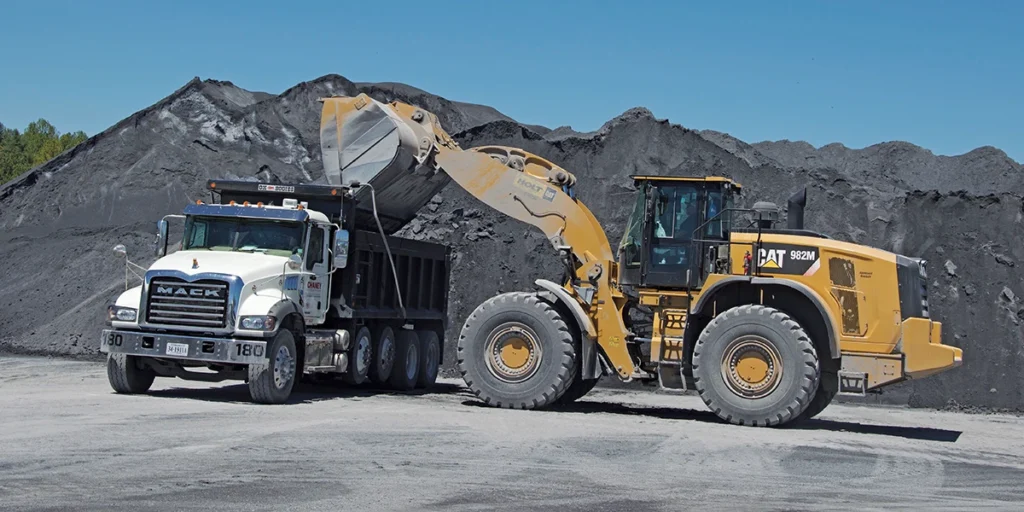
Once aggregates leave the stockpile and pass over the scale, the final stage of delivery begins: on-road hauling.
While producers may not always own the trucks carrying their material, understanding hauling options, truck configurations and regulatory factors is important for efficient, legal and profitable transport.
Truck and trailer options
Hauling crushed stone, sand and gravel is typically handled by dump trucks or dump trailers pulled by tractors. Trailer types include:
- End dump trailers. These unload material straight back. They’re versatile but require more overhead clearance
- Side dump trailers. This type tips material to the side. They’re safer in uneven conditions but require lateral space
- Bottom dump trailers. Bottom dump trailers discharge material through gates in the trailer floor, and they’re efficient for windrows and paving applications
- Live bottom trailers. These use a conveyor to unload material, and they’re useful when overhead clearance is limited
The choice depends on material type, delivery site conditions and customer preference.
Regional weight laws and axle configurations
Weight and axle laws vary by state, province and country, shaping how trucks are spec’d and operated.
Northern U.S. states often allow shorter trucks with higher axle ratings while Southern and Western states typically enforce the federal bridge formula, which requires longer lengths and additional axles to distribute weight. Some states issue exemptions or special permits, which can allow variations on these limits.
Canada often uses additional configurations such as lift axles (pneumatically raised/lowered), twin steer (two front steering axles) or tridrive (three driving axles).
Because regulations differ widely, producers and haulers must confirm compliance in each jurisdiction they operate, including state-level exemptions or local permitting requirements.
Matching truck specs to application
Specifying the right truck or trailer is a balance between durability and payload.
- Bodies. Steel dump bodies are heavier but more durable for rock and demolition debris. Aluminum bodies are lighter, allowing higher payloads for sand, gravel or asphalt
- Suspensions. Heavy-duty suspensions (camelback springs, walking beams) withstand harsh terrain but add weight. Air-ride suspensions reduce tare weight and improve ride quality but may not hold up in rugged quarry environments
- Engines. Midrange power (375 to 425 hp) is typically sufficient for most dump applications. Smaller engines save fuel and weight but must still provide enough torque for grades and heavy loads
Choosing lighter components maximizes payload, but producers and haulers must weigh the long-term tradeoff between payload efficiency and equipment longevity.
SAFETY TIP
Plan heavy haul moves carefully: Secure permits and escorts to avoid legal and safety risks.
Payload, weight distribution and productivity
Hauling efficiency depends on maximizing payload within legal weight limits. Every extra pound of truck tare weight reduces the amount of material hauled. At the same time, proper weight distribution across all axles is essential to remain compliant with laws and avoid fines.
Producers can help haulers optimize payloads by:
- Maintaining efficient loadout processes to minimize waiting and idle time
- Training loader operators to achieve even, consistent bucket passes
- Designing stockpile and scale layouts that reduce maneuvering and turnaround times
Heavy-haul considerations
In addition to aggregates, producers often move equipment, portable plants and other heavy loads. These moves typically require lowboy or flatbed trailers pulled by heavy-haul tractors with large engines, multiple transmissions and additional axles.
Weights can range from 110,000 to 250,000 lbs. or more. Such moves demand specialized permits, escorts and routing, but they are an integral part of maintaining and mobilizing production equipment.
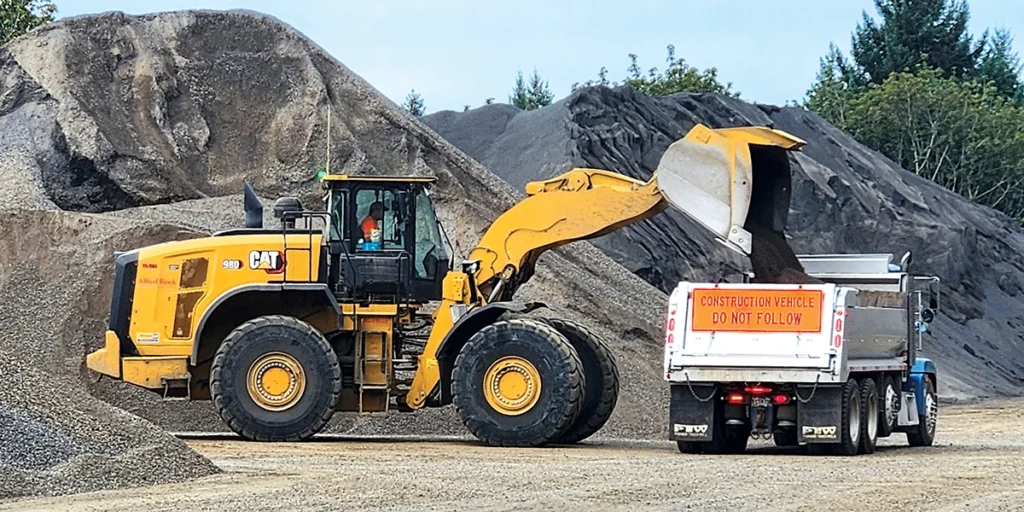
Why it matters
Even when a quarry contracts hauling to third-party truckers, the efficiency of on-road hauling directly affects customer satisfaction and profitability.
Slow cycle times, overweight tickets or trucks spec’d poorly for the job can all erode margins. By understanding truck types, axle configurations and the balance between durability and payload, producers can better align loadout operations with transportation realities.
Ultimately, hauling is an extension of the loadout process. Just as efficient scales and ticketing keep trucks moving on-site, the right trucks and trailers – operated within legal limits – ensure that material gets to the customer safely, efficiently and profitably.
&uuid=(email))
SOURCES
Jonathan Sabo
Cardinal Scale
cardinalscale.com
Cardinal Scale
cardinalscale.com
Ranjeev Teelock
Command Alkon
commandalkon.com
Loadrite
goloadrite.com
Mack Trucks
macktrucks.com
Rice Lake Weighing Systems
ricelake.com
Southern Illinois Scale & Construction
southernilscale.com
Josh Villano
Thayer Scale
thayerscale.com
Trimble
trimble.com
The Pit & Quarry University Handbook is an educational resource that offers comprehensive lessons covering the entire aggregate production process from start to finish, highlighting new technologies and enhanced procedures within each branch/category of the aggregates industry.
FULL HANDBOOK
Chapter 1: Industry Overview
Chapter 2: Geology & Site Selection
Chapter 3: Drilling & Blasting
Chapter 4: Excavating & Loading
Chapter 5: Hauling
Chapter 6: Crushing & Hydraulic Breaking
Chapter 7: Screening
Chapter 8: Washing & Classifying
Chapter 9: Conveying & Material Handling
Chapter 10: Loadout & Weighing
Chapter 11: Safety & Health
PROMOTED PARTNERS