
Dream big.
That was the message a group of Knife River Corp.’s regional presidents delivered years ago to Dan Abbott, a 46-year employee who had long been responsible for the company’s training and learning services.
Specifically, the group pointed Abbott, now retired, to a legacy Morse Bros. operation in Albany, Oregon – one that ceased sand and gravel mining operations in 2019 – as the place where Knife River could build a training complex unlike anything the industry has seen.
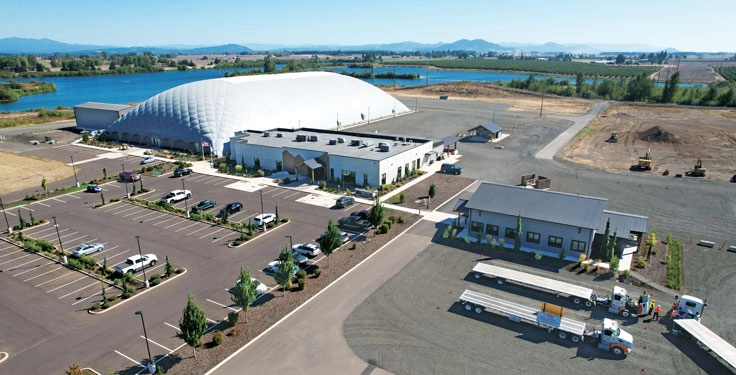
That dream became a reality in 2022, when the Knife River Training Center opened. Nearly four years later, the center is resetting the standard for what industry training can be. And with 230 acres to work with, Knife River aims to raise the bar even higher as new training areas come online.
“We are a vertically integrated construction materials and contracting services company, and we want to be able to train on everything we do at Knife River on-site – safely and away from live traffic, so to speak,” says Kris Latimer, senior director of training and development at the Knife River Training Center.
Inside the dome
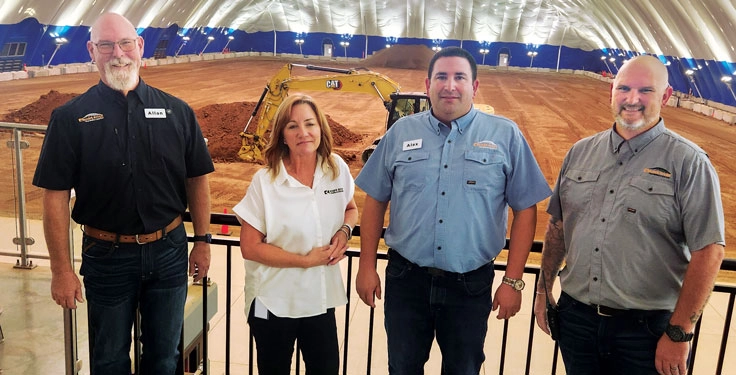
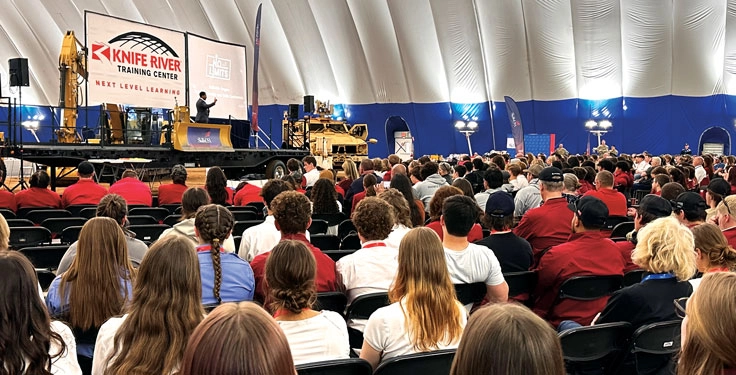
An 80,000-sq.-ft. dome, which is complete with a dirt arena and a concrete viewing platform, is among the standout features of the Knife River Training Center.
The dome is large enough to accommodate most of the heavy-duty equipment Knife River utilizes in the field – its airlock entrance was designed to bring a portable ready-mix plant into the dome, should the training need ever arise. Because the environment is controlled, Knife River can make use of the dome throughout the year.
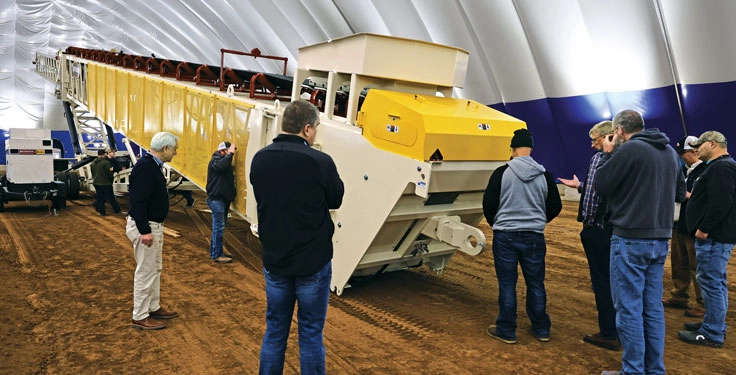
Knife River’s industry partners recognize the dome’s value, with many leveraging the space to train their own customers.
Knife River’s use of technology gives the dome even greater reach. With in-cab and around-the-dome audio and video capabilities, the trainers leading equipment sessions can reach not only those in the facility’s classrooms and conference rooms, but those situated off-site.
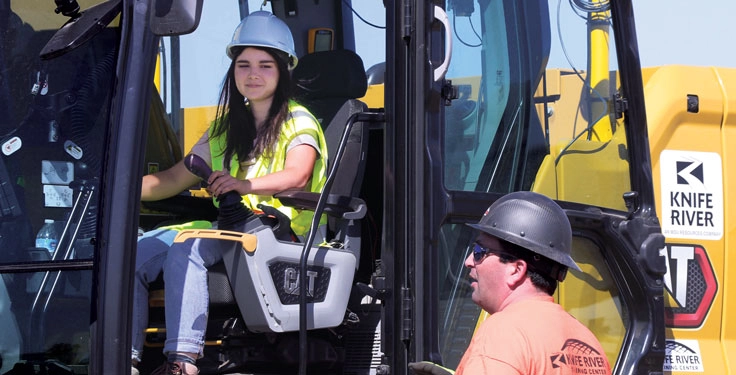
“We’ve installed cameras throughout our equipment so everyone in the course can see exactly what the operating student sees,” says Mike Glazier, senior instructor and facilities manager at the Knife River Training Center. “If we have one excavator and six students, only one can be in the cab with the operator. But now the whole class can watch, hear our conversation and understand the corrections being made in real time. They learn together, and often they learn just as much from each other as they do from an instructor.”
Beyond the dome
While the dome serves as a facility centerpiece, a variety of other features collectively enhance the trainee’s experience at the Knife River Training Center.
Attached to the dome is a 16,000-sq.-ft. facility with multiple meeting rooms and classrooms, as well as a commercial kitchen and indoor/outdoor gathering space.
Outside, Knife River created a mock urban environment for training on equipment and underground work. Featuring simulated overhead and underground hazards, Sim Town includes building facades, paved streets, gravel streets, cul-de-sacs and a mock urban sewer system.
Last year, Knife River completed a building dedicated to truck driver training. The company provides training in the classroom and in the field for industry newcomers and seasoned professionals.
Just like the dome, which has an observation room, Knife River carved out a space in its newest building where students can watch and learn from a safe distance.
“We wanted to build something where students can stay out of harm’s way, out of the weather and still see what’s going on with the instructor and the student outside,” says Allan Nichols, CDL driver trainer lead at the Knife River Training Center.
In addition to the new building, Knife River is investing in a mock mine site and asphalt plant as next phases of the center.
“Knife River is being an innovator when it comes to training and supporting the development of our team members, whether it’s an operator, a driver or individual on a management track,” Latimer says. “We are utilizing the latest technology we can get our hands on.”
Training the trainers
Of course, part of having a state-of-the-art training center means employing industry-leading trainers.
According to Latimer, every Knife River Training Center instructor is rigorously trained so they can effectively teach others.
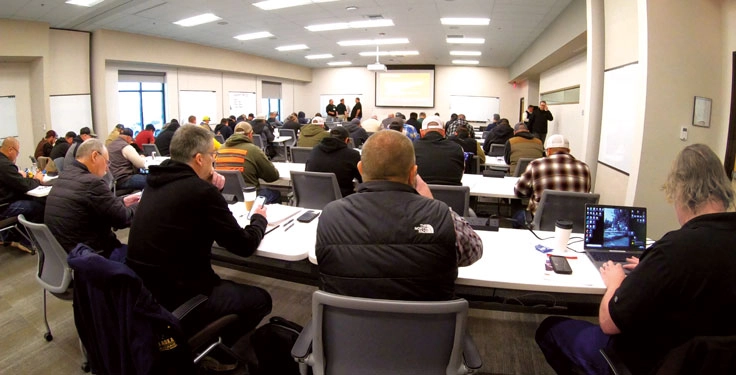
“It doesn’t matter whether they’re teaching equipment operation, CDL skills or leadership skills, every instructor goes through the same process to build the abilities that lead to high-quality adult education,” Latimer says. “The transfer of learning is critical, so we use the latest methods to make sure knowledge truly sticks and we achieve the highest possible ROI (return on instruction).”
Ultimately, effective training is a key to safe, healthy and vibrant workplaces. Knife River believes this, making investments not only for its people but the industry at large.
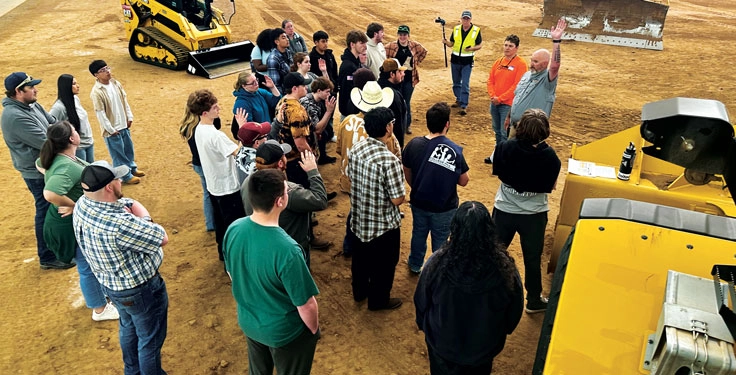
“One of our biggest goals – as a team and as a company – is to make construction a career of choice again, just like it was decades ago,” Latimer says. “Every year we open our doors to more than 2,000 high school students, offering programming for them and for the educators who influence their paths. We’re doing this not just for Knife River, but for the entire industry. We want to raise the bar for everyone.”
Inside the Knife River Training Center
Kris Latimer, senior director of training and development at Knife River Corp., joined P&Q’s Kevin Yanik on Episode 51 of the Drilling Deeper podcast. Latimer details how the Knife River Training Center in Albany, Oregon – one that’s complete with a massive indoor arena, simulation zones and advanced classrooms – is preparing the next generation of operators for real-world jobsite conditions. Listen today at drillingdeeperpodcast.com or wherever you get your podcasts.