
In surface mining, we work in what are essentially giant sandboxes – open spaces shaped by loaders, dozers, haul trucks, excavators, skid steers and pickups that never stop moving.
The terrain shifts constantly. The piles change shape. The sightlines change with the hour. The weather rewrites the script whenever it feels like it.
In that kind of world, the biggest threat to going home safely, every day is not some obscure hazard lurking around the corner. It’s the same thing it has always been: unexpected interactions between people and mobile equipment.
If there’s one truth I’ve learned in my years around pits, quarries and heavy equipment, it’s this: machines don’t compromise. A dozer doesn’t have a bad day. A haul truck doesn’t look up from a text message. A skid steer doesn’t suddenly decide to “be careful.” Machines do exactly what they are told – and sometimes, exactly what we didn’t anticipate.
And that’s where people get hurt.
People versus machines
The Mine Safety & Health Administration continuously reminds us that powered haulage is the No. 1 cause of fatal incidents in surface mining.
It’s not because operators don’t care. It’s not because teams aren’t skilled. It’s because the window for error is razor thin, and the consequences are unforgiving.
A person on the ground and a machine in motion is always a vulnerable combination. Add in blind spots, changing terrain, shifting piles, weather, rain-softened berms or a moment of miscommunication, and the risk multiplies instantly and cataclysmically.
The good news? This is one risk category where immediate action pays immediate dividends. You don’t need a million-dollar system upgrade or an army of consultants to start reducing exposure. You need clarity, consistency and discipline.
Risk you can manage
Here are three things your team can do today to reduce powered haulage risk – not next quarter, not after the budget review meeting, but right now.
1. Pedestrian segregation plans. Engineer your pedestrian and vehicle flow. The most effective way to avoid a person-versus-machine incident is stunningly simple: separate them. Create clear, predictable, enforceable traffic patterns – and then hold the line on them.
A pedestrian segregation plan isn’t a binder on a shelf. It’s the tactical blueprint of how your site breathes and moves.
A plan includes defined haul routes, dedicated pedestrian paths, one-way traffic flow where possible, controlled intersections, right-of-way rules that everyone understands, clear signage that doesn’t fade into the landscape, and communication expectations. The key here is ongoing operational ownership and enforcement of the expectations, so it doesn’t become a flavor of the month.
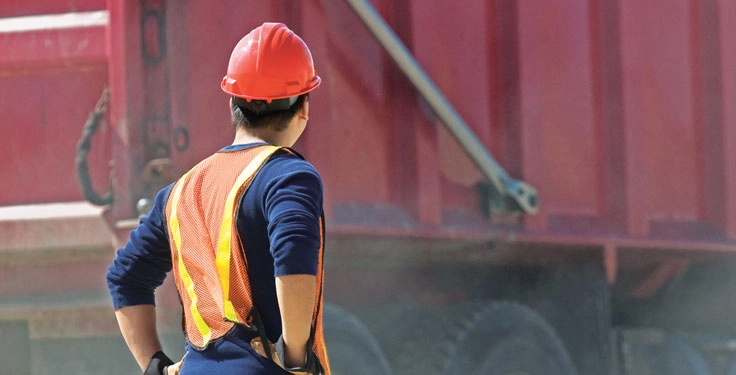
2. Be seen. Visibility isn’t optional – it’s lifesaving.
We lose people every year because they simply weren’t seen. Operators rely on movement, color and reflectivity to detect pedestrians. High-visibility clothing isn’t a fashion choice. It’s a survival tool.
This means bright, contrasting clothing during daylight. Retroreflective gear in low light, rain or fog. No faded PPE.
If your team’s PPE blends into the background – mud, stone, limestone dust, fog – then you’ve effectively created an invisible workforce.
Also, consider adding illumination to your equipment – particularly if you operate in low-light conditions.
3. Material stability. Your equipment is only as safe as what it’s sitting on.
Powered haulage incidents aren’t only about collisions. A significant portion are rollovers – and rollovers often stem from unstable material.
It’s a haul truck edging too close to a soft shoulder. A loader working on undermined ground. A dozer pushing material on a rain-loosened face.
Operators must be trained to read material conditions, identify compromised areas, avoid overhangs and undercut faces, maintain distance from edges and stop the job if conditions don’t feel right.
Material isn’t static. It shifts. It weakens. It surprises you when you assume it won’t.
The bottom line
Powered haulage isn’t complicated. It’s not a mystery. It’s the intersection of massive machines, human beings and constantly changing ground.
If your team can control the patterns, the visibility and the terrain, you dramatically reduce the chances that today will be the day something goes sideways.
These aren’t policies. They are habits. They are culture. And they are the reason we all get the chance to go home safely, every single day.
Stay safe, and please send any photos you’d like spotlighted along with questions, comments or thoughts to steve@stevefullercompany.com.
Steve Fuller has worked over the past 20-plus years with a variety of industries – including aggregates – in operational and safety leadership roles. Now representing Steve Fuller Company, he can be reached at steve@stevefullercompany.com.
Related: Closing the gap on guarding