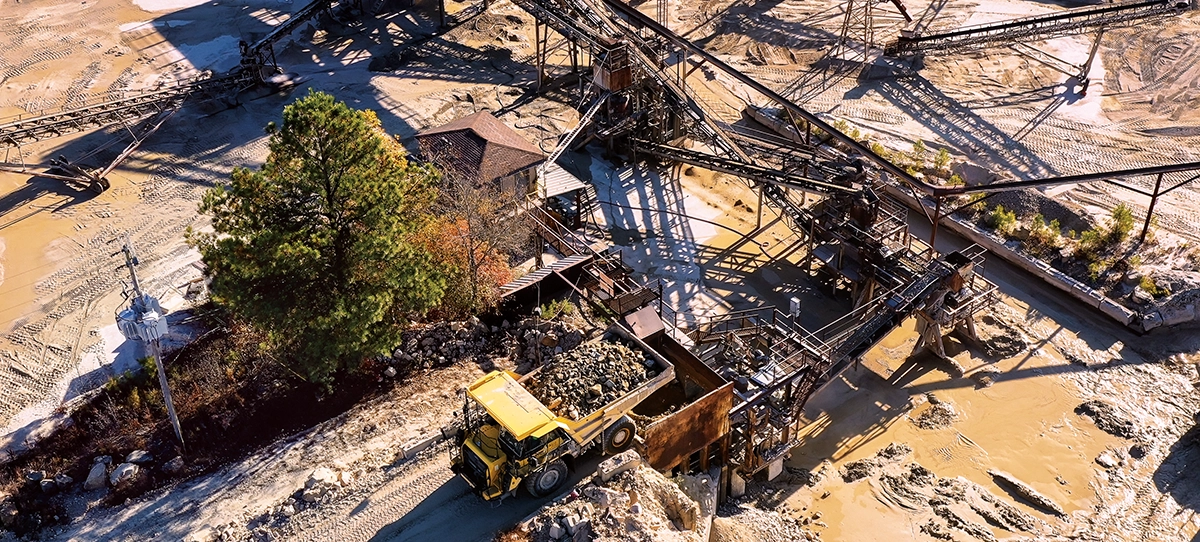

Heidelberg Materials reached a milestone in autonomous hauling, hitting the 2-million-ton mark at its Lake Bridgeport Quarry in Bridgeport, Texas.
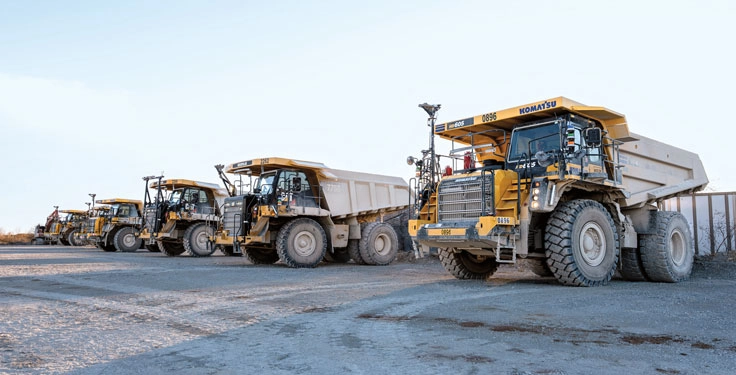
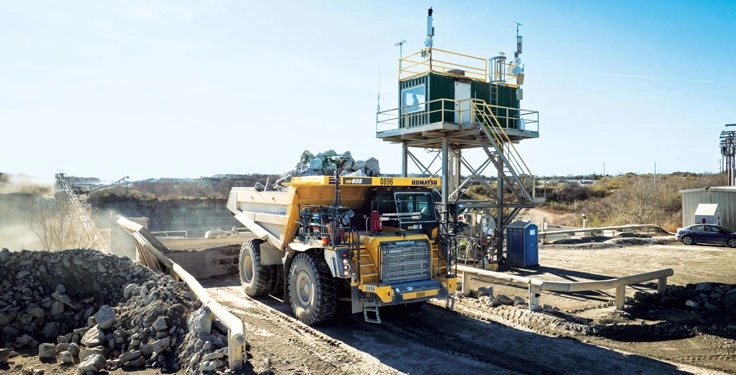
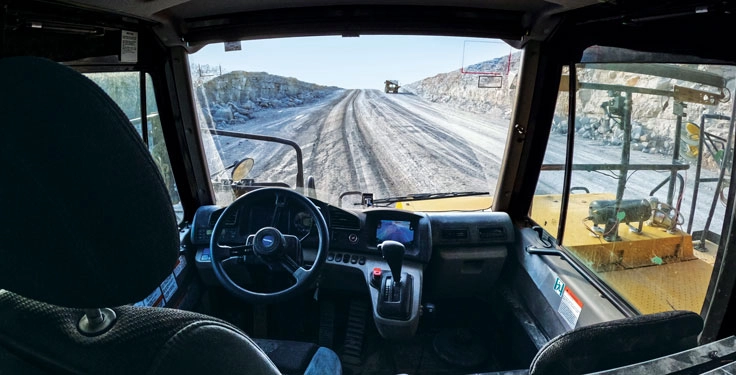
Following a successful pilot project at Heidelberg Materials’ neighboring Bridgeport Quarry in Chico, Texas, the company equipped a mixed fleet of Caterpillar and Komatsu haul trucks with Pronto.ai’s autonomous haulage system (AHS). Pronto says the achievement at the Lake Bridgeport Quarry was made in less than eight months.
To learn more about the project, the technology and what it takes to integrate autonomous hauling into daily operations, P&Q connected with Scott Tipping, global director of Heidelberg Materials’ Competence Centre Aggregates and Asphalt.
What ultimately attracted Heidelberg Materials to autonomy for its hauling operations? What problems was the company trying to solve?

Tipping: Introducing autonomy to our haulage operations closely aligns with our priorities at Heidelberg Materials.
In terms of safety, we want to keep our employees out of potentially hazardous situations – for example, when they operate in poor visibility.
Like many in the aggregates industry, we also experience a labor shortage of skilled haul truck operators. Autonomous hauling helps us address this while ensuring consistent performance.
At the same time, we gain valuable insights into real-time data to drive operational excellence and increase our overall productivity.
When you evaluated autonomy providers, what about Pronto’s approach stood out? And what were the ‘must haves’ that ultimately led Heidelberg to select the Pronto autonomous haulage system?
Tipping: We apply a holistic approach to evaluate providers – technically, operationally and economically. A key requirement was the ability to retrofit our existing heavy mobile equipment, rather than replace it, using a system that can be scaled and works across our mixed fleets.
We also needed a solution that can reliably achieve set production targets and deliver a clear payback in installation and operating costs. Balancing these criteria, Pronto’s autonomous haulage system emerged as a good choice for us.
Running multiple OEM trucks in the same autonomous system is a unique achievement. What were the biggest technical and operational challenges in making autonomous haulage work across a mixed fleet?
Tipping: As the user of any autonomous solution, we require a single, user-friendly interface which makes the work of our skilled operators easier – not more complex.
On the operational side, different OEMs and their dealer networks remain responsible for service and maintenance on the base vehicles. Coordinating this across brands, while ensuring smooth integration with the autonomous system, was a critical challenge to solve.
What made the Bridgeport Quarry the right location for the initial pilot, and what factors led to Lake Bridgeport being selected as the next site for autonomous hauling?
Tipping: When selecting sites suitable for the deployment of autonomous technology, we balance commercial and operational aspects to ensure success.
In addition, the proximity of Lake Bridgeport to Heidelberg Materials’ North America headquarters in Irving, Texas, made this site an ideal starting point, as all required internal stakeholders could easily support the first autonomous deployment.
What changes were required in dispatching, traffic management, loading and dumping procedures, and workforce training to integrate autonomous trucks into everyday quarry operations?
Tipping: When integrating autonomous technology at any given site, we start by carefully evaluating the operational procedures, which were originally designed around the needs of human operators. If required, together with our partner Pronto, we then adapt these to ensure smooth operations of the autonomous haulage system.
A well-trained workforce is essential to the successful integration of autonomous technology at our quarries. Training materials and classroom sessions provide an important foundation, but the focus is on practical, hands-on experience. Our teams build confidence and expertise by working directly with the autonomous trucks in the field.
What have been the most significant measurable operational and business gains so far – whether in safety, productivity, cost or consistency? Can you share any data or directional improvements that help quantify those gains?
Tipping: Safety is the underlying principle of everything we do at Heidelberg Materials. Therefore, it is important to us that the autonomous trucks uphold our high standards.
Consistency is another key benefit of deploying autonomous equipment. Autonomous trucks can perform at a consistently high level and, thus, improve downstream planning and decision-making.
Lastly, each difficult situation a single autonomous truck encounters captures valuable data, which directly improves the operational performance of the entire fleet. The 2-million-ton milestone clearly demonstrates that the system is operating reliably and at scale.
What truck sizes were involved in this deployment, and which haul truck classes do you see as the best candidates for autonomous operation going forward?
Tipping: At Lake Bridgeport, we are leveraging Caterpillar’s 775G and Komatsu HD605-8/HD605-10. All of these are 70-ton trucks. Depending on the site at hand, different sizes of autonomous trucks will be automated.
Looking ahead, how do you plan to scale autonomous haulage across North America? Where do you see Heidelberg Materials in one year, five years and 10 years? And what does this milestone signal for the future of haulage in the aggregate industry?
Tipping: Heidelberg Materials is strongly committed to leading the building materials industry in automation and digitalization. We intend to scale autonomous haulage significantly, deploying the AHS system to over 100 trucks operating across more than a dozen sites worldwide.
Our real-world learnings from our first autonomous deployment at Lake Bridgeport will inform our rollout strategy and increase speed at our next deployment sites.
Anything else you’d like to add?
Tipping: Our milestone shows that autonomous haulage is moving from concept to reality in the aggregates industry and will increasingly become a standard component of efficient, safe quarry operations.
Related: Heidelberg Materials reaches autonomous hauling milestone