
FULL HANDBOOK
Chapter 1: Industry Overview
Chapter 2: Geology & Site Selection
Chapter 3: Drilling & Blasting
Chapter 4: Excavating & Loading
Chapter 5: Hauling
Chapter 6: Crushing & Hydraulic Breaking
Chapter 7: Screening
Chapter 8: Washing & Classifying
Chapter 9: Conveying & Material Handling
Chapter 10: Loadout & Weighing
Chapter 11: Safety & Health
Driver Training
Operator training is a critical factor in managing equipment costs and ensuring safe, efficient hauling. Driving a haul truck differs significantly from driving a pickup or on-road vehicle, and new operators require thorough instruction to adapt to the unique challenges of quarry conditions.
Even experienced operators benefit from refresher courses, orientation to new equipment or opportunities to correct unsafe habits. Poor practices – such as driving with the dump bed raised or careless loading – can quickly increase operating costs and negate gains made through equipment selection or haul road design.
Training is available through most dealers as well as independent companies specializing in operator instruction. Investing in education not only improves safety, but reduces cost per ton by promoting efficient, consistent hauling practices.
Autonomous Hauling
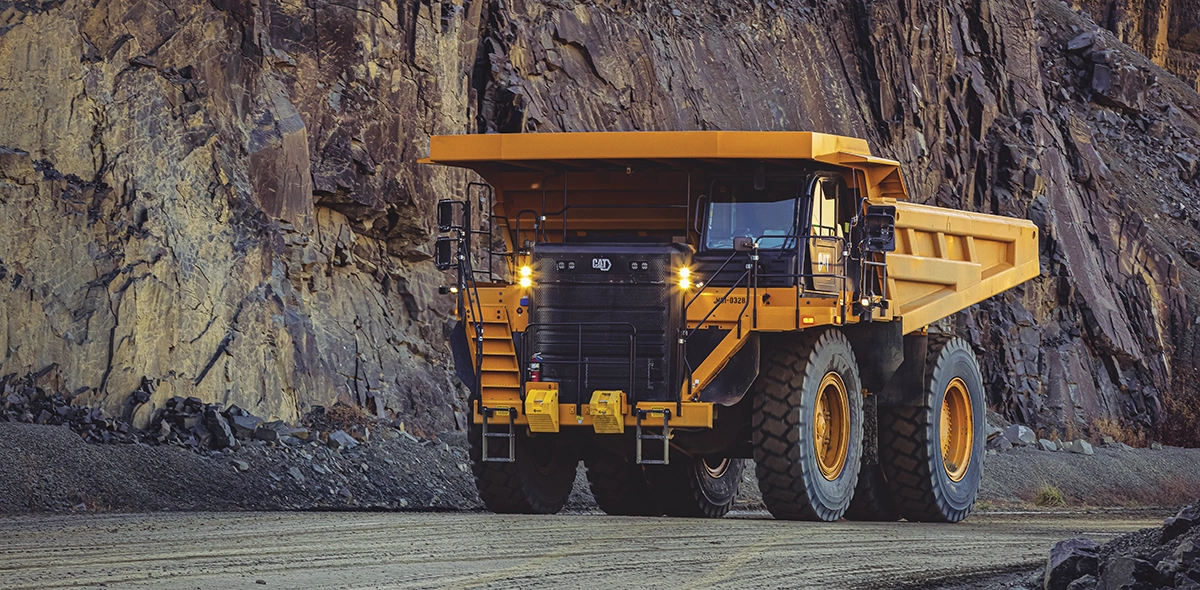
The push for autonomy in surface mining has accelerated in recent years, and hauling has been the primary focus.
Hauling is one of the most repetitive tasks in production but also one of the hardest jobs to staff. By automating truck movement, operations can reduce dependence on hard-to-fill operator roles, increase machine utilization and control variable costs more effectively.
Autonomous systems also allow fleets to run more consistently – without the inefficiencies that come from absenteeism, overstaffing or unnecessary hauling when material movement is not required. In effect, automation helps align operating costs more closely with production needs.
&uuid=(email))
Real-world applications
Autonomous haulage systems (AHS) are already proving successful in large-scale mining.
Hundreds of autonomous trucks are in operation worldwide, collectively moving billions of tons of material with strong safety records. While commercialization for aggregate producers is still developing, early pilot projects in large quarries are underway to adapt these systems to smaller fleets and more variable environments.
Autonomous haul trucks typically operate within a defined network of haul roads, dump points and crusher or stockpile locations. Trucks are guided by GPS and onboard control systems, and their movements are coordinated by central software. Routes can be programmed in advance and shared across the fleet. Static areas such as haul roads remain constant, while more dynamic zones, such as loading faces, can be updated as conditions change.
Integration with loading equipment
Loading machines continue to play an essential role in autonomous operations.
Loader operators or control systems interface with the AHS to position trucks for loading, record material types and dispatch trucks to their next destinations. The process maintains production flow while ensuring the trucks operate safely around active loading equipment.
Safety and risk reduction
One of the strongest drivers for autonomy is safety.
Removing drivers from trucks reduces exposure to risk within the pit. Fewer people in the haulage circuit means fewer opportunities for collisions and other incidents.
Modern AHS incorporate multiple layers of protection:
- Situational awareness systems continuously monitor vehicle locations, speeds and directions, ensuring safe separation
- Object-detection systems use cameras and sensors to identify and categorize obstacles, automatically adjusting truck behavior when needed
- Emergency stop systems allow an entire fleet to be halted immediately if conditions require
Together, these measures significantly reduce the likelihood of accidents. The safety records from existing autonomous fleets indicate a sharp reduction in powered haulage incidents compared to conventional operations.
Challenges in quarry applications
Although autonomy has proven effective in large mines, quarry applications present unique challenges.
Smaller fleets – often three to a dozen trucks – require lower-cost systems and simpler infrastructure. Quarries are also more variable, with dynamic loading faces, tighter working areas and haul patterns that may change more frequently.
Developments in software and communications are already addressing these needs. For example, compact systems now allow route programming and fleet dispatching to be managed through mobile devices rather than large control rooms. These streamlined approaches aim to make autonomy feasible for operations with smaller footprints.
&uuid=(email))
Looking ahead
Autonomous hauling is not yet standard in aggregates, but the technology is advancing quickly. Early adopters will gain insight into efficiency, cost savings and safety improvements, while equipment suppliers continue to refine systems for broader use.
For aggregate producers, understanding the principles of autonomous hauling is valuable preparation for a future where automation plays a growing role in material movement.
SOURCES
BKT USA
bkt-tires.com
Case Construction Equipment
casece.com
Caterpillar
cat.com
John Deere
deere.com
Komatsu America Corp.
komatsu.com
Josh Swank
Philippi-Hagenbuch
philsystems.com
Pronto
pronto.ai
Titan International
titan-intl.com
Rob Palermo
Volvo Construction Equipment
volvoce.com
Tyler Smith
Volvo Construction Equipment
volvoce.com
Volvo Construction Equipment
volvoce.com
FULL HANDBOOK
Chapter 1: Industry Overview
Chapter 2: Geology & Site Selection
Chapter 3: Drilling & Blasting
Chapter 4: Excavating & Loading
Chapter 5: Hauling
Chapter 6: Crushing & Hydraulic Breaking
Chapter 7: Screening
Chapter 8: Washing & Classifying
Chapter 9: Conveying & Material Handling
Chapter 10: Loadout & Weighing
Chapter 11: Safety & Health
PROMOTED PARTNERS