

FULL HANDBOOK
Chapter 1: Industry Overview
Chapter 2: Geology & Site Selection
Chapter 3: Drilling & Blasting
Chapter 4: Excavating & Loading
Chapter 5: Hauling
Chapter 6: Crushing & Hydraulic Breaking
Chapter 7: Screening
Chapter 8: Washing & Classifying
Chapter 9: Conveying & Material Handling
Chapter 10: Loadout & Weighing
Chapter 11: Safety & Health
Tires
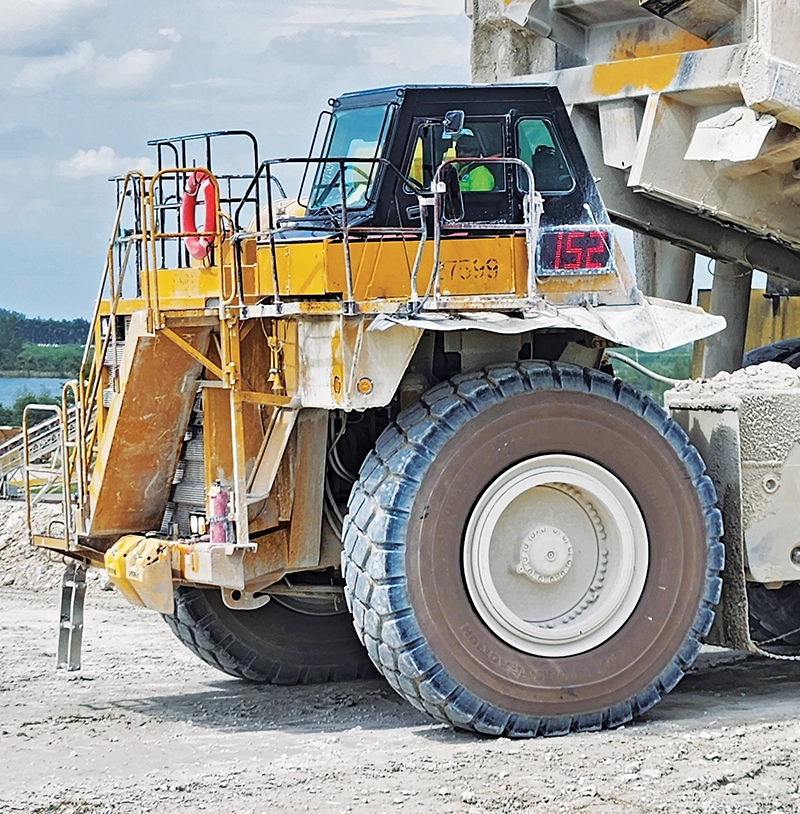
Tires are essential components of hauling operations, directly influencing safety, productivity and cost per ton.
Because they are among the most expensive consumables in quarry operations, selecting the right construction type and classification is critical. Not all tires are the same, though, and understanding the differences helps producers optimize performance and extend tire life.
Tire construction: bias versus radial
Off-the-road (OTR) tires are built in two primary construction types: bias-ply and radial. Each has distinct advantages depending on the operating environment and machine application.
Bias-ply tires are constructed with multiple layers of fabric plies laid diagonally across each other at alternating angles. This cross-ply design creates a stiff sidewall that resists flexing. The result is a tire that is durable in rugged terrain and resistant to sidewall damage from rocks or other impacts.
Bias tires also carry a lower upfront cost, which makes them economical in certain applications. Their limitations include a rougher ride and less effective heat dissipation, which can reduce efficiency and longevity at higher speeds.
Bias tires are best suited for short-distance, lower-speed work, such as loaders, dozers and compact equipment operating on rough ground.
Definition
Bias-ply tire: An off-the-road tire constructed with diagonal fabric plies, creating stiff sidewalls that resist side impacts but run hotter and ride rougher than radials.
&uuid=(email))
Radial tires
Radial tires feature plies that run perpendicular to the direction of travel, extending from bead to bead, with steel belts reinforcing the tread. This construction allows the sidewalls to flex more easily, providing a smoother ride and reducing heat buildup.
Radials typically offer longer tread life, better traction and lower rolling resistance, which contributes to fuel efficiency and extended service life. While they have a higher initial cost and can be more susceptible to sidewall damage in some conditions, their durability and efficiency often provide a better long-term return on investment.
Radial tires are commonly used on haul trucks, graders and machines traveling longer distances at higher speeds on well-maintained haul roads.
Definition
Radial tire: An OTR tire built with plies running perpendicular to travel and steel belts under the tread. Radials provide cooler operation, longer tread life, and better traction.
Comparing the two
In practical terms, bias tires are tougher and cheaper up front, making them reliable in harsh, short-haul environments. Radials, by contrast, provide smoother operation, higher efficiency and greater longevity in high-speed or long-haul applications. The correct choice depends on the type of machine, haul distance, ground conditions and production requirements.
OTR tire classifications
Beyond construction type, OTR tires are categorized by classifications set by the Tire & Rim Association (TRA). These designations reflect the machine type, travel distance and operating speed.
- E – Earthmover/Haulage. Used on haul trucks and scrapers, rated for up to 40 mph and 2.5 miles one way
- L – Loader/Dozer. Used on loaders and dozers, rated for up to 5 mph and 250 ft. one way
- G – Grader. Used on graders, rated for up to 25 mph and unlimited distance
- C – Compactor. Used on compactors, rated for up to 5 mph and unlimited distance
- SH – Subterranean Haulage. Used on underground haul trucks, rated for up to 25 mph and 2.5 miles one way
- Mobile Cranes. No TRA classification. Cranes are designed for off-road use but can also travel on roads between sites
Tires are also differentiated by tread depth and type:
- For rib regular tread
- For traction regular tread
- For regular tread
- For deep tread
- For extra-deep tread
- For flotation tread
- For smooth tread
Considerations
Selecting the correct tire construction, classification and tread type is essential for safe and efficient quarry operations.
Bias tires offer rugged durability and economy for short-haul, rough conditions. Radial tires provide longer life and greater efficiency in long-distance hauling.
Matching the right TRA classification and tread depth to the application ensures tires perform as designed, reducing downtime, minimizing the risk of failure and lowering overall cost per ton.
Tire Maintenance
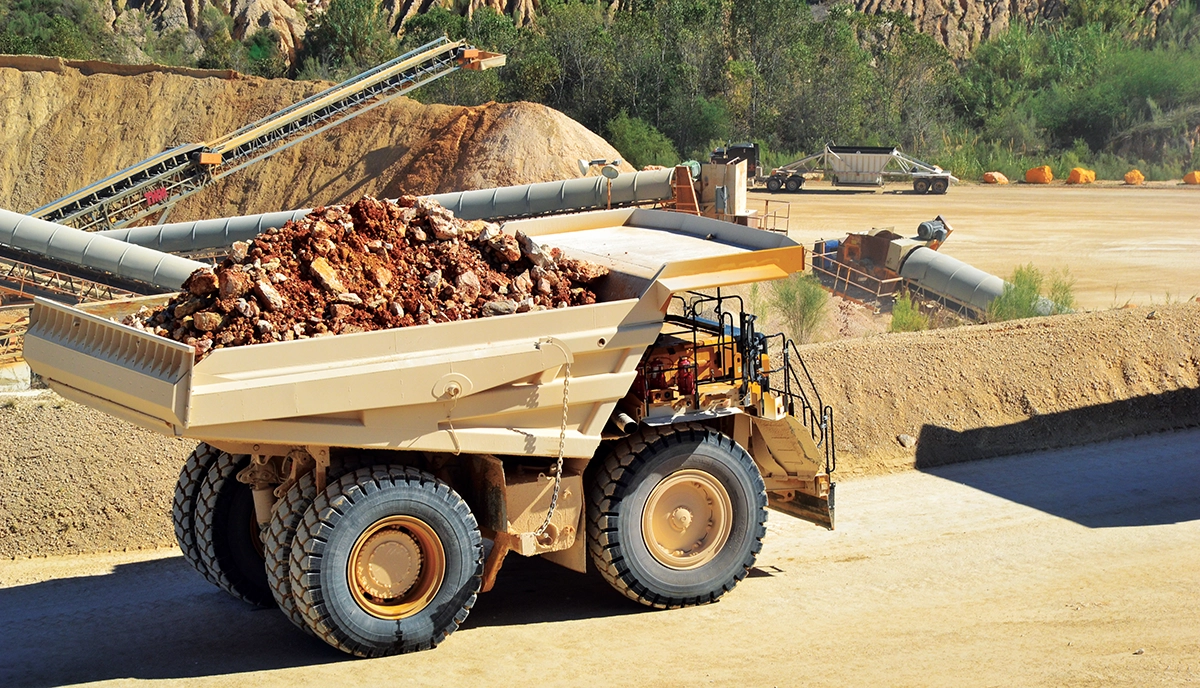
Tires are a major investment in quarry operations, and their care has a direct impact on both safety and cost per ton.
A tire failure is more than just a replacement expense. It also causes costly downtime. Even small maintenance practices can extend tire life significantly and save thousands of dollars over time.
Whether in a large mining operation or a smaller contracting business, protecting tire life is essential to overall profitability.
Daily inspections and practices
Tire abuse and misapplication are leading causes of reduced service life. Establishing daily inspection routines allows problems to be identified and corrected before they become failures.
Before beginning work each day, operators should walk around their machines to check for:
- Lodged debris between treads
- Uneven wear patterns
- Cuts, cracks, bulges or sidewall damage
- Low inflation pressure
These simple checks can prevent delays, improve safety and reduce unplanned downtime.
Matching tires to conditions
Selecting the right tire for the job is just as important as maintaining it.
Operators should consider terrain, haul distances, expected loads and ambient temperatures when choosing tires. Tires must be matched to the speed and weight requirements of the application. A tire used outside its intended rating will wear prematurely and may fail unexpectedly, creating both safety and cost concerns.
Tire tracking systems
Tracking tire performance helps managers evaluate costs and extend service life. Regardless of the system, consistent recordkeeping provides valuable insights into how tires perform under site-specific conditions and allows for adjustments in practices or equipment selection. Different methods are used across the industry, such as:
- Recording cost per hour by tracking mounting and removal times
- Recording cost per mile by monitoring total distance traveled
- Recording cost per ton by calculating material moved within a given period
Inflation and speed control
Maintaining correct tire pressure is one of the most important aspects of tire care.
Underinflation increases sidewall flex, generating heat and shortening service life. Overinflation reduces traction and increases the likelihood of cuts. Inflation pressure should be checked daily with a calibrated gauge.
Electronic monitoring systems are now available from some vendors, offering real-time pressure data and alerts when adjustments are needed. These systems also support adherence to tire speed ratings, which helps prevent heat buildup, tread separation and blowouts.
PRO TIP
Employ real-time tire monitoring: Use pressure and temperature monitoring systems to prevent costly failures and catch issues early.
Vendor support and site analysis
Many tire manufacturers and dealers provide value-added services that help optimize tire performance.
Using tools such as GPS, accelerometers, video analysis and data loggers, vendors can analyze haul road conditions, cycle times, distances and operating speeds. This information, when combined with production data, helps determine the best tire pattern and compound for a given site. It also provides insight into potential changes to road design or operating practices that could reduce wear and improve efficiency.
Wheels
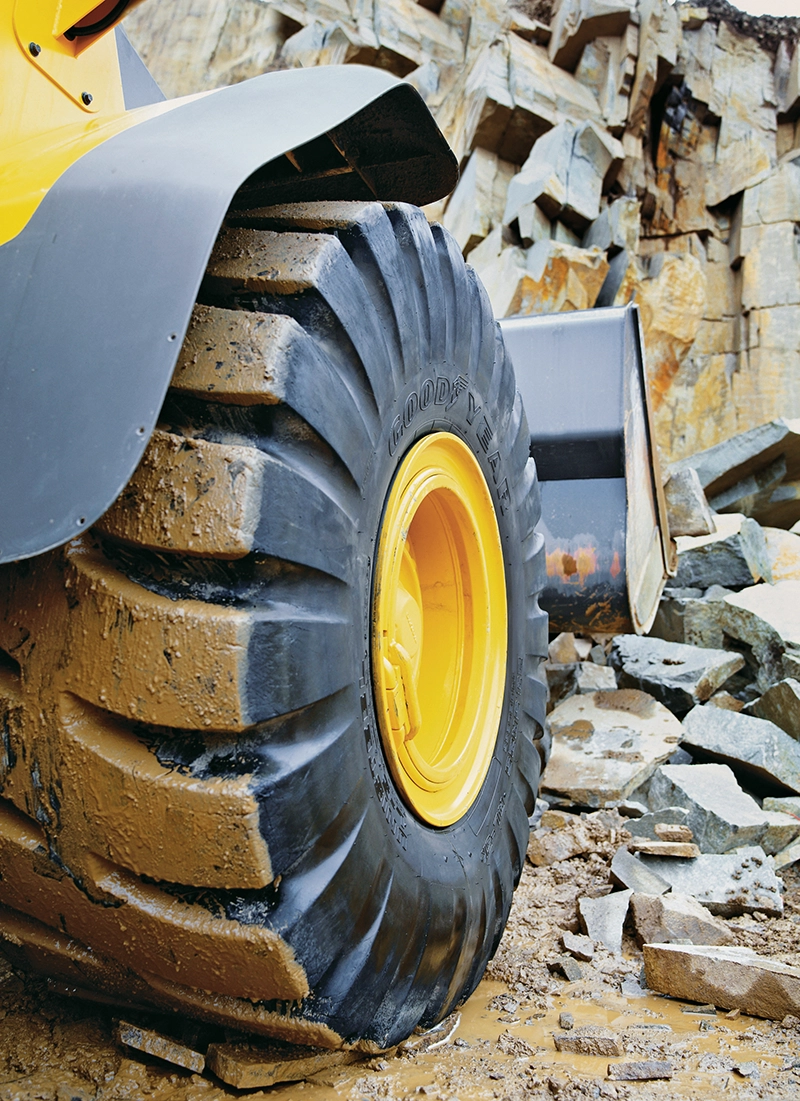
Wheel maintenance is often given less attention than tire care, yet both are equally critical to safe and efficient hauling operations.
A set of tires is only as reliable as the wheel assembly supporting them. Using mismatched or improperly fitted components not only shortens tire life but creates serious safety risks for operators.
Daily walkarounds
As part of a daily machine inspection, operators should evaluate both the tire and the wheel assembly. This means checking the overall profile for any distortion or irregularities and looking closely for corrosion. Key components such as rims, flanges, lock rings and driver keys should be examined for cracks, wear or other signs of distress.
Valve stems, caps and cores are equally important. A faulty valve component can allow air to escape unnoticed, reducing inflation pressure and increasing the risk of a tire failure.
SAFETY TIP
Enforce daily walkarounds: Require operators to check tires, wheels and hauler bodies for damage, low pressure or lodged debris before every shift.
Periodic full inspections
While daily checks identify obvious issues, some problems can only be detected when the wheel is removed. A good rule of thumb is to conduct a full inspection at or around 10,000 service hours. Tire rotations or new tire installations also present opportunities to review wheel components that are normally hidden.
During these inspections, technicians should:
- Verify that wheel nuts and studs are secure
- Retorque fasteners after the machine completes an initial cycle of operation
- Inspect wheel flanges and buff away sharp edges that may damage tire beads.
Wheel manufacturers provide specification sheets to guide inspections. If a gutter section or other dimension falls outside the stated tolerances, the wheel must be replaced. When replacement is necessary, producers can also consider whether an alternative wheel design is better suited to site conditions.
&uuid=(email))
Managing wheels as assets
Effective fleets manage wheels and tires as long-term assets rather than expendable parts.
Many producers now use software systems to track the condition of every wheel and tire in service. These programs record inflation pressures, tread depths, inspection results and hours of use.
By maintaining detailed records, producers and tire dealers can calculate lifetime costs on a per-hour, per-mile or a per-ton basis. Tracking this data helps identify patterns in performance, highlights problem areas and allows operations to make more informed purchasing and maintenance decisions.
Benefits of proper wheel care
A comprehensive tire and wheel management plan reduces unplanned downtime, enhances operator safety and lowers the overall cost per ton. Just as important, it ensures that equipment runs consistently and reliably in demanding quarry environments.
Treating wheels with the same priority as tires helps aggregate producers protect their investment while supporting safer and more efficient operations.
FULL HANDBOOK
Chapter 1: Industry Overview
Chapter 2: Geology & Site Selection
Chapter 3: Drilling & Blasting
Chapter 4: Excavating & Loading
Chapter 5: Hauling
Chapter 6: Crushing & Hydraulic Breaking
Chapter 7: Screening
Chapter 8: Washing & Classifying
Chapter 9: Conveying & Material Handling
Chapter 10: Loadout & Weighing
Chapter 11: Safety & Health
Use the page numbers to continue reading, or select a section / chapter above.