

FULL HANDBOOK
Chapter 1: Industry Overview
Chapter 2: Geology & Site Selection
Chapter 3: Drilling & Blasting
Chapter 4: Excavating & Loading
Chapter 5: Hauling
Chapter 6: Crushing & Hydraulic Breaking
Chapter 7: Screening
Chapter 8: Washing & Classifying
Chapter 9: Conveying & Material Handling
Chapter 10: Loadout & Weighing
Chapter 11: Safety & Health
Hauler-Loader Compatibility
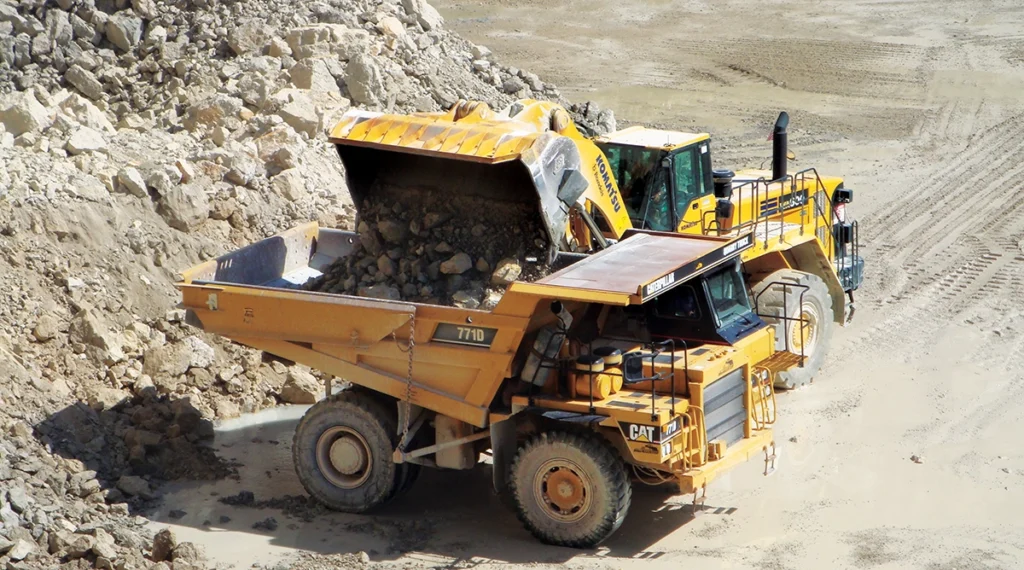
Matching trucks and loading machines is critical to both productivity and cost effectiveness.
The two must be considered as an integrated system when designing a quarrying operation. A mismatch in size or capacity can result in idle equipment, wasted time and unnecessary operating cost.
SAFETY TIP
Respect truck load limits: Overloading reduces braking and steering effectiveness and increases the chance of accidents.
Capacity and pass matching
The key factor in truck-loader matching is capacity. Efficient loading requires a balance where the truck can be filled with an even number of bucket passes without exceeding rated payload. An even pass match eliminates wasted cycle time and ensures consistent bucket loads.
For most operations, three passes are considered ideal. Four or five passes are generally acceptable, particularly for larger haulers, but more than that begins to reduce efficiency.
To establish the correct bucket size, divide the rated payload of the hauler by the desired number of passes. The result is the target weight for each bucket load. For example, a 90-ton hauler filled in three passes requires a bucket load of roughly 30 tons. While off-road trucks are designed to carry up to about 10 percent beyond their nominal capacity, frequent overloading negatively impacts steering, braking and component life.
PRO TIP
Match loader passes to truck size: Select buckets that allow trucks to be filled in three to four passes for maximum efficiency.
Material density and fill factor
Material density also influences loader-hauler matching. The rated capacity of a bucket is based on a 2-to-1 heap and a 100 percent fill factor, but in practice, fill factors vary significantly. A loader excavating blasted rock may only achieve a 75 to 90 percent fill factor, while one working in clay or fine sand may achieve higher.
To approximate actual bucket loads, multiply the rated capacity by the expected fill factor for the material. Teeth, edge segments and other bucket accessories can also increase effective capacity. These adjustments are important in selecting a loader that can meet target pass counts without under- or overfilling the truck.
Physical compatibility factors
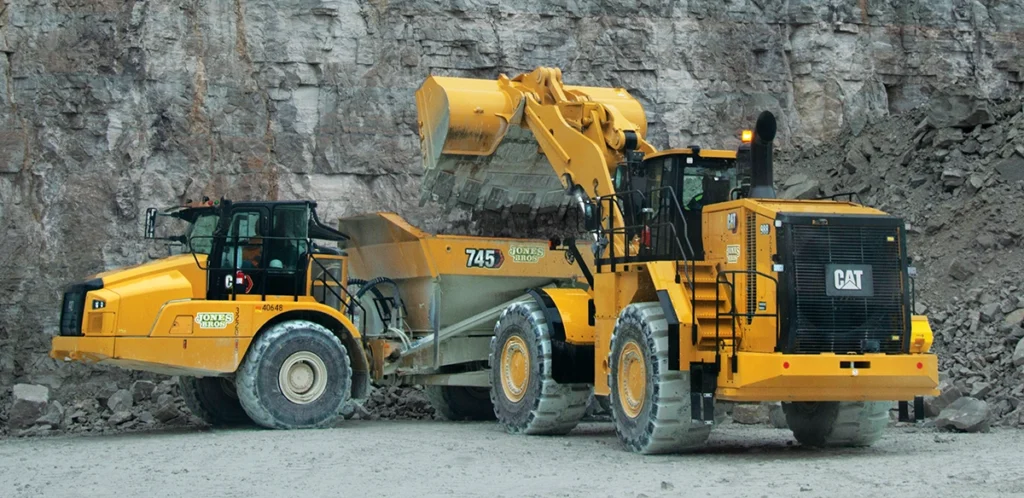
Beyond capacity, several physical compatibility factors must be considered. Loader reach is a key dimension. Reach is measured from the front of the loader’s front tires to the tip of the bucket at full dump. The reach must allow the bucket to place material across the full width of the hauler body to ensure even distribution of the load.
Bucket width relative to hauler body length is another consideration. Manufacturers often recommend a ratio of 1-to-1.4 or 1-to-1.5. The bucket should be wide enough to protect the loader’s front tires but not so wide that it risks striking the hauler cab or depositing material too close to the end of the body. Material that collects at the rear of the bed is prone to spillage when the truck climbs a grade, which reduces safety and productivity.
Dump height must also be checked. The loader must clear the side of the hauler body in the actual working configuration. Factors such as bucket teeth can reduce effective dump height by as much as a foot.
Likewise, modifications to the hauler such as larger tires or sideboards can significantly increase body height. If the loader cannot clear the hauler without rolling the bucket back, loading cycle times will increase and spillage may occur.
&uuid=(email))
Operational considerations
Other operational details influence the efficiency of truck-loader systems. Matching the number of trucks to the loader’s capacity ensures continuous operation without idle time. Too few trucks causes the loader to wait between cycles, while too many trucks cause queues at the loading area. Both situations reduce productivity and raise costs.
Operators must also be trained to maximize efficiency. Loading half buckets takes as long as loading full ones, which reduces production. Even load distribution within the hauler body helps prevent premature wear on tires and suspension and reduces the chance of rocks spilling onto haul roads. Consistent loading practices also contribute to safety, as overfilled or unevenly filled trucks are more difficult to control on grades or curves.
In practice, truck-loader matching involves balancing payload capacity, bucket size, material density and machine dimensions with site-specific conditions such as haul road design and production targets. Attention to these details ensures efficient cycles, longer equipment life and a lower cost per ton.
Haul Roads
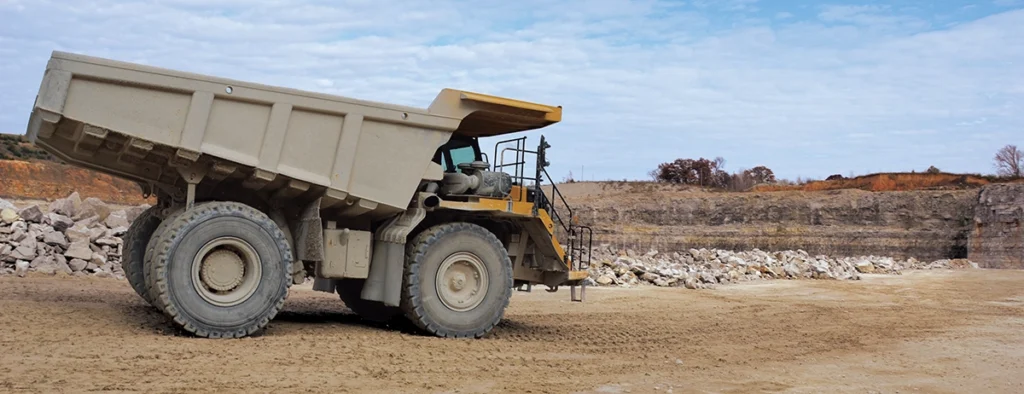
Haul road design plays a critical role in the efficiency and safety of quarry operations.
For rigid-frame haulers in particular, road design directly influences haul cycle times, fuel use, tire wear and overall production costs. A well-constructed haul road allows trucks to remain stable at optimum speeds, minimizing rolling resistance and extending the life of machine components.
Definition
Rolling resistance: The opposing force to truck motion created by tire flexing, road softness and surface conditions. Increased resistance reduces productivity and raises fuel consumption.
Grades and weight distribution
The grade of a haul road determines how weight is distributed across the tires. As grades steepen, more weight shifts to the rear tires. Ideally, weight should be distributed about one-third on the front tires and two-thirds on the rear duals. For this reason, road grades should not exceed 8 percent. Consistent, smooth grades are important to reduce sudden changes in weight distribution, minimize gear shifting and promote safe braking as trucks return to loading areas.
Spillage and tire damage
Well-designed roads also reduce material spillage. Rocks on the road surface are a primary cause of tire failures, with estimates showing up to 75 percent of failures caused by cuts or impacts from loose rock. By maintaining smooth, stable haul roads, operators minimize spillage, protect tires and reduce unscheduled downtime.
Definition
Cross-slope: A sideways grade built into a haul road to shed water. Typical values range from 2 percent in normal conditions to 4 percent in high- rainfall areas.
Cross-slope and drainage
Drainage is essential to haul road performance.
Standing water increases rolling resistance, weakens the road base and creates slippery conditions. On flat terrain, a constant cross-slope of about 2 percent is recommended to shed water. In high-rainfall areas, cross-slopes up to 4 percent may be necessary. Crowning the road can also direct water to both sides.
On grades, less cross-slope or crowning is required because water naturally drains downhill. Ditches and drainage structures should be installed where needed to carry water away from the road base and prevent saturation.
Corners and superelevation
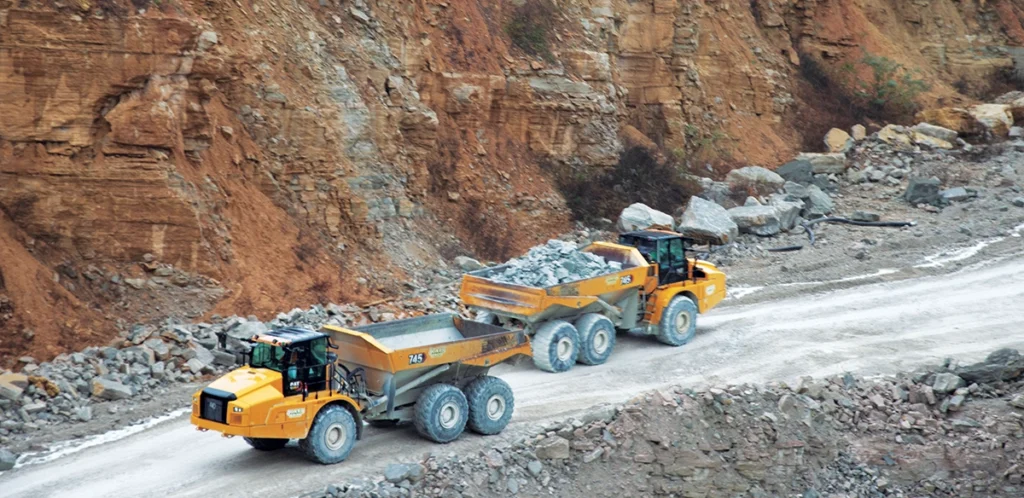
Curves should be designed with the maximum practical radius to help maintain truck speed and reduce side forces on tires. Excessive side force generates heat, shortens casing life and accelerates tread wear. Smooth, consistent curves also reduce steering corrections, operator fatigue and component wear.
When truck speeds exceed 10 mph, curves should be superelevated to offset centrifugal forces. The required amount depends on the curve radius and expected truck speed. Corners and hill crests should also afford operators clear visibility to spot obstacles and maintain safe stopping distances.
SAFETY TIP
Ensure visibility on curves and crests: Design haul roads with clear sightlines to give operators time to react to obstacles or other equipment.
Road width and bench design
Road width must accommodate truck size and traffic direction.
On one-way roads, width should be two to 2.5 times the width of the largest truck. On two-way roads, width should be three to 3.5 times truck width on straight sections and 3.5 to four times in curves.
Bench widths must allow loaded trucks to clear loading equipment and provide empty trucks with room to pass safely. A minimum bench width equals the turning radius of the machine plus additional space for a safety berm. Dump points must also provide sufficient maneuvering space for trucks to align properly without excessive backing or turning.
Definition
Bench width: The horizontal width of a working bench in a quarry, designed to provide clearance for haul trucks, loaders, and safety berms.
Rolling resistance
Rolling resistance is the force opposing a truck’s forward motion. Even small increases significantly affect productivity. A 5 percent rise in rolling resistance can cause a 10 percent drop in production.
For trucks with radial-ply tires:
- On hard, well-maintained roads, rolling resistance is about 1.5 percent
- On firm, smooth, rolling roads, it is about 3 percent
- Tire penetration of 1 in. equals about 4 percent resistance; 2 in. equals about 5 percent
- Penetration of 100 mm produces about 8 percent; 200 mm produces about 14 percent.
Soft or wet road bases are the most common cause of high rolling resistance. Adequate compaction and drainage structures prevent water from weakening the road base.
PRO TIP
Prioritize road design: Invest in well-graded, compacted haul roads to improve fuel economy, protect tires and reduce downtime.
Road construction materials
Haul roads must be built from material that compacts well and maintains stability – even in wet conditions. Quarry trucks exert deep compaction forces, so a stable, well-compacted base is essential. Roads constructed with poorly compacted material are more prone to rutting, spillage and increased resistance.
Effective haul road design balances grade, cross-slope, drainage, curvature, width and compaction. Properly engineered roads improve productivity by keeping trucks stable and efficient while protecting tires and reducing fuel and maintenance costs. Poorly designed roads, by contrast, increase downtime, reduce component life and raise the cost per ton.
SAFETY TIP
Maintain proper cross-slopes: Poor drainage leads to slick roads and rollover hazards. Design roads with appropriate cross- slope for local conditions.
Haul Road Maintenance & Equipment Solutions
Haul roads are an essential part of quarry operations. Their condition directly affects truck productivity, tire life, fuel efficiency, safety and overall cost per ton.
While road maintenance is often seen as an unavoidable expense, preventive practices can reduce long-term costs and improve operational efficiency.
Preventive maintenance
Consistent upkeep of haul roads prevents small issues from becoming costly problems. Regular grading, compaction and debris removal reduce the risk of washboarding, rutting and potholes that increase rolling resistance. Preventive maintenance also extends the life of tires and minimizes downtime associated with truck repairs.
Tire life and safety
Tires are among the most expensive consumables in hauling operations, with individual replacements exceeding $25,000. Poorly maintained haul roads accelerate tire wear and increase the likelihood of failures. Damaged tires compromise truck stability and create safety risks for operators. Maintaining smooth, debris-free roads significantly lowers the frequency of replacements and reduces the risk of accidents.
Spillage control
Spillage of material onto haul roads is both a safety hazard and a contributor to tire damage. Standard truck bodies without tailgates often lose material, especially on grades where gravity shifts the load rearward.
Operators sometimes reduce loading to prevent spillage, but this results in trucks carrying 10 to 20 percent less than their rated capacity. A 70-ton truck carrying 12 percent less material, for example, forfeits more than 200 tons of haulage potential in a single eight-hour shift.
SAFETY TIP
Control spillage on haul roads: Spilled rock creates tire hazards and rollovers. Regular cleanup and proper body design prevent accidents.
Tailgates and custom truck bodies
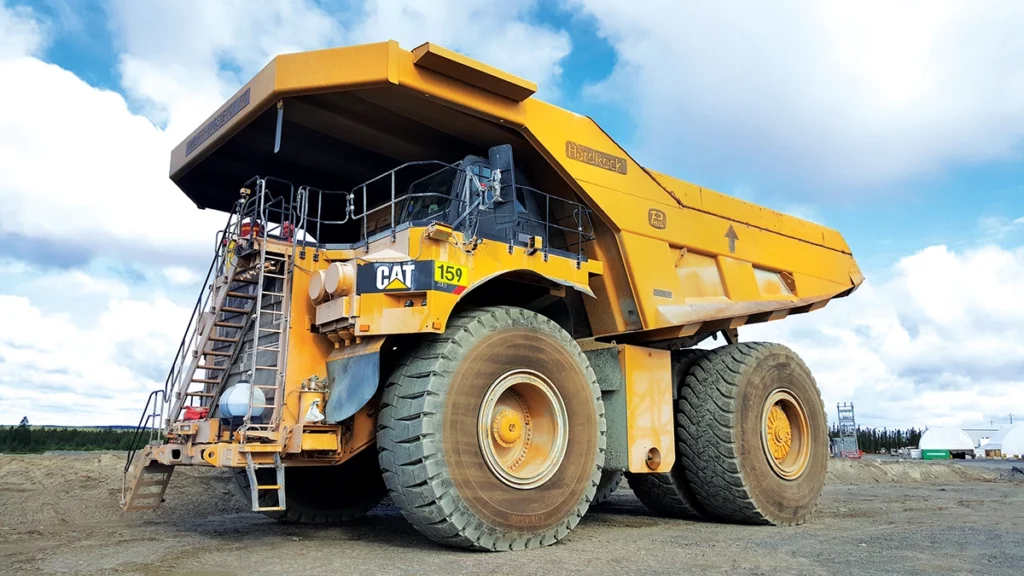
Adding a tailgate helps maximize payload while reducing spillage. Beyond tailgates, fully customized truck bodies provide the greatest efficiency.
Standard OEM bodies are designed as general solutions, assuming uniform material density. In practice, material properties vary widely – iron ore, coal, overburden and aggregates all differ in density. Custom bodies are engineered to match specific material characteristics, haul road profiles and loading equipment. These designs help ensure trucks operate at full payload without excessive spillage, extending tire life and improving overall cycle efficiency.
Rear-eject bodies
Rear-eject truck bodies are particularly useful for smaller trucks working in quarries or low-clearance environments. These bodies push material out the rear in a controlled manner rather than lifting the bed. The design improves stability, prevents spillage and enables safe operation in confined spaces. Rear-eject bodies are also valuable in haul road construction. They allow for even spreading of material without requiring the truck to stop and raise its bed, improving both safety and efficiency.
PRO TIP
Adopt rear-eject bodies where needed: Improve stability and safety in confined or low- clearance areas with rear-eject designs.
Material spreader attachments
Pairing a rear-eject body with a material spreader attachment further enhances haul road maintenance.
Spreader attachments can evenly distribute aggregates from fine particles to 2-in. stone across widths ranging from 5 to 60 ft. They are particularly effective for addressing washboard effects and maintaining a solid road base.
In winter conditions, spreaders also improve efficiency. Instead of assigning multiple workers to manually spread sand, a single operator can spread material directly from the truck cab, improving workforce utilization and reducing downtime.
Water tanks
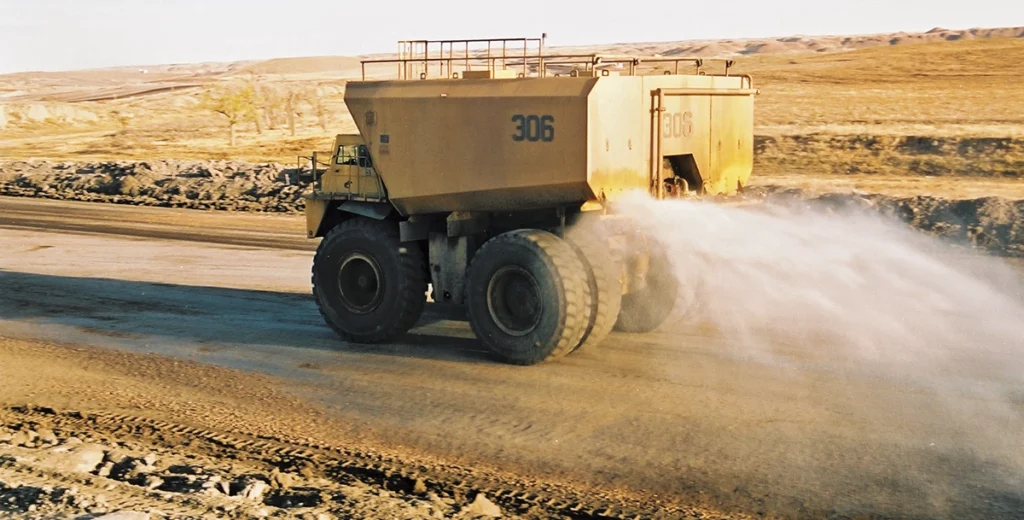
Dust suppression is another critical aspect of haul road maintenance.
Water trucks help mines comply with environmental regulations and extend road life by keeping surfaces compacted. Custom water tank designs can convert older haul trucks for this purpose, maximizing equipment investment.
Tank shape matters, though. Square tanks carry roughly 20 percent more water than round tanks of the same dimensions and lower the truck’s center of gravity, improving stability. Proper baffling systems reduce surging, while independently controlled spray heads allow operators to adjust output and avoid oversaturation.
&uuid=(email))
Operational considerations
Maintenance labor represents both direct cost and lost opportunity.
For example, 10 hours spent on road repair may equate to hundreds of dollars in labor plus additional lost production. Proactive haul road management reduces the need for emergency repairs and helps ensure equipment time is devoted to production.
Haul roads require continuous attention, but preventive maintenance reduces long-term costs and supports higher productivity. Practices such as grading and drainage control, adoption of tailgates or custom truck bodies, use of rear-eject systems and material spreaders, and investment in effective water suppression all contribute to safer, more efficient operations.
By maintaining haul roads systematically, producers can minimize future risks, extend equipment life and improve overall cost per ton.
FULL HANDBOOK
Chapter 1: Industry Overview
Chapter 2: Geology & Site Selection
Chapter 3: Drilling & Blasting
Chapter 4: Excavating & Loading
Chapter 5: Hauling
Chapter 6: Crushing & Hydraulic Breaking
Chapter 7: Screening
Chapter 8: Washing & Classifying
Chapter 9: Conveying & Material Handling
Chapter 10: Loadout & Weighing
Chapter 11: Safety & Health
Use the page numbers to continue reading, or select a section / chapter above.