
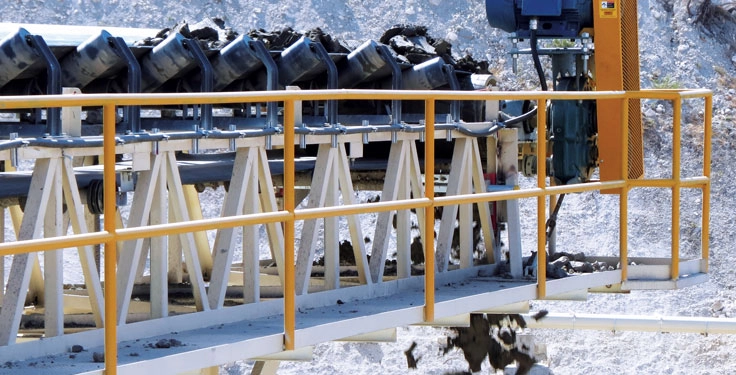
Bulk conveyor systems are foundational to operations.
While indispensable, these systems pose inherent risks and maintenance challenges. Ensuring safety, maximizing efficiency and extending the service life of components are interrelated objectives that must be addressed systematically.
Safety should be built into conveyor design from the start. Systems can incorporate modular components for easier servicing, continuous emergency shutoff pull cords, and enclosed return rolls to eliminate pinch hazards.
Training and operator engagement are also important. Personnel must be trained on system-specific procedures – including hazard recognition, lockout/tagout and emergency response.
Controlling dust, spillage and carryback is necessary to maintain safe and efficient operation. Proper chute design, belt cleaning systems, sealed skirtboards and a regular cleaning schedule mitigate these issues.
In inclined belt conveyor applications, managing the risk of rollback is essential to maintain a safe and efficient operation. Anti-runback systems are engineered specifically to address this concern by preventing the uncontrolled reversal of the conveyor belt and material flow – especially in the event of a belt failure or unplanned stop.
Used most often on the inclined sections of conveyors, anti-runback rollers enhance safety by eliminating the risk of sudden backsliding. This prevents catastrophic material spillage, protects take-up systems and pulleys, and reduces the likelihood of costly unplanned downtime. This protection is automatic and passive, requiring no external power or manual activation.
Aggregate operations can significantly benefit from this type of safety solution. Incorporating anti-runback roller systems is not just a preventive measure, but it’s a best practice for responsible, efficient and safe conveyor operation.
Additionally, high-quality components improve both safety and reliability by reducing failure points, minimizing downtime and limiting exposure during maintenance.
Improving conveyor efficiency
System efficiency is driven by both design and operation.
Design decisions made early on impact serviceability and long-term reliability. Modular components, inspection access points and self-cleaning or enclosed designs reduce material buildup and allow easier maintenance, contributing to reduced downtime.
Preventive maintenance is central to system performance. Inspections should focus on wear-prone items and be supplemented with condition monitoring tools such as thermal imaging and vibration analysis. Maintenance logs help identify patterns, allowing for data-informed improvements and more efficient scheduling of repairs.
Certain upgrades provide significant efficiency gains. Low-drag idlers reduce energy use, while ceramic or replaceable lagging on pulleys minimizes slippage and wear. Modern impact beds and skirtboard systems improve material control, and belt tracking systems prevent misalignment. Magnetic separators protect downstream equipment by removing ferrous debris.
Technology further supports operational efficiency. Sensors monitoring speed, alignment and temperature, coupled with SCADA systems and automated lubrication, allow for predictive rather than reactive maintenance. Even simple alignment sensors can prevent costly belt or component damage.
Efficient material flow begins with proper load zone design, centered material discharge and dust suppression. Paired with a robust housekeeping plan, these steps maintain clean operations and prevent disruptions.
Information for this article courtesy of Douglas Manufacturing Co.
Related: Douglas Rulmeca opens conveyor component plant in Alabama