
FULL HANDBOOK
Chapter 1: Industry Overview
Chapter 2: Geology & Site Selection
Chapter 3: Drilling & Blasting
Chapter 4: Excavating & Loading
Chapter 5: Hauling
Chapter 6: Crushing & Hydraulic Breaking
Chapter 7: Screening
Chapter 8: Washing & Classifying
Chapter 9: Conveying & Material Handling
Chapter 10: Loadout & Weighing
Chapter 11: Safety & Health
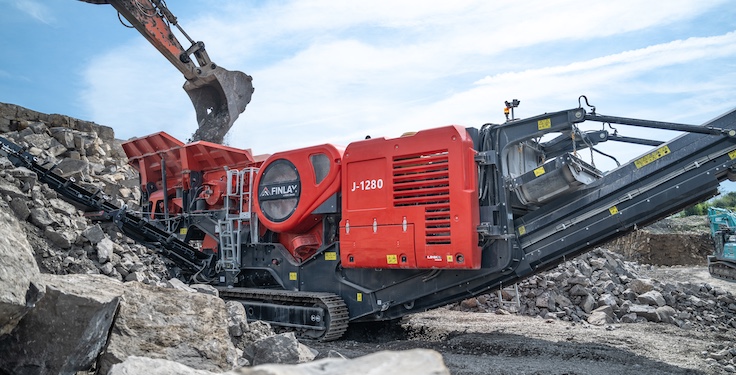
Crusher Safety
While new technologies and equipment are emerging to make the workplace safer, an operation’s best resource is its people. It’s not only important to make sure employees are trained on the safety procedures of the workplace, but on the proper use of their machine.
Untrained, unknowledgeable work staff can lead to unsafe work environments. Just because a person is on a site working with other equipment doesn’t necessarily mean they’re trained on the proper use of a crusher or breaker. Do they know proper feed size and capacity? Not knowing these can lead to oversized material entering the crusher and cause malfunction.
SAFETY TIP
Respect feed size limits: Oversized rock can damage chambers, stall machines and put operators at risk during restarts.
&uuid=(email))
Safety on a crusher starts with the person feeding the plant. The person feeding the plant must be trained on best practices specific to the crusher they’re working with. An operator may have years of experience operating and loading a cone crusher, for example, but that doesn’t translate into experience loading and operating a jaw crusher.
Operators must be trained on what to look for to prevent unnecessary maintenance. Spending the time and resources to train operators not only leads to safer workplaces, but it ultimately increases production. The safer you are, the more productive you are.
When operators proactively keep crushers running safely and effectively, they increase production. A couple of minutes spent on cleaning or maintenance can lead to hours of productivity later and an overall safer working machine. Operators should also keep detailed records of maintenance and other issues.
SAFETY TIP
Train the operator, not just the loader: Each crusher type has unique operating requirements. Experience on one machine doesn’t translate to another.
Once operators are fully trained on a machine and site-specific safety policies, it’s time to talk crushing safety. Make sure the operator is in protective clothing. Also, make sure all guards and safety devices are in place at the crusher – secured and functional before operating. Be sure to review and follow all lockout, tagout and tryout procedures for the crusher when performing equipment maintenance, repairs or adjustments.
Additionally, keep crushers working safely and efficiently by performing regular maintenance inspections. This allows operators to pinpoint problems that may make the machine unsafe to use. Some tips to keep a safe crusher:
- Operate at the appropriate capacity
- Keep platforms and areas around the machine clean
- Ensure lubrication, flow, temperature, wear and pressure are monitored
Safety is something that can be practiced and planned daily, monthly and yearly. Try to make yourself or your workspace safer every day. Clean up hazardous debris. Walk to your workstation a different way to see if you notice anything unsafe.
Crusher operators should follow all operational guidelines and ensure all safety best practices are in place. Also, take the time to make sure the entire workforce is properly trained on site safety procedures and best practices. Hold regular safety meetings to review new procedures or address any safety concerns. Set yearly safety goals and commend operators on years of safety excellence.
SAFETY TIP
Guard moving parts: Make sure belt guards, access covers and safety devices are in place and secure before operation.
Hydraulic Breaking
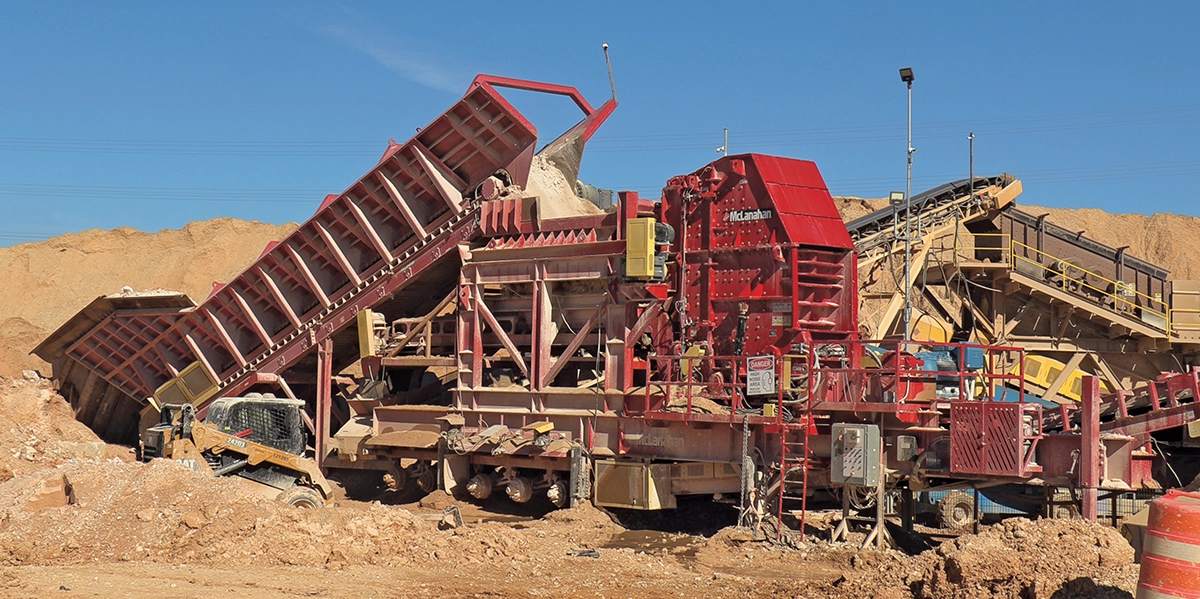
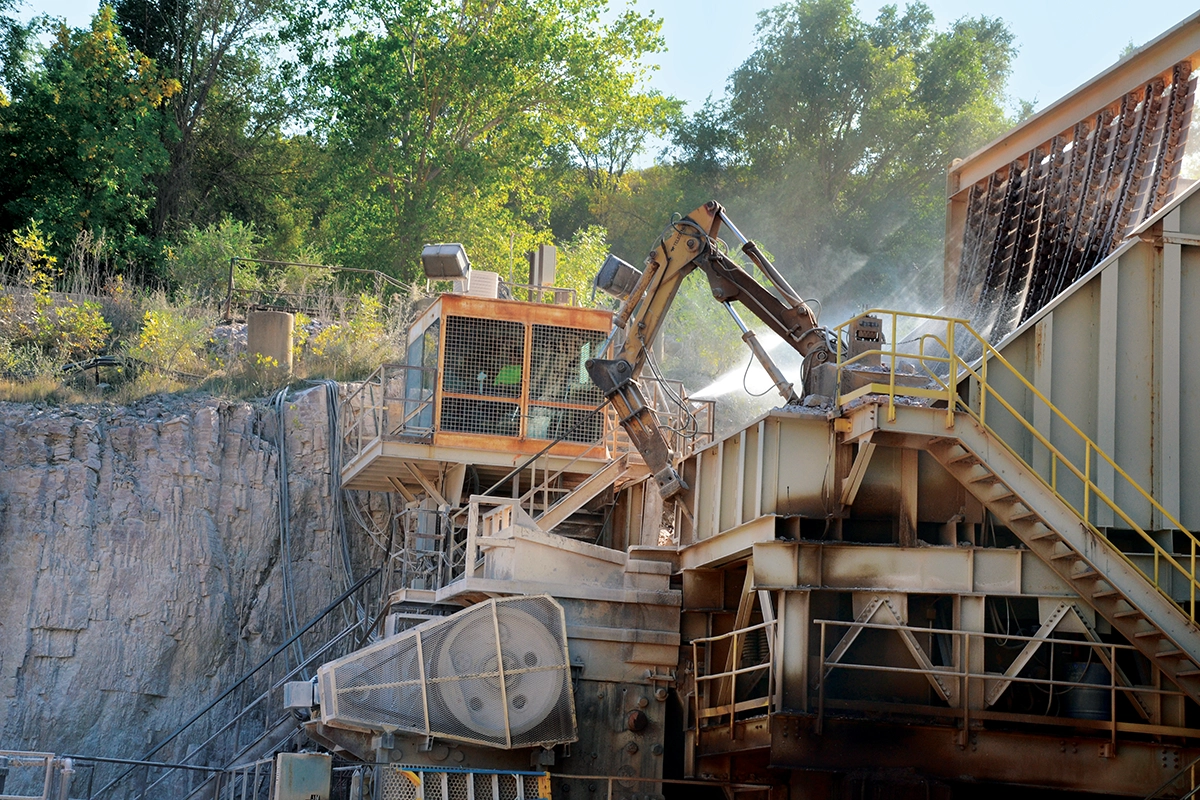
After blasting, breakers are used to break down aggregates that are typically not only too large to be hauled in dump trucks, but too large for crushers that size rock to meet specifications.
Breakers can be mounted to a mobile carrier, such as an excavator, or to stationary boom systems that can be attached to a crusher. The total number of hydraulic breakers can vary from site to site depending on production levels, the type of aggregate materials and the entire scope of the operation.
Without hydraulic breakers, workers rely on alternative practices that can quickly affect production rates – for instance, blasting mandates shutting down operations and moving workers to a safe location. And when you consider how many times oversize aggregates might need to be reduced, this can lead to a significant amount of downtime and substantially lower production rates.
Aggregate operations can use hydraulic breakers to attack oversize without having to clear an operation. But with an ever-growing variety of manufacturers, sizes and models to choose from, narrowing the decision to one hydraulic breaker can be overwhelming with all the stats and speculation. That’s why it’s important to know which factors to consider before investing in a new hydraulic breaker.
Selection
In most cases, heavy equipment dealers are very knowledgeable about quarry equipment – including breakers – so they are a good resource to find the best model for a carrier. More than likely, they will have specifications and information about various breaker sizes to help gauge which model is best. But being familiar with what to look for in a breaker can streamline the selection process.
First, carefully review the carrier weight ranges. A breaker that is too big for the carrier can create unsafe working conditions and cause excessive wear to the carrier. An oversized breaker also transmits energy in two directions: toward the aggregates and through the equipment. This produces wasted energy and can damage the carrier.
Using a breaker that’s too small puts excessive force on the tool steel, which transmits percussive energy from the breaker to the material. Using breakers that are too small can also damage mounting adapters and internal components, which considerably decreases their life.
Once you find a breaker that meets the carrier’s capacity, check its output power. This is typically measured in foot-pounds. Foot-pound classes are generalizations and not based on any physical test.
Often, a breaker’s output will be documented in one of two ways: as the manufacturer’s calculated foot-pound class or as an Association of Equipment Manufacturers’ (AEM) measured foot-pound rating. Foot-pound class ratings can be deceiving because they are loosely based on the breaker’s service weight and not the result of any physical test.
The AEM rating, on the other hand, measures the force a breaker exerts in a single blow through repeatable and certified testing methods. The AEM rating, which was developed by the Mounted Breaker Manufacturers Bureau, makes it easier to compare breaker models by reviewing true figures collected during an actual test procedure.
For instance, three breaker manufacturers might claim their breakers belong in a 1,000-lb. breaker class. But AEM testing standards can reveal all three have less foot-pound impact.
You can tell if a breaker has been AEM tested if a manufacturer provides a disclosure statement or if the breaker is labeled with an AEM Tool Energy seal. If you cannot find this information, contact the manufacturer.
In addition to output energy specifications, manufacturers often supply estimates for production rates on different types of aggregate material. Make sure to get the right measurements to make the best decision.
In addition to weight and output power, look at the breaker’s mounting package. Two things are crucial for mounting a breaker to a carrier: a hydraulic installation kit and mounting components. Breakers need hydraulic plumbing with unidirectional flow to move oil from the carrier to the breaker and back again. A one-way flow hydraulic kit is sufficient to power the breaker, as long as components are sized to properly handle the required flows and pressures.
Still, consider a bidirectional flow hydraulic kit if you plan to use the same carrier with other attachments that require two-way flow. Check with a breaker manufacturer or dealer to determine which hydraulic package best fits current and future needs.
Hydraulic flow and pressure specifications must also be considered when pairing a breaker to a hydraulic system. If the carrier cannot provide enough flow at the right pressure, the breaker won’t perform with maximum output. This lowers productivity and can damage the breaker.
Additionally, a breaker receiving too much flow can wear quickly, reducing its service life. For the best results, follow the hydraulic breaker specifications found in owner’s manuals, catalogs and brochures. You’ll find out if a breaker has additional systems that might require additional servicing.
For instance, some breakers feature nitrogen gas-assist systems that work with the hydraulic oil to accelerate the breaker’s piston. The nitrogen system’s specifications must be followed for consistent breaker power output.
Brackets or pin and bushing kits are commonly required to attach the breaker to the carrier. Typically, they are bolted to the top of a breaker and configured to match a specific carrier.
Some manufacturers make universal mounting brackets that can accommodate two or three different sizes of carriers. With the adjustable pins, bushings or other components inside these universal brackets, the breaker can fit a range of carriers.
However, varying distances between pin centers can complicate hookups to quick coupling systems. In addition, loose components like spacers can be lost when the breaker is not in use and detached from the carrier.
Some carriers are equipped with quick-coupling systems, which require a breaker’s mounting interface to be configured like the carrier’s original attachment. Some manufacturers produce top-mount brackets that pair extremely well with couplers. This allows operators to use the original bucket pins from the carrier to attach the breaker, eliminating the need for new pins. This pairing also ensures a fast pickup with the quick coupler.
&uuid=(email))
Tool varieties
It’s important to check which breaker tools are available through the dealer and manufacturer.
The most common for aggregates are chisels and blunts. There are two kinds of chisels commonly used in aggregates: crosscut and inline. Both resemble a flat head screwdriver, but the crosscut chisels are used when carrier operators want to direct force in a left-to-right concentration. Inline chisels direct force fore and aft.
With chisel tools, operators can concentrate a breaker’s energy to develop cracks, break open seams or define scribe lines.
If a chisel can’t access or develop a crack or seam, a blunt can be used. Blunts have a flattened head that spreads energy equally in all directions. This creates a shattering effect that promotes cracks and seam separation.
Extending breaker life
Regular breaker maintenance is necessary, yet it’s one of the biggest challenges for aggregate operations.
It not only extends the life of the breaker but can keep minor inconveniences from turning into expensive problems. Some manufacturers recommend operators inspect breakers daily to check grease levels and ensure there are no worn or damaged parts or hydraulic leaks.
Breakers must be lubricated with adequate amounts of grease to keep the tool bushing area clear and reduce friction, but follow the manufacturer’s recommendations. For example, adding grease before properly positioning the breaker can lead to seal damage or even catastrophic failure. Too little grease can cause the bushings to overheat, seize and damage tools.
Also, manufacturers advise using high-moly grease that withstands working temperatures greater than 500 degrees. Some breakers have automatic lube systems that manage grease levels, but those systems still need inspections to ensure there’s adequate grease in the vessels. Shiny marks on the tool are a good indication the breaker is not properly lubricated.
Inspect the unit’s retaining pins, look for oil leaks and any loose or damaged bolts, which can quickly turn a minor problem into a major issue.
SOURCES
Deister Machine Co.
deistermachine.com
Brandon Godman
Marion Machine
marionmachinellc.com
Masaba
masabainc.com
Mark Krause
McLanahan Corp.
mclanahan.com
McLanahan Corp.
mclanahan.com
Mellott
mellottcompany.com
Kevin Cadwalader
REMco
remcovsi.com
Jarrod Adcock
Superior Industries
superior-ind.com
Curt Theisen
Superior Industries
superior-ind.com
Superior Industries
superior-ind.com
Carol Wasson
FULL HANDBOOK
Chapter 1: Industry Overview
Chapter 2: Geology & Site Selection
Chapter 3: Drilling & Blasting
Chapter 4: Excavating & Loading
Chapter 5: Hauling
Chapter 6: Crushing & Hydraulic Breaking
Chapter 7: Screening
Chapter 8: Washing & Classifying
Chapter 9: Conveying & Material Handling
Chapter 10: Loadout & Weighing
Chapter 11: Safety & Health
PROMOTED PARTNERS