
FULL HANDBOOK
Chapter 1: Industry Overview
Chapter 2: Geology & Site Selection
Chapter 3: Drilling & Blasting
Chapter 4: Excavating & Loading
Chapter 5: Hauling
Chapter 6: Crushing & Hydraulic Breaking
Chapter 7: Screening
Chapter 8: Washing & Classifying
Chapter 9: Conveying & Material Handling
Chapter 10: Loadout & Weighing
Chapter 11: Safety & Health
Best Practices
Optimizing crusher settings
Properly setting a crusher is one of the most important steps in achieving efficient, consistent and cost-effective production.
Whether processing soft limestone or hard granite, adjusting crusher settings to match the material type and desired product size can greatly influence throughput, product shape and wear part longevity.
Match the machine to the material
Material hardness, abrasiveness and moisture content all affect how a crusher should be configured. For example:
- Harder materials may require wider closed-side settings (CSS) to avoid excessive wear or energy draw.
- Softer, more friable materials can be crushed more aggressively with tighter settings to maximize reduction.
- Wet or sticky material may necessitate slower speeds or feed rate adjustments to prevent buildup or blockages.
Understanding these material characteristics helps operators choose the right combination of speed, feed size and chamber configuration for the crusher type being used.
PRO TIP
Match CSS to material: Adjust closed-side settings based on material hardness and desired product size for efficiency and longer liner life.
&uuid=(email))
Fine-tune for performance
Once basic parameters are matched to the material, operators can fine-tune:
- CSS. A tighter CSS produces finer material but can increase wear and energy use.
- Feed gradation and consistency. Keep crushers choke-fed with even material flow to maintain steady pressure and ideal particle shape.
- Liner profile and wear. Monitor wear patterns and replace liners before they negatively impact product size or efficiency.
Monitor and adjust in real time
Modern automation systems allow operators to monitor performance metrics – such as motor load, throughput and CSS – in real time. This makes it easier to adapt settings as material properties change throughout the day or from one shot to the next.
The best crushing results come not from “set it and forget it,” but from operators who understand their equipment, their material and how to optimize for both.
Feeding and flow control
Efficient crushing starts with a consistent, well-controlled feed. No matter how advanced the crusher is, its performance depends on what – and how – it’s being fed. Proper loading techniques ensure uniform wear, optimal reduction and fewer unplanned stops due to overload or uneven material flow.
Consistent, choke-fed operation
For most crushers – especially cones – choke feeding is key. This means keeping the crushing chamber full to maintain even pressure and ensure the material is crushed in the most efficient compression zone.
When the chamber runs low, rock bounces around instead of being compressed. This can cause poor particle shape, increased wear and even damage. Loaders and operators must coordinate closely with plant flow to avoid starving the crusher or dumping excessive material all at once. A steady stream of material keeps the system balanced.
PRO TIP
Keep crushers choke-fed: Maintain a consistent, full chamber to maximize reduction, particle shape and wear life.
Use the right equipment for control
Feeders play a crucial role in regulating flow.
Options like belt feeders, vibrating grizzly feeders and pan feeders can meter material into the crusher at a consistent rate. Advanced systems use sensors to monitor crusher load and automatically adjust the feeder speed to maintain optimal performance.
Some automation platforms go a step further, dynamically adjusting feed rate to match motor amperage or cavity pressure in real time.
Avoid overloading and segregation
Overloading the crusher with heavy, dense rock or allowing segregated feed (fines on one side, coarse on the other) leads to uneven wear and increased maintenance. Proper material blending and controlled delivery help minimize these risks.
Smart feeding isn’t just about volume. It’s about balance, consistency and coordination. Get it right, and your crusher runs smoother, longer and more efficiently.
Maintenance protocols
In crushing operations, consistent maintenance is the foundation of long-term equipment performance. While reactive fixes might keep a plant running short-term, only proactive, well-timed service routines will protect your investment, minimize downtime and maintain production targets over the long haul.
Selecting the right manganese
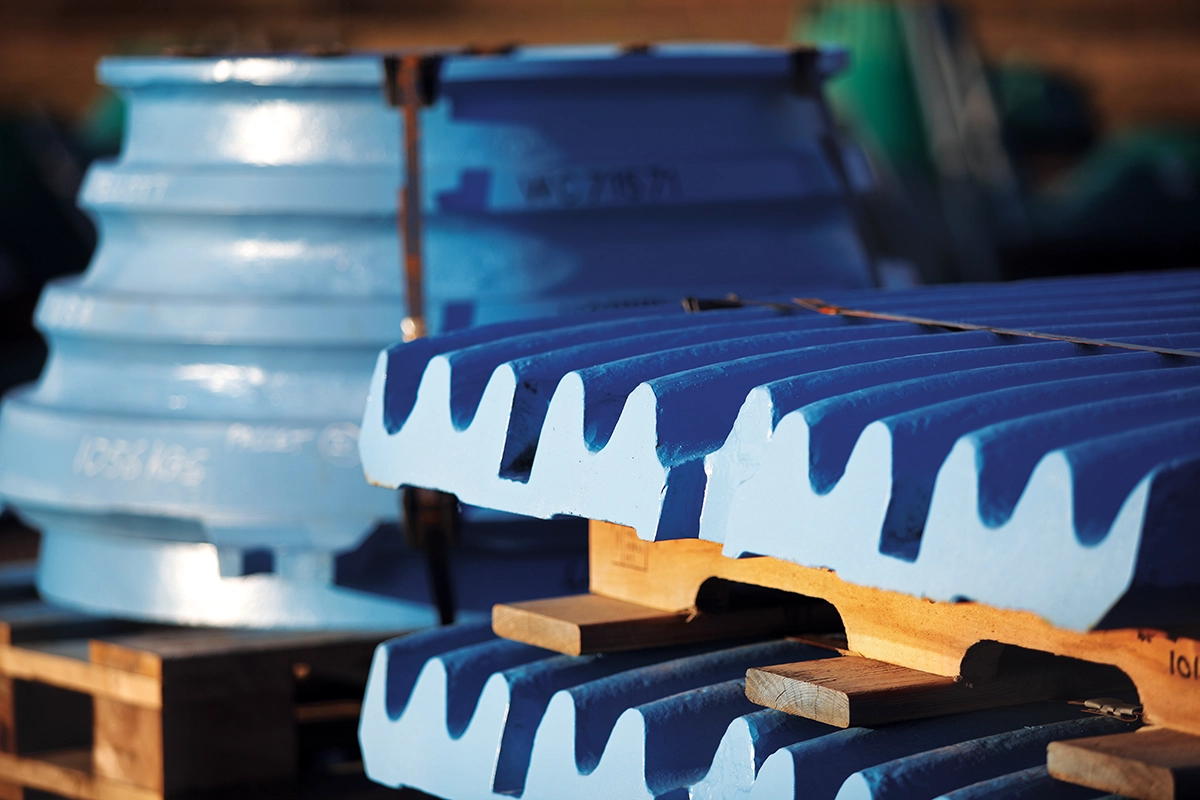
Crusher liners are typically made of manganese steel, but not all manganese is the same.
Matching manganese percentage and alloy type to the material being processed can significantly extend wear life. Harder rock often requires lower manganese content for work hardening, while softer rock may benefit from higher manganese. Choosing incorrectly can shorten wear part life and increase costs.
As operators explore manganese parts for their rock crushing operation, here are some considerations to make for choosing the right ones:
- Start with the basics. Why should you choose manganese wear parts for your crushing operation at all? The basic answer – one uncovered long ago – is that manganese alloys are work-hardening metals, meaning the harder you hit them, the harder they get. In wear part applications, material is hit repeatedly, so manganese steel is ideally suited for durability in this role. Manganese has been used as such for more than a century. But while higher manganese content in an alloy makes it harder, it also makes it more brittle. The upshot of this is that pure manganese doesn’t make for good wear parts. Instead, different ratios of manganese are used, along with steel and other materials, for different applications.
- Factors impacting wear parts. When choosing manganese wear parts, there are three key considerations to make:
- The material being crushed. Is the rock hard (i.e., granite) or soft (i.e., limestone, sandstone)? What size is it being crushed to? How has material been prepped? If material is being recycled, is tramp metal included?
- The final product. What is the final size of the product?
- The crusher used. Is it a jaw or a cone crusher? What’s the make and model? And what are the manufacturer’s specifications for wear parts?
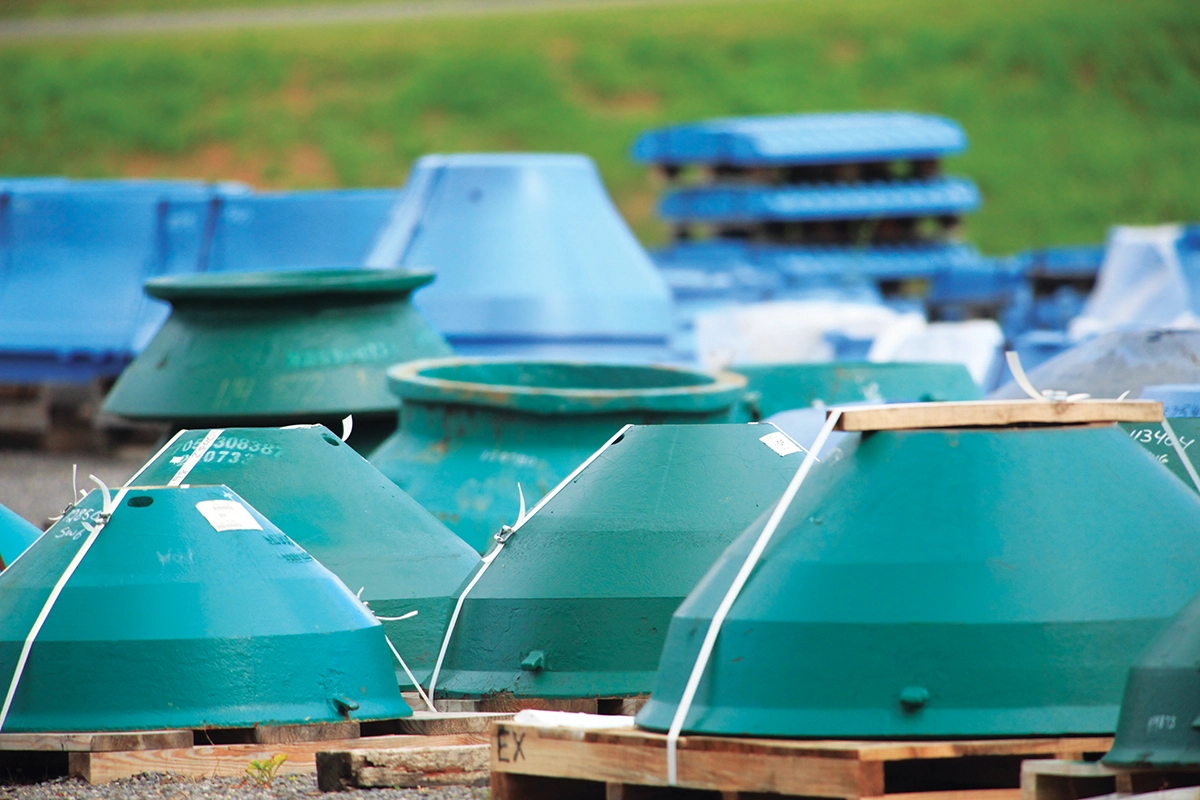
With these questions in mind, there are a few common manganese content levels whose wear parts are fits for certain applications, including:
- 11 to 14 percent manganese wear parts. This represents the lower end of the spectrum. Wear parts that are 11 to 14 percent manganese are more ductile and more durable, and they’ll also work-harden the fastest. This means they’re best suited for very low-abrasion, lower-strength rock.
- 18 percent manganese wear parts. This represents the middle of the spectrum. Eighteen percent manganese wear parts are middle-of-the-road when it comes to abrasion resistance and the rate at which parts work-harden. As a result, 18 percent manganese is one of the most used ratios. Outside of limestone, it works for most applications.
- 22 to 24 percent manganese wear parts. Finally, 22 to 24 percent manganese wear parts represent the high end of the spectrum. At this level of manganese, wear parts are brittle, and so they’re only suited for high-abrasion material that’s even more brittle.
Make maintenance predictable
Crushers operate under extreme conditions processing abrasive material at high tonnages with constant vibration. Without regular attention, wear accelerates and minor issues can escalate into major failures.
That’s why it’s essential to follow a scheduled maintenance program that includes:
- Daily visual inspections. Check for oil leaks, unusual noises, excessive vibration or material buildup.
- Weekly component checks. Inspect belts, liners, seals and fasteners for signs of wear or misalignment.
- Monthly lubrication checks. Ensure grease and oil systems are full, clean and flowing properly.
- Quarterly or seasonal services. Rotate or replace wear parts, reset machine settings and check alignment.
Maintaining accurate service records allows teams to track trends and plan maintenance before problems interrupt production.
PRO TIP
Keep records religiously: Track maintenance, liner life and performance metrics to establish reliable service intervals and predict part changes.
Empower operators to monitor
Operators are the first line of defense. Training them to recognize early warning signs can help catch issues before they escalate.
Many modern crushers come equipped with automated diagnostics and real-time monitoring, which alert crews to abnormal conditions such as high amperage draw, oil temperature spikes or out-of-spec settings. These alerts should prompt inspection and intervention and not be ignored.
Unplanned downtime is expensive – not just in repair costs, but in lost production. A disciplined maintenance protocol pays for itself by keeping the plant running reliably and safely, day after day.
&uuid=(email))
Troubleshooting common issues
Even well-run crushing operations encounter problems. Understanding the most common issues, like blockages, inconsistent material flow and excessive wear, helps operators act quickly and minimize costly downtime.
Crusher blockages often result from oversized feed, poor material control or uneven loading. When too much material enters the chamber at once – or when a large rock bridges the opening – the machine can stall. This not only halts production but can damage internal components during forced restarts.
To prevent blockages:
- Maintain a steady feed rate and avoid sudden surges
- Pre-screen material to remove oversize or use a grizzly to scalp fines
- Ensure loader operators avoid dumping large, irregular rocks directly into the crusher
If a blockage occurs, always follow lockout/tagout procedures. Never enter a crusher chamber without full shutdown and verification.
Inconsistent flow, meanwhile, creates production swings and can lead to unnecessary wear. Starved crushers (not choke-fed) allow material to ricochet in the chamber instead of being compressed, reducing product quality and increasing stress on liners.
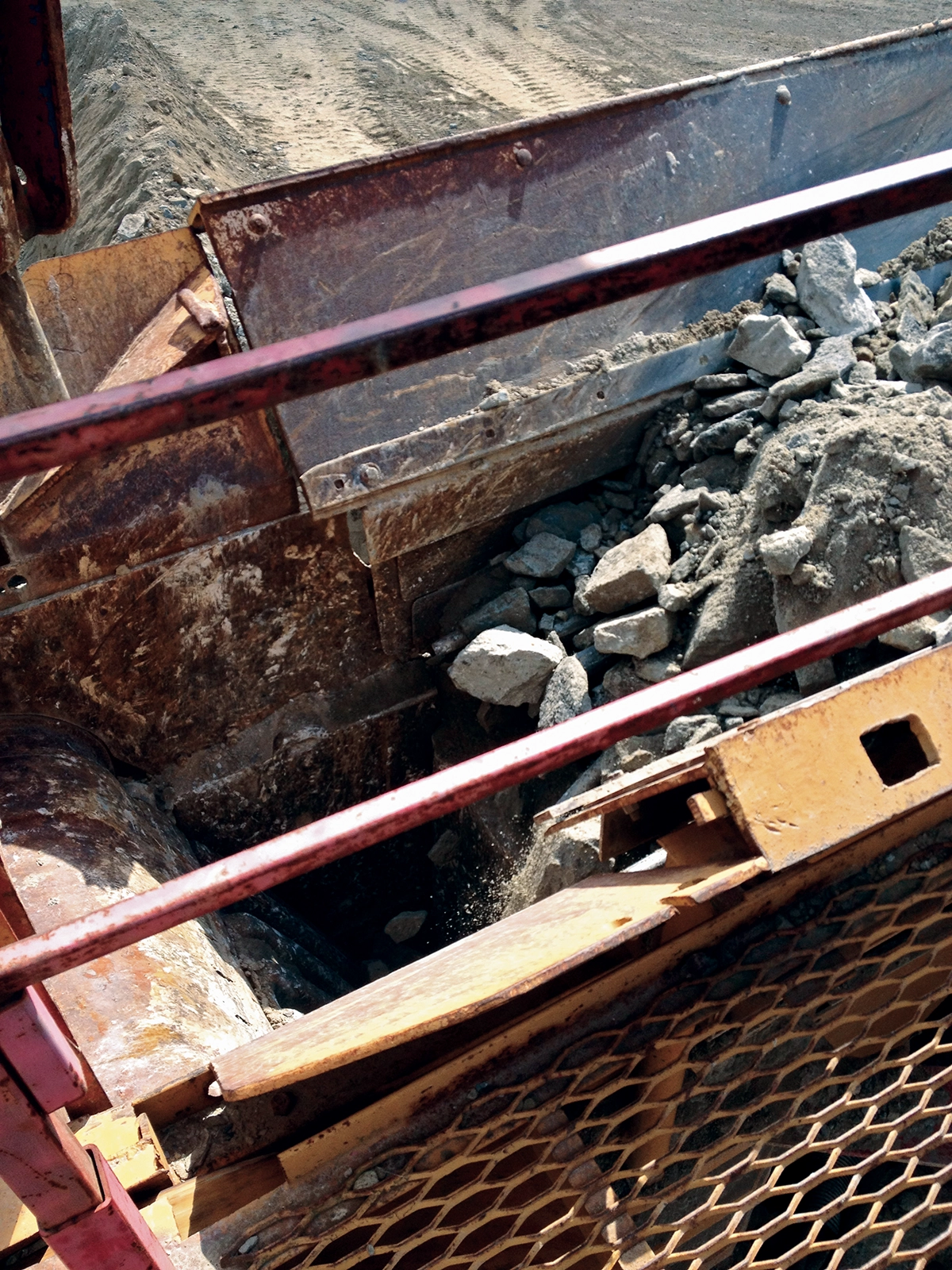
Use feed sensors, variable-speed feeders and automation systems to maintain constant feed levels, balanced material gradation and even flow across the chamber.
Unusual or accelerated wear is worth monitoring, as well. This often traces back to:
- Operating outside ideal closed-side settings
- Misaligned liners
- Improper feed distribution (segregation of coarse/fine material)
- Running with underfilled or overfilled cavities
PRO TIP
Rotate liners on schedule: Don’t wait until product quality drops. Schedule liner changes to keep gradation and reduction ratios in spec.
Troubleshooting begins with awareness. The more consistently crews observe performance and investigate small changes, the faster they’ll resolve issues and keep production on track.
Another common – and frustrating – issue in crushing operations is inconsistent product size. Poor gradation or excessive variation in material size can impact downstream processes, compromise quality standards and trigger rejected loads. Fortunately, several key factors influence product uniformity, and most can be controlled with proper attention.
Start by confirming the CSS and chamber configuration are correct for the desired output. As liners wear, the actual CSS can drift, leading to larger or uneven material. Use feeler gauges or automated monitoring to regularly verify and adjust the setting.
Crusher performance depends on consistent, choke-fed loading. Fluctuations in feed rate or material type can lead to sudden shifts in pressure and inefficient crushing, which often causes flaky or elongated particles. Feeders, level sensors and automated controls can help regulate flow and maintain chamber consistency.
Definition
Reduction ratio: The ratio between the feed size and the product size after crushing For example, a 6-to-1 ratio means feed at 6 in. is reduced to 1 in.
Uneven liner wear can affect the compression profile of the crushing chamber, leading to variable output. Rotating or replacing liners on schedule – not after performance drops – helps maintain consistent reduction ratios.
When coarse and fine material separate before entering the crusher, the chamber may be overfilled on one side and underfilled on the other. This leads to uneven reduction and poor particle shape. Proper loading techniques and blending strategies help prevent this.
Uniform product begins with uniform process control. Small adjustments upstream often solve big problems downstream.
FULL HANDBOOK
Chapter 1: Industry Overview
Chapter 2: Geology & Site Selection
Chapter 3: Drilling & Blasting
Chapter 4: Excavating & Loading
Chapter 5: Hauling
Chapter 6: Crushing & Hydraulic Breaking
Chapter 7: Screening
Chapter 8: Washing & Classifying
Chapter 9: Conveying & Material Handling
Chapter 10: Loadout & Weighing
Chapter 11: Safety & Health
Use the page numbers to continue reading, or select a section / chapter above.