
The Pit & Quarry University Handbook is an educational resource that offers comprehensive lessons covering the entire aggregate production process from start to finish, highlighting new technologies and enhanced procedures within each branch/category of the aggregates industry.
FULL HANDBOOK
Chapter 1: Industry Overview
Chapter 2: Geology & Site Selection
Chapter 3: Drilling & Blasting
Chapter 4: Excavating & Loading
Chapter 5: Hauling
Chapter 6: Crushing & Hydraulic Breaking
Chapter 7: Screening
Chapter 8: Washing & Classifying
Chapter 9: Conveying & Material Handling
Chapter 10: Loadout & Weighing
Chapter 11: Safety & Health
Crushing is the first mechanical step in the aggregate production process.
Once raw materials are mined from the earth – whether granite, limestone, gravel or other stone – they must be reduced in size to meet the specifications required for construction and industrial uses.
The crushing process is typically divided into three main stages: primary, secondary and tertiary. Each stage uses different types of crushers and serves a specific role in preparing the final product.
Crushing Stages
Primary crushing
The goal of primary crushing is to reduce large, blasted rock into more manageable sizes that can be processed further. This stage handles the largest feed sizes – as big as several feet across – and outputs material typically ranging from 6 to 10 in. in size.
Primary crushers are designed for durability and throughput and often operate at or near the quarry face. The most common primary crushers are gyratory crushers and jaw crushers.
Gyratory crushers are used in high-capacity applications and offer continuous crushing action. Jaw crushers use compressive force between a fixed and moving jaw.
Primary crushers are generally not used to produce a final product. Rather, they create feedstock for the secondary crusher while beginning the process of shaping and sizing.
&uuid=(email))
Secondary crushing
Secondary crushing further reduces material size to meet specific gradation requirements or prepare feed for tertiary units. Feed material typically ranges from 6 to 10 in. and is reduced to about 1 to 3 in., depending on the desired end use.
Cone crushers and horizontal shaft impactors (HSI) are common secondary crushers. Cone crushers are ideal for abrasive materials and produce good particle shape while HSIs are known for high reduction ratios and flexibility.
Secondary crushers are often used in closed-circuit systems with screens, allowing operators to control gradation more precisely and return oversized material for additional reduction. This stage is where producers begin to fine-tune particle size distribution to meet job specifications.
Tertiary crushing
Tertiary crushing is used when producing fine aggregates or manufactured sand, or when additional refinement is needed to meet tight specifications. At this stage, feed sizes are typically 1 to 3 in. and are reduced to below 1 in.
Equipment used at this stage includes vertical shaft impactors (VSIs) and cone crushers. VSIs provide precise shaping and cubical products whereas cone crushers feature high-speed models designed for finer output and tighter gradation control.
Tertiary crushers are commonly paired with wash plants to remove excess fines or dust. This stage is critical when producing high-spec products for concrete, asphalt or specialty applications.
In rare cases, a quaternary stage is added to achieve ultra-fine sizing or to meet exceptionally tight product specifications.
Still, crushing is not just about reducing size. It’s about controlling particle shape, maximizing efficiency and delivering products that meet strict industry standards. Understanding each crushing stage helps producers design better systems, reduce wear costs and produce materials that perform well in the field.
Crusher Types
Gyratory crushers
A gyratory crusher uses a mantle that gyrates, or rotates, within a concave bowl. As the mantle contacts the bowl during gyration, it creates compressive force, which fractures the rock. The gyratory crusher is mainly used in rock that is abrasive and/or has high compressive strength. Gyratory crushers are often built into a cavity in the ground to aid in the loading process, as large haul trucks can access the hopper directly.
Jaw crushers
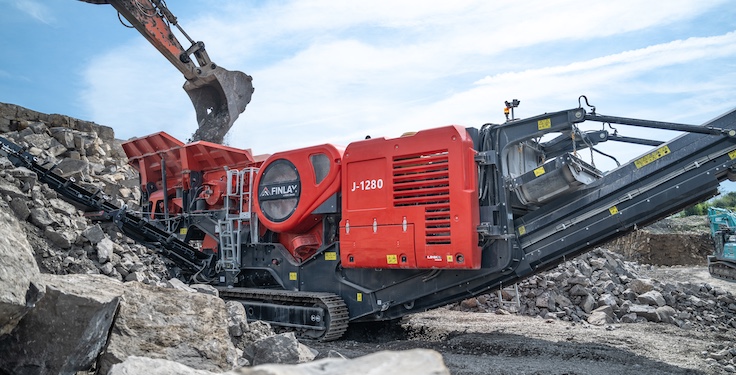
Jaw crushers are compression crushers allowing stone into an opening at the top of the crusher, between two jaws.
One jaw is stationary while the other is movable. The gap between the jaws becomes narrower farther down into the crusher. As the movable jaw pushes against the stone in the chamber, the stone is fractured and reduced, moving down the chamber to the opening at the bottom.
The reduction ratio for a jaw crusher is typically 6-to-1, though it can be as high as 8-to-1. Jaw crushers can process shot rock and gravel. They can work with a range of stone from softer rock, such as limestone, to harder granite or basalt.
HSI crushers
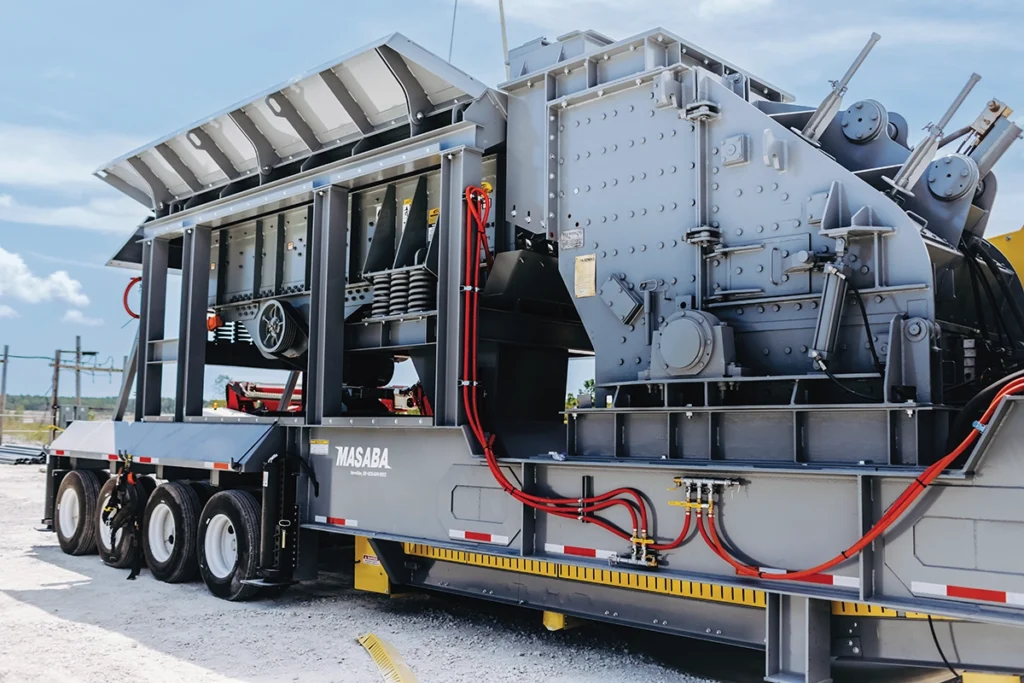
As the name implies, horizontal shaft impact (HSI) crushers have a shaft that runs horizontally through the crushing chamber, with a rotor turning hammers or blow bars.
HSIs use the high-speed impacting force of the turning blow bars hitting and throwing stone to break rock. They also use the secondary force of the stone hitting the aprons (liners) in the chamber, as well as stone hitting stone.
With impact crushing, the stone breaks along its natural cleavage lines, resulting in a more cubical product, which is desirable for many of today’s specifications. HSI crushers can be primary or secondary crushers. In the primary stage, HSIs are better suited for softer rock, such as limestone, and less abrasive stone. In the secondary stage, HSIs can process more abrasive and harder stone.
Cone crushers
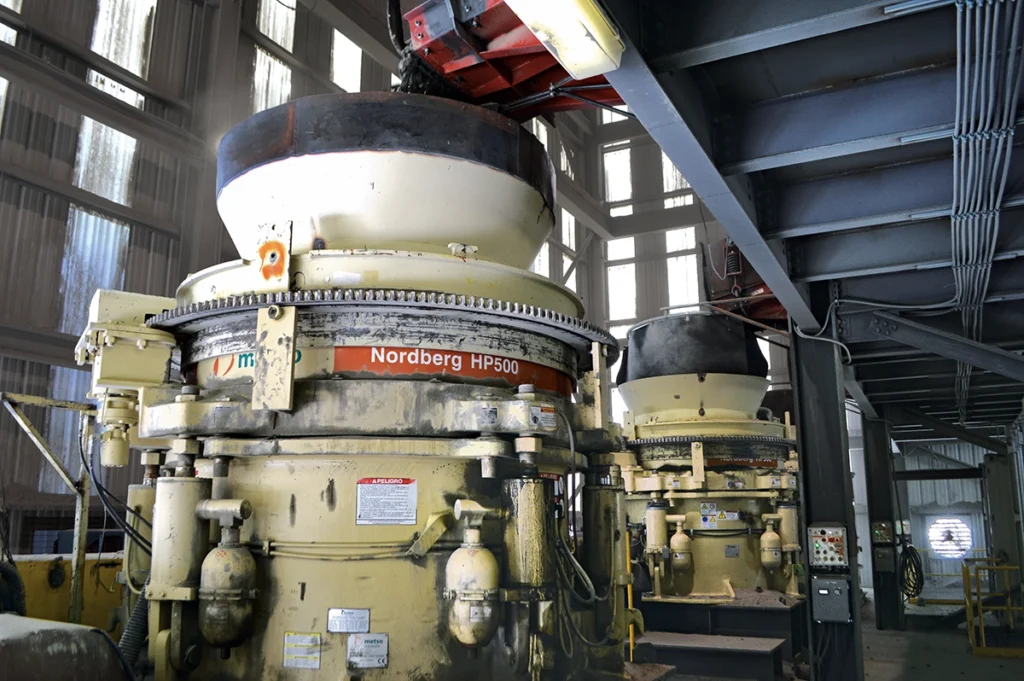
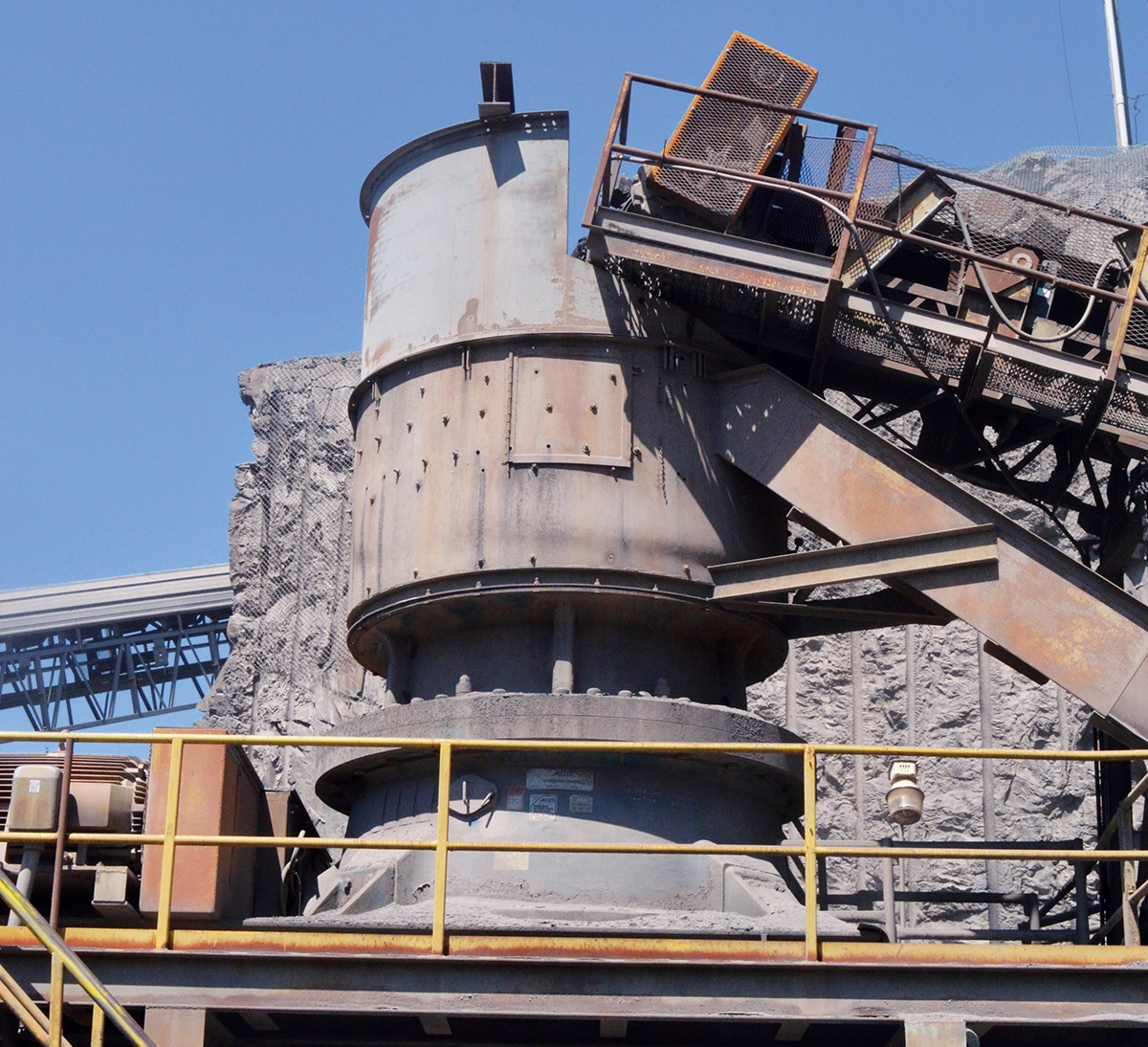
Cone crushers are like gyratory crushers in that they have a mantle that rotates within a bowl, but the chamber is not as steep. They are compression crushers that generally provide reduction ratios of 6-to-1 to 4-to-1. Cone crushers are used in secondary, tertiary and quaternary stages.
With proper choke-feed, cone-speed and reduction-ratio settings, cone crushers will efficiently produce material that is high quality and cubical in nature. In secondary stages, a standard-head cone is usually specified. A short-head cone is typically used in tertiary and quaternary stages. Cone crushers can crush stone of medium to very hard compressive strength as well as abrasive stone.
Definition
Anvil ring: A circular arrangement of steel blocks in a VSI chamber that rock impacts after leaving the rotor in rock-on-steel configurations.
VSI crushers
Vertical shaft impact (VSI) crushers have a rotating shaft running vertically through the crushing chamber. In a standard configuration, the VSI’s shaft is outfitted with wear-resistant shoes that catch and throw the feed stone against anvils lining the outside of the crushing chamber. The force of the impact, from the stone striking the shoes and anvils, fractures it along its natural fault lines.
VSIs can be configured to use the rotor as a means of throwing the rock against other rock lining the outside of the chamber through centrifugal force. Known as “autogenous” crushing, the action of stone striking stone fractures the material. In shoe-and-anvil configurations, VSIs are suitable for medium to very hard stone that is not very abrasive. Autogenous VSIs are suitable for stone of any hardness and abrasion factor.
&uuid=(email))
Roll crushers
Roll crushers are a compression-type reduction crusher with a long history of success in a broad range of applications.
The crushing chamber is formed by massive drums, revolving toward one another. The gap between the drums is adjustable, and the outer surface of the drum is composed of heavy manganese steel castings known as roll shells that are available with either a smooth or corrugated crushing surface.
Double roll crushers offer up to a 3-to-1 reduction ratio in some applications, depending on the characteristics of the material. Triple roll crushers offer up to a 6-to-1 reduction. As a compressive crusher, the roll crusher is well suited for extremely hard and abrasive materials. Automatic welders are available to maintain the roll shell surface and minimize labor expense and wear costs.
Roll crushers are rugged, dependable machines – but not as productive as cone crushers with respect to volume. Still, roll crushers provide very close product distribution and are excellent for chip stone, particularly when avoiding fines.
Hammermills
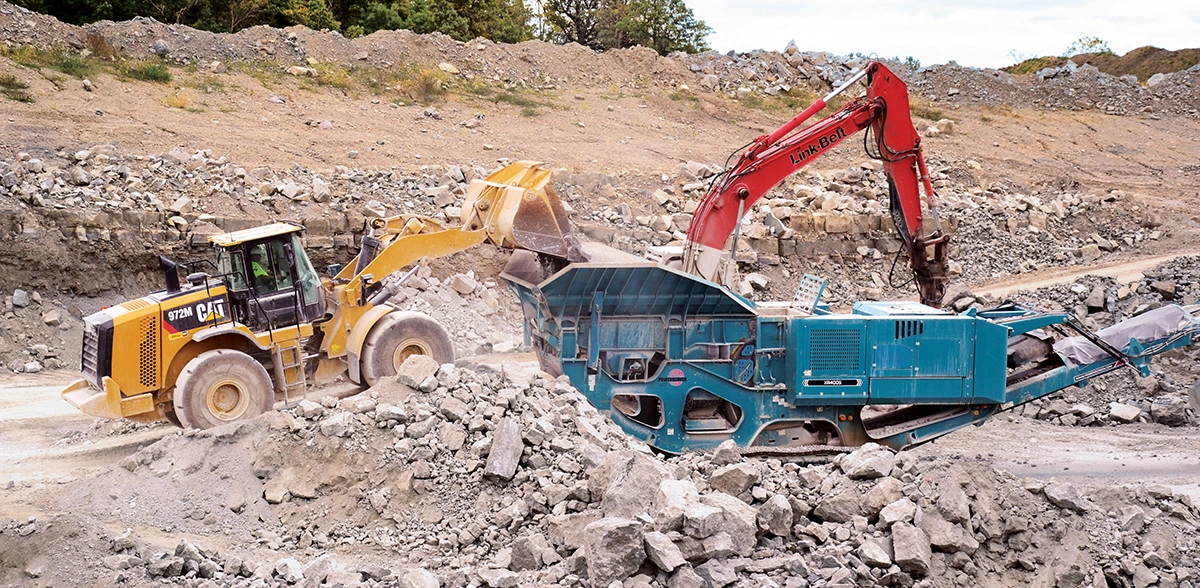
Hammermills are like impactors in the upper chamber where the hammer impacts the in-feed of material. The difference is that the rotor of a hammermill carries several “swing type” or pivoting hammers.
Hammermills also incorporate a grate circle in the lower chamber of the crusher. Grates are available in a variety of configurations. The product must pass through the grate circle as it exits the machine, ensuring controlled product sizing.
Hammermills crush or pulverize materials that have low abrasion. The rotor speed, hammer type and grate configuration can be converted for different applications. They can be used in a variety of applications – including primary and secondary reduction of aggregates, as well as a variety of industrial applications.
FULL HANDBOOK
Chapter 1: Industry Overview
Chapter 2: Geology & Site Selection
Chapter 3: Drilling & Blasting
Chapter 4: Excavating & Loading
Chapter 5: Hauling
Chapter 6: Crushing & Hydraulic Breaking
Chapter 7: Screening
Chapter 8: Washing & Classifying
Chapter 9: Conveying & Material Handling
Chapter 10: Loadout & Weighing
Chapter 11: Safety & Health
Use the page numbers to continue reading, or select a section / chapter above.