

Editor’s note: This article was updated March 3.
Caterpillar outlined its plans for autonomous construction equipment at CES 2026, detailing the next era of intelligent machines.
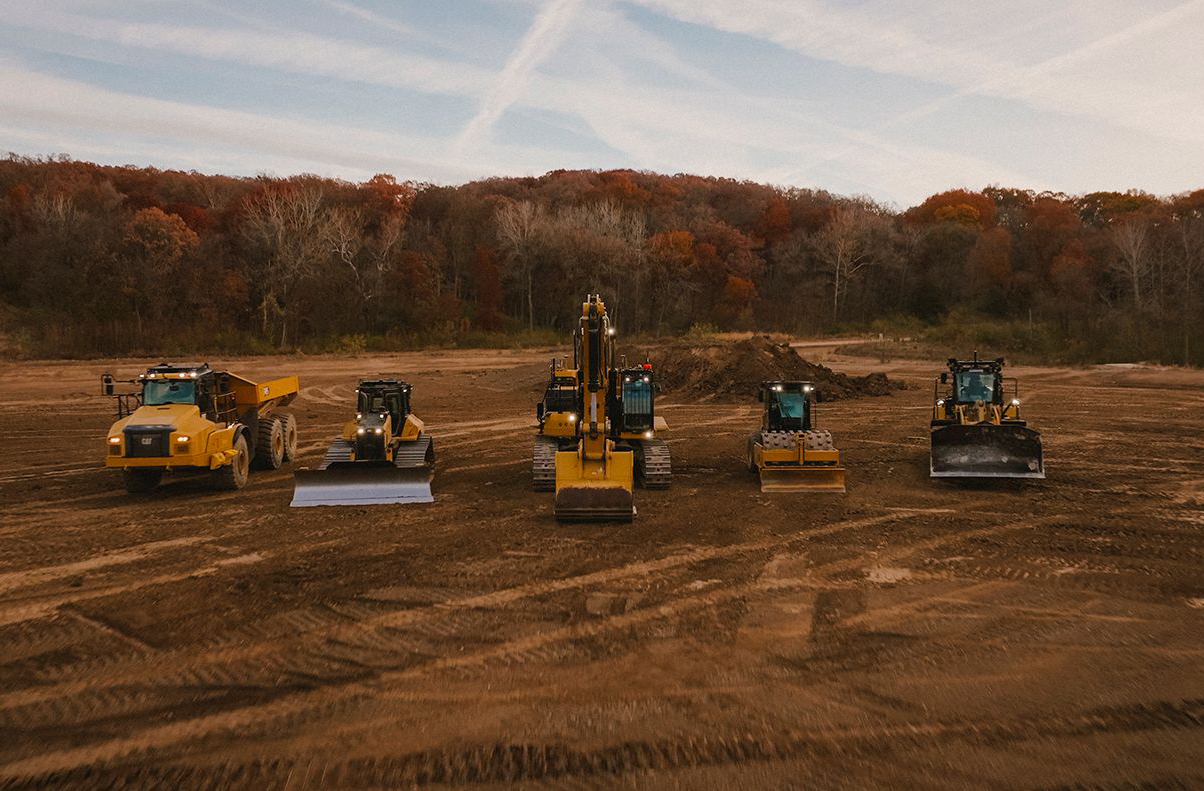
Looking ahead, Caterpillar says its intelligent product lineup will include excavators, loaders, haul trucks, dozers and compactors. According to the company, the innovations build on more than three decades of research, development and real-world deployment in automation and machine intelligence.
Caterpillar, which issued a press release containing these details, did not provide a timeline for when autonomous versions of these machines would be commercially available.
“By embedding autonomy into construction workflows, we’re reshaping the industry to achieve safer jobsites, better jobs and easy precision that redefines productivity for the modern jobsite,” says Jaime Mineart, chief technology officer at Caterpillar.
Caterpillar’s entry into autonomy dates back to the 1980s and included a partnership with Carnegie Mellon. The partnership led to the development of software, GPS and perception systems that supported its first autonomous truck tests.
In the 1990s, Caterpillar teams advanced capabilities in sensing, positioning and control that later fed into the company’s autonomous operations. By the mid-2000s, the company advanced real-world testing under extreme conditions. Caterpillar now offers Level 4 autonomy: machines that operate independently.
Today, Caterpillar’s autonomous mining fleet is among the larger industry deployments, having moved more than 12 billion short tons of material and traveled more than 236 million miles.
“Caterpillar’s legacy of innovation is rooted in solving our customers’ toughest challenges, and that mission continues to guide our future,” says Joe Creed, Caterpillar CEO. “Technology is accelerating and expanding our ability to meet customer needs by seamlessly connecting deep digital insights with our machine expertise to deliver solutions for their most critical tasks.”
As Caterpillar describes, its autonomous solutions are built on a foundation of AI, machine learning, computer vision and edge computing that process sensor data in real time, supporting autonomous decision-making on jobsites. Integrated LiDAR, radar, GPS and high-resolution cameras provide a 360-degree, constantly updated digital view of the jobsite, enabling precise and reliable autonomous operations – even in challenging environments.
“Together with our customers, we’re transforming the industries we serve – one jobsite, one breakthrough, one bold idea at a time,” Mineart says.
Caterpillar will spotlight its autonomy plans at ConExpo-Con/Agg, which runs March 3-7.
Also at CES, Caterpillar unveiled an expanded collaboration with Nvidia to drive innovation across industries through AI-enhanced customer solutions and manufacturing systems.
“As AI moves beyond data to reshape the physical world, it is unlocking new opportunities for innovation – from jobsites and factory floors to offices,” Creed says. “Caterpillar is committed to solving our customers’ toughest challenges by leading with advanced technology in our machines and every aspect of business. Our collaboration with Nvidia is accelerating that progress like never before.”