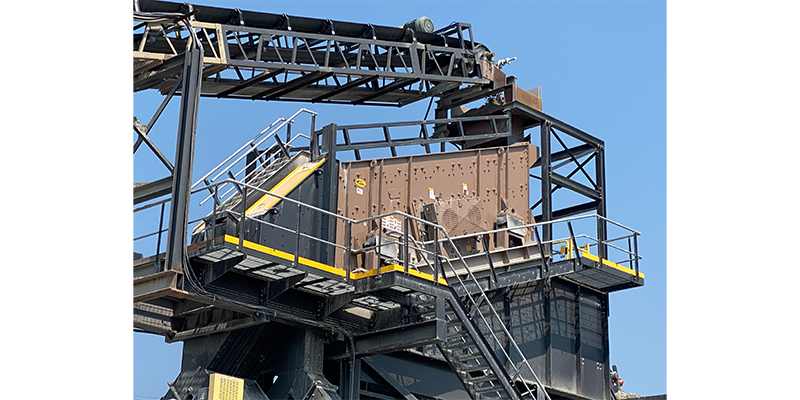

There is no trade-off between maintaining a clean operation and ensuring productivity.
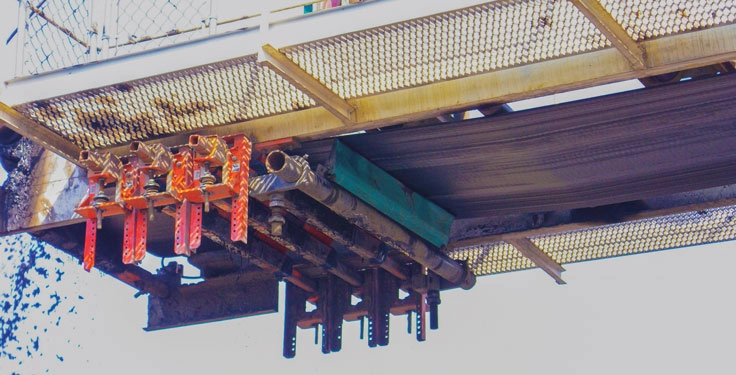
Installing the correct belt cleaning configuration at discharge zones can effectively address both concerns, but the quality and construction of belt cleaners are crucial to achieve optimal results.
Typically, a lower-quality cleaner allows more material to carry back, requires more maintenance labor, needs to be replaced more frequently, may not be suitable for the application’s volume or properties, and could cause belt damage, which is commonly the most expensive component of any conveyor system.
Carryback control
■ Problem. Carryback refers to material that is not discharged, bypasses cleaners and remains adhered to the conveyor belt beyond the head pulley.
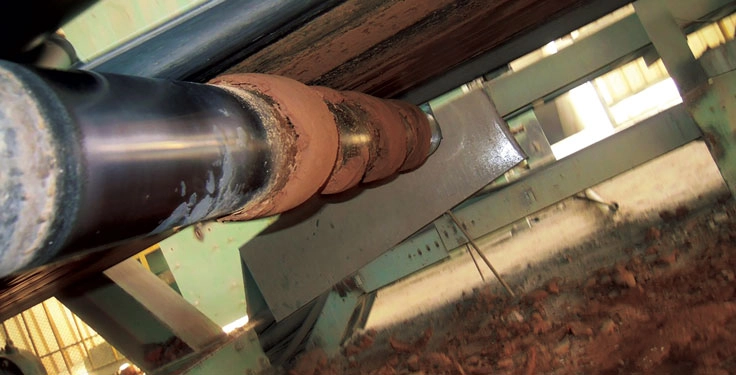
As the stuck material travels along the belt return toward the tail pulley, it falls off along the belt path, disrupted by return rollers. Thus, cleaning the belt is essential for workplace cleanliness and safety.
■ Solution. When selecting a primary belt cleaner, consider the pulley diameter, belt speed, production volume and material properties. Wet, viscous, acidic or alkaline, sharp or abrasive materials may require blades made from specialized polyurethane or material blends (i.e., tungsten tips, rubber).
Dust control
■ Problem. Dust from the return belt can be pervasive. Once the belt is loaded, the pressure of the cargo and the vibration of the belt compress dust into divots and cracks in the belt. Without proper cleaning, dust is released along the belt return. This creates clouds of dust and leads to equipment fouling.
■ Solution. A secondary or tertiary cleaner may be necessary. Positioned behind the head pulley, a secondary cleaner should be tensioned against a hold-down roll within 2 to 4 in. to ensure effective cleaning.
Contact with the belt should be in a negative-rake position and made from tungsten carbide or other abrasion-resistant materials for durability. Tertiary cleaners often rely on the weight of the belt combined with a spring tensioner.
Equipment fouling
■ Problem. Carryback and dust lead to costly consequences throughout the entire system. This results in reduced equipment lifespan, expensive replacements and unscheduled downtime.
■ Belting. Carryback material can encapsulate the tail pulley, rollers and belt. The belt can ride on the abrasive material and erode, reducing the equipment’s lifespan.
■ Pulleys and motors. Often, the head pulley acts as the drive pulley, meaning any fugitive dust from the discharge gets drawn into the air intake, clogs the working parts and leads to a breakdown.
■ Rollers. Fine particulates can foul bearings and cause the rollers to seize over time, leading to roller wear, belt damage, and frictional heat.
■ Solution. Install a belt cleaning setup that eliminates carryback and dust. Seal exposed bearings and axles for rolling components. The preferred option is to inspect the system regularly or use a monitoring system such as a position indicator showing the status of cleaners. This provides data that informs operators about servicing.
Belt mistracking
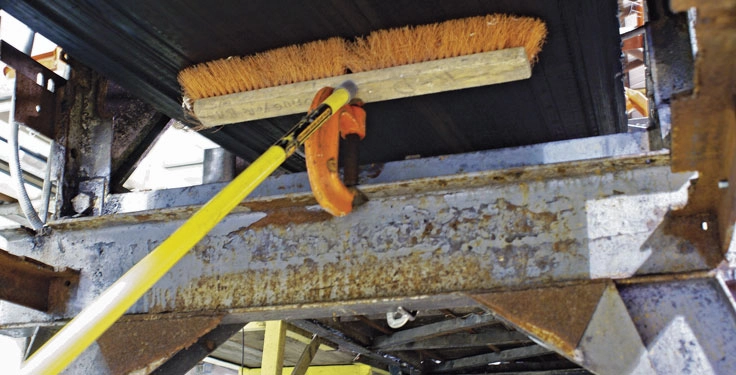
■ Problem. Many conveyors come with a “tracking” system that is intended to keep the belt from contacting the stringer and shredding the edges.
■ Solution. Modern belt alignment systems can remedy misalignment more effectively than merely installing crown rollers. Designed for either the return or carrying side of the belt, these devices use sensing arms to detect slight variations in the belt path and immediately correct them by turning a roller or idler in the opposite direction.
Belt tracking on the return is also advised, regardless of issues stemming from carryback. With longer gaps between rollers on the return side than the upper carrying side has between idlers, the return side is susceptible to wind, belt camber and other elements that can lead to drift.
Operational safety
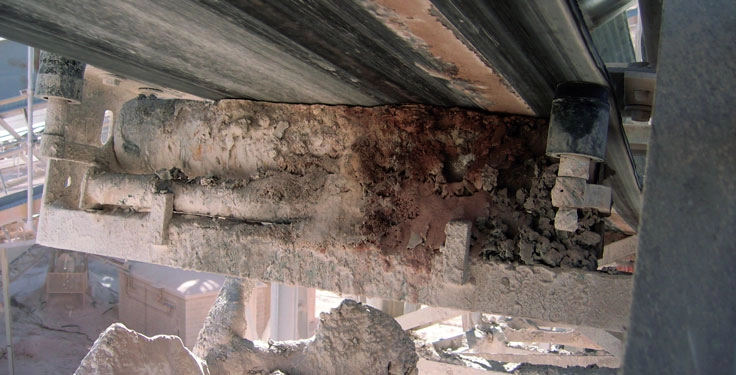
■ Problem. Carryback increases safety risk and raises operational costs. Although it is strongly discouraged, operators continue to assign workers to clear spillage from around the system while the belt is running. If a worker comes into contact with a belt, the risk of an injury or fatality is high.
■ Solution. Avoid safety issues and labor costs associated with cleaning by eliminating the cause: carryback. Always follow the lockout-tagout (LOTO) procedure, and never allow any worker to perform maintenance on or around a working conveyor.
Also, some cleaner designs enable equipment to be pulled away from the mainframe and serviced quickly and ergonomically by a single worker from outside the system.
Discharge zone design
By enclosing the discharge zone and extending the entry hood, operators can control airflow with dust curtains and return run seals.
As part of the enclosure, accessible inspection doors that offer a clear view of equipment should be installed. Once the appropriate primary, secondary and tertiary cleaners are installed, operators will notice an increase in material flow through the transfer chute. It’s recommended to install a dribble chute to ensure all captured material is handled.
Conclusion
In the punishing environment of bulk materials handling, many aspects of workplace safety and operational efficiency are directly tied to how clean the conveyor belt is.
Because incidental contact with high-speed belts has become the leading cause of conveyor injuries and fatalities, Mine Safety and Health Administration inspectors are increasingly scrutinizing carryback. Eliminating the safety hazards associated with belt cleaning also adds benefits such as reduced unscheduled downtime, fewer equipment failures and lower operating costs.
Dave Mueller is product manager of conveyor products at Martin Engineering.