
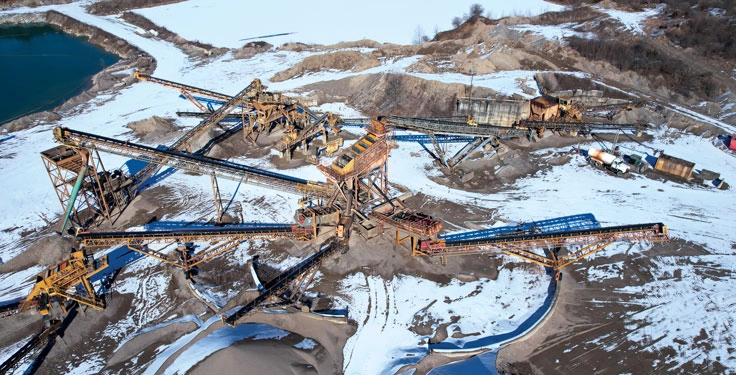
When not managed properly, cold weather wash plant operation will likely result in serious downtime and equipment damage.
While these risks are nothing new, operations typically make the same costly mistakes year after year when processing materials as temperatures plunge. Drawing on decades of assisting producers on-site, John Bennington, technical sales manager of washing and classifying at Superior Industries, shares a few common cold weather practices to avoid – and several better strategies to adopt.
Common mistakes
According to Bennington, one of the most common operator errors related to washing and classifying equipment is repeatedly hitting the start button when screws won’t turn over.
Operators are often under pressure to keep material flowing. If the screw doesn’t turn, production stops. The operator’s instinct is to reset by hitting start, hoping the screw will clear itself.
Operators, however, may not fully grasp that ice can physically lock the screw. They assume it’s just an electrical trip or overload that can be reset.
If maintenance procedures don’t emphasize never restarting against a frozen load – and if the control system doesn’t lock out after multiple failed starts – the button remains available, effectively encouraging repeated presses.
Still, repeatedly hitting the start button can cause motor damage and gearbox stress. It can also damage rubber or urethane shoes by causing them to rip.
Importantly, if ice suddenly breaks free, the screw can lurch violently, risking injury. The bottom line: Instead of clearing ice, repeated starts cause mechanical strain and extend downtime.
Another common mistake is draining screws to remove water, thinking it prevents freezing. Bennington says this is not an ideal solution.
“You’re often better off having some ice just on the surface because that’s easier to break up,” he says. “When ice forms down where the shoe and tub are, it acts like glue and can stall equipment.”
Also, operators often drain large vessels like classifying tanks, assuming that’s the safe thing to do in the short term. But draining can lead to frozen valves and longer startup times.
Better methods
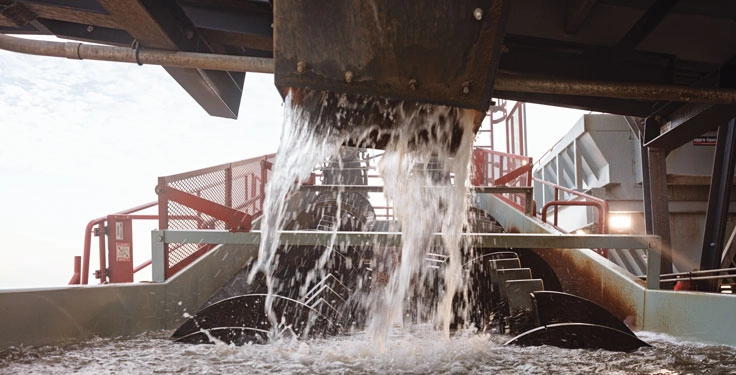
Keeping water moving is key, as it doesn’t freeze as easily. Bennington stresses that running a screw continuously overnight can prevent freezing – especially if temperatures stay above 20 degrees.
When components do freeze, gentle thawing is essential.
“If you apply warm water on them, you can usually break any ice loose and let it go,” says Bennington, highlighting the importance of using warm – not hot – process water to free frozen components without damage.
Bennington also says the real bottleneck in winter isn’t screws or classifying tanks, but head pulleys and conveyors. These smaller surface areas freeze more easily and often require warming methods to keep belts from freezing to pulleys.
To avoid conveyor head pulley freeze-ups in cold weather, operators should consider heated pulleys, chemical deicers and preventive spray systems that stop ice from forming on pulleys and belts. These solutions reduce downtime, safety risks and costly manual interventions.
Cost-benefit considerations
Cold weather operation often comes down to a cost-benefit analysis.
If you’re running an eight or 10-hour day and it takes two hours to start the plant, how much is that effort worth? It’s better for most operations to stockpile material before winter to avoid costly startup delays.
In colder regions, some operators use steam lines or insulation to keep equipment warm, but these methods are less common. Most prefer to run full tilt in milder months rather than fight freezing conditions in winter.
Cold weather washing requires a blend of practical knowledge, patience and strategic planning. By keeping water moving, avoiding common mistakes, and understanding the real bottlenecks, operators can maintain productivity, protect equipment and reduce the risks associated with cold weather washing hazards.
Information for this article courtesy of Superior Industries.
Related: Closing the gap on guarding